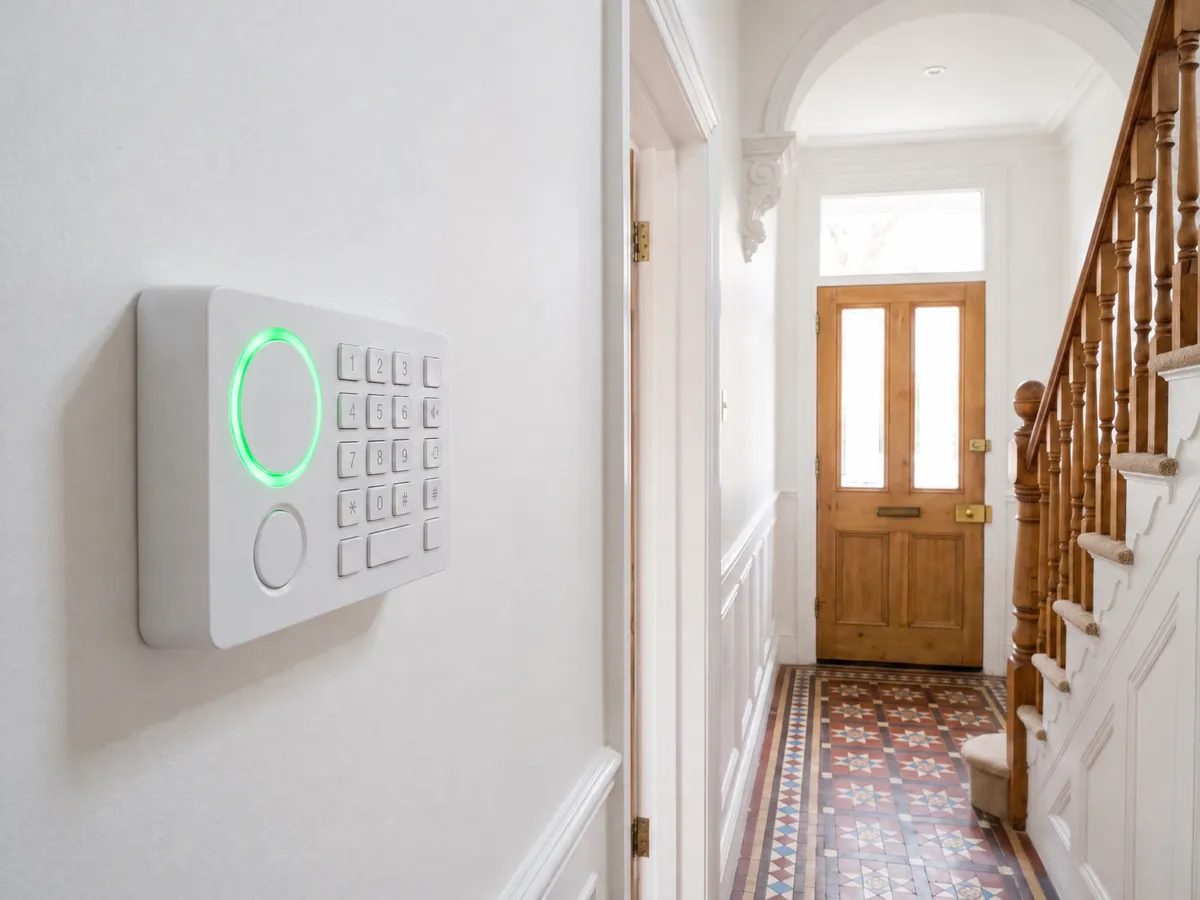
Monitored Alarm Systems.
A monitored alarm sends its signal to a staffed alarm receiving centre, which contacts your keyholders and, if the system holds a police unique reference number and the activation is confirmed, the police. Staffed monitoring costs about £15 to £25 a month on MyJobQuote's guide and £25 to £40 with police response. Here is how monitoring works, what the police require, what it costs and what to check in the contract.
Takes about two minutes. Installers pay us, so it is free for you.
- A month, staffed monitoring
- £15-£25MyJobQuote guide figure, 5 November 2026
- A month, with police response
- £25-£40MyJobQuote guide figure, 5 November 2026
- Monitored alarm, fitted
- £680-£1,140MyBuilder guide figure, read 26 November 2026
- Keyholders must reach the property
- 20 minutesBIBA, for a police reference number
Sources: MyJobQuote, burglar alarm cost, page updated 5 November 2026; MyBuilder, burglar alarm installation cost, undated page read 26 November 2026; BIBA, intruder alarms: guidance for purchasers. Prices are the guides' own figures, not Switchable's.
In short
- Monitored means a person is told. The alarm signals a staffed centre that contacts your keyholders and, where the system holds a police reference number, the police.
- The police respond only to systems that meet their requirements. BIBA says that needs a system to PD 6662 and BS 8243, an installer and monitoring centre listed by the NSI or SSAIB, and at least two keyholders who can reach the property within 20 minutes.
- Monitoring costs about £15 to £25 a month on MyJobQuote's guide, £25 to £40 with police response and £180 to £540 a year on MyBuilder's.
- Too many false alarms can curtail or withdraw police response, which BIBA says may affect related insurance cover.
- Keep the contract short: the police advise avoiding long-term monitoring contracts and paying no more than a year in advance.
On this page (10)
What Is A Monitored Alarm And How Does It Work?
An unmonitored alarm sounds a siren and relies on someone nearby to hear it and act. A monitored alarm does that and also sends a signal, through an alarm transmission system, to a continuously staffed alarm receiving centre. The centre holds the details of the property and its keyholders, who may be friends, family, neighbours or a paid response company, and it contacts them when the alarm activates.
BIBA, the insurance brokers' body working with the insurers' research body RISCAuthority, says that where the installing company meets the police rules and the applicable standards it can request a police unique reference number, known as a URN. The URN lets the centre contact the police force's control room directly and ask for an immediate response to activations that justify attendance.
| Unmonitored (audible only) | Monitored (remote signalling) | |
|---|---|---|
| Who is told | Anyone who hears the siren | A staffed centre, then your keyholders and, if it holds a URN, the police |
| Police response | Only if a caller can say more than that an alarm is sounding | Through the centre, if the system meets the police requirements |
| Typically used at | Lower-risk homes with neighbours next door | Higher-risk homes with significant contents, and business premises |
| Running cost | None for monitoring | £15 to £40 a month on MyJobQuote's guide |
Source: BIBA, intruder alarms: guidance for purchasers; MyJobQuote, burglar alarm cost, page updated 5 November 2026. The running cost is MyJobQuote's guide figure, not Switchable's.
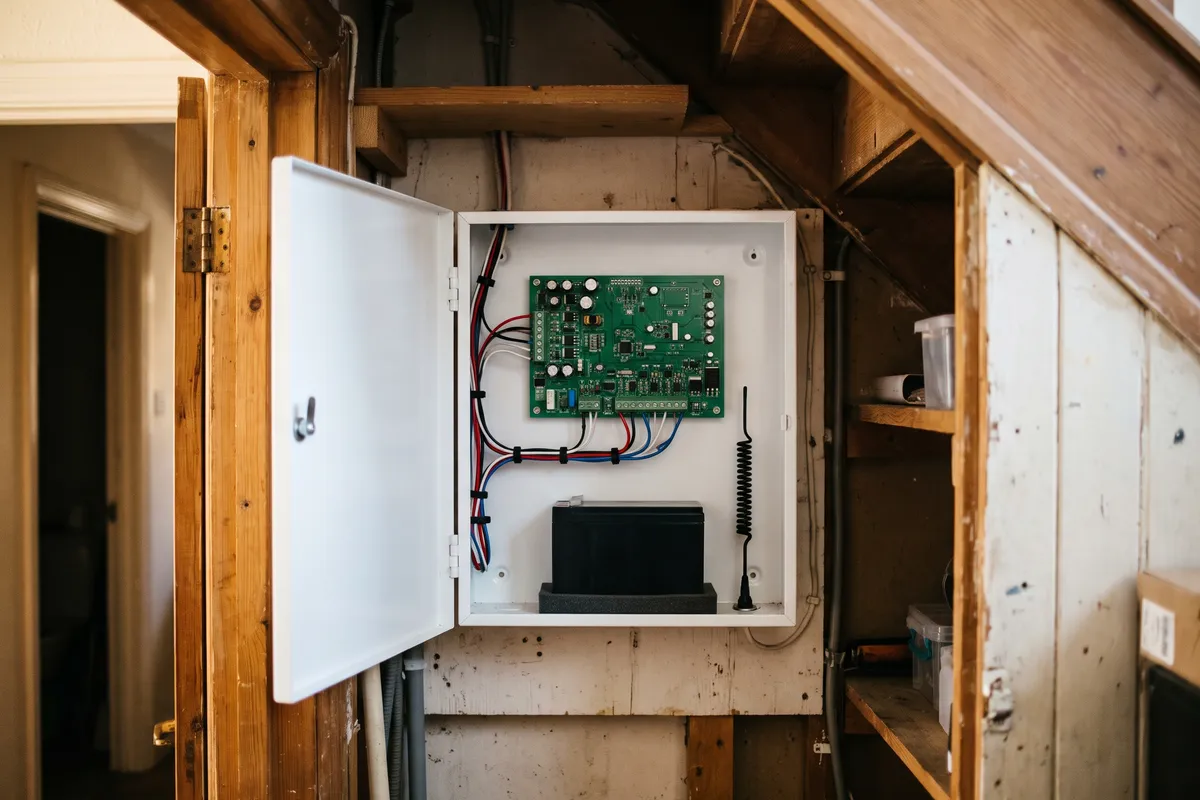
Which Sensors Does A Monitored Alarm System Use?
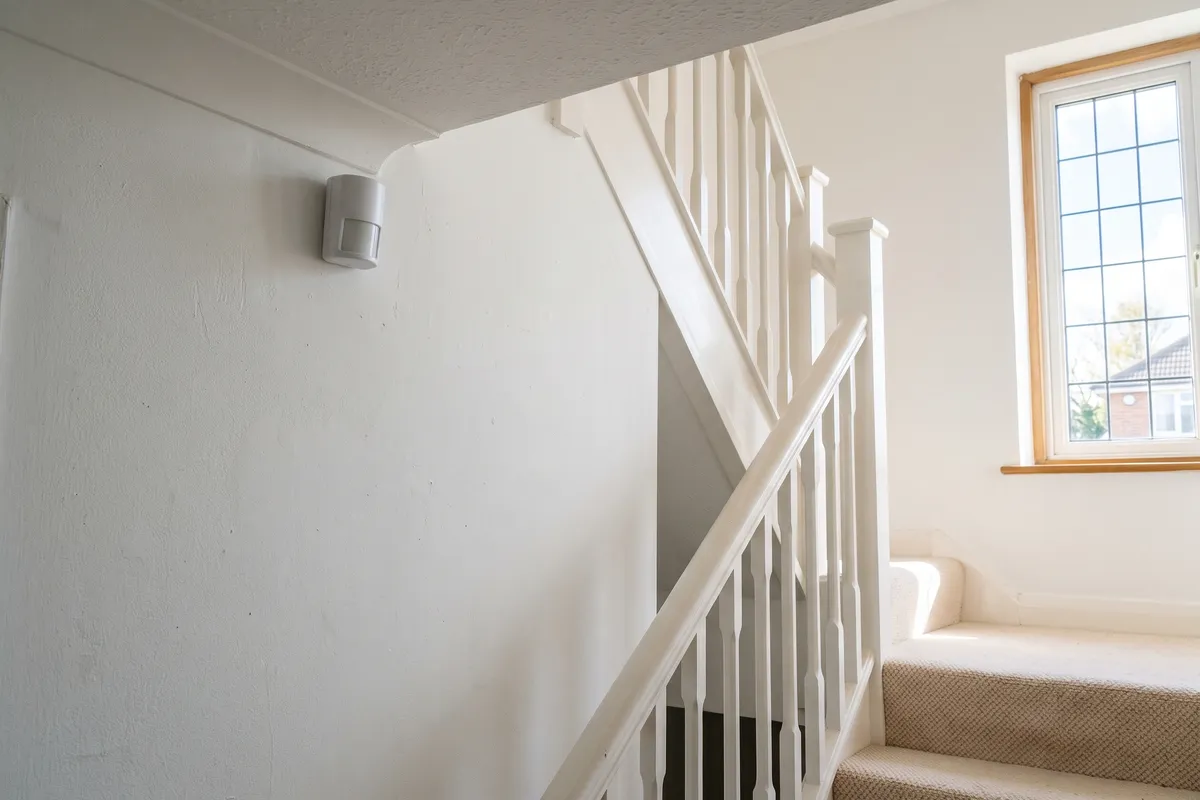
A monitored alarm system in a UK home uses the same detection as any other alarm: door contacts and window sensors on the entry points, motion sensors covering the rooms an intruder would cross, a keypad and a siren. What makes it monitored is the communicator that sends an alert to the centre, which can then notify your keyholders by phone. Many systems also let you receive alerts and arm the alarm system from an app on your phone.
Some monitored systems add cameras or microphones so the centre can check an activation, which BIBA describes as visual or audio confirmation. A camera on its own does not make a security system monitored, and CCTV is a separate job: see our guide to CCTV installation cost. A homeowner choosing a monitored alarm system should ask what it alerts, whom it notifies and how quickly. Switchable is free to use, and you can compare quotes from installers who survey your home first.
What Do The Police Require Before They Respond?
The national police policy on responding to security systems is set by the National Police Chiefs' Council. It was updated in 2025, with changes to documentation requirements, terminology for monitoring centres, audio challenge guidance and false alarm definitions, as the NSI noted on 23 May 2025, and its public advice was revised in February 2026. The practical requirements for a home, as BIBA sets them out, are:
- The system. It must conform to PD 6662, at grade 2, 3 or 4, and to BS 8243, which governs how activations are confirmed.
- The installer. The alarm company must be listed by an independent inspectorate, the NSI or SSAIB.
- The monitoring centre. It must also be inspectorate-listed.
- Keyholders. The centre needs the telephone numbers of at least two keyholders who can each reach the property within 20 minutes of being asked.
- Confirmed activations. The police attend a confirmed activation, not a single unconfirmed signal.
Check the position with your local force and your installer before you pay. Forces keep their own lists of compliant companies, and the police's public advice asks you to check that the company is currently on the compliant list for your area.
What Does Alarm Monitoring Cost?
Monitoring is a monthly or yearly fee on top of the cost of fitting. The two guides we read differ, so both are shown, and the fee depends on who monitors, whether police response is included and what the contract covers.
| Cost | Figure | Guide |
|---|---|---|
| Self-monitoring through an app, monthly | Under £5 | MyJobQuote, 5 Nov 2026 |
| Staffed monitoring, monthly | £15 to £25 | MyJobQuote, 5 Nov 2026 |
| Police response, added monthly | £8 to £15 | MyJobQuote, 5 Nov 2026 |
| Monitored with police response, monthly | £25 to £40 | MyJobQuote, 5 Nov 2026 |
| Package with maintenance, monthly | £35 to £55 | MyJobQuote, 5 Nov 2026 |
| Monitoring, yearly | £180 to £540 | MyBuilder, read 26 Nov 2026 |
| A monitored alarm, fitted | £680 to £1,140 | MyBuilder, read 26 Nov 2026 |
Source: MyJobQuote, burglar alarm cost, page updated 5 November 2026; MyBuilder, burglar alarm installation cost, undated page read 26 November 2026. Guide figures, not Switchable's.
MyJobQuote's separate home security guide says police response monitoring needs a grade 2 system, which is one reason the fitted price is higher than for a bells-only alarm. Our guide to burglar alarm cost covers the fitted price, and wireless alarm systems explains how wireless sensors fit into a monitored system.
What Is Confirmation, And Why Does It Matter?
Confirmation is the method that stops false alarms reaching the police. BIBA explains that BS 8243 sets the rules, and the commonest method is sequential confirmation: the centre must receive two activations within set times before it can ask the police to attend. A single activation is unconfirmed, and then only your keyholders are told and, depending on your insurance wording, they may have to attend and investigate.
That has a practical consequence. BIBA says there are several ways to unset an alarm under BS 8243 and each affects whether an intruder forcing the entry door produces a confirmed activation. Ask your installer how you will unset the system and whether a break-in through your usual door would be confirmed. BIBA says a lock on the entry door that is electronically linked to the alarm is generally the most secure way.
The signalling path matters as well. BIBA says insurers generally recommend a dual path transmission system, which keeps working if one path fails, and that a single path is cheaper but a fault or criminal act can stop the signal reaching the centre.
What Should You Check In A Monitoring Contract?
The police's public advice on choosing a security company, Appendix H of the National Police Chiefs' Council policy (February 2026), is direct about contracts and call-outs.
- Short terms. Avoid long-term monitoring contracts and pay no more than one year in advance.
- Prepayment risk. The advice warns that paying a large part of a price early can be lost if the business is wound up before the contract is complete.
- Call-out. A 24-hour call-out service with attendance within four hours.
- The terms in writing. The quote should name the standard and set out maintenance and monitoring terms.
- Your insurer. Check the company is acceptable to your home insurer.
If your keyholders are a paid response company, BIBA says its staff must hold Security Industry Authority guarding licences and, where a police URN is needed, must be able to reach the property within 20 minutes.
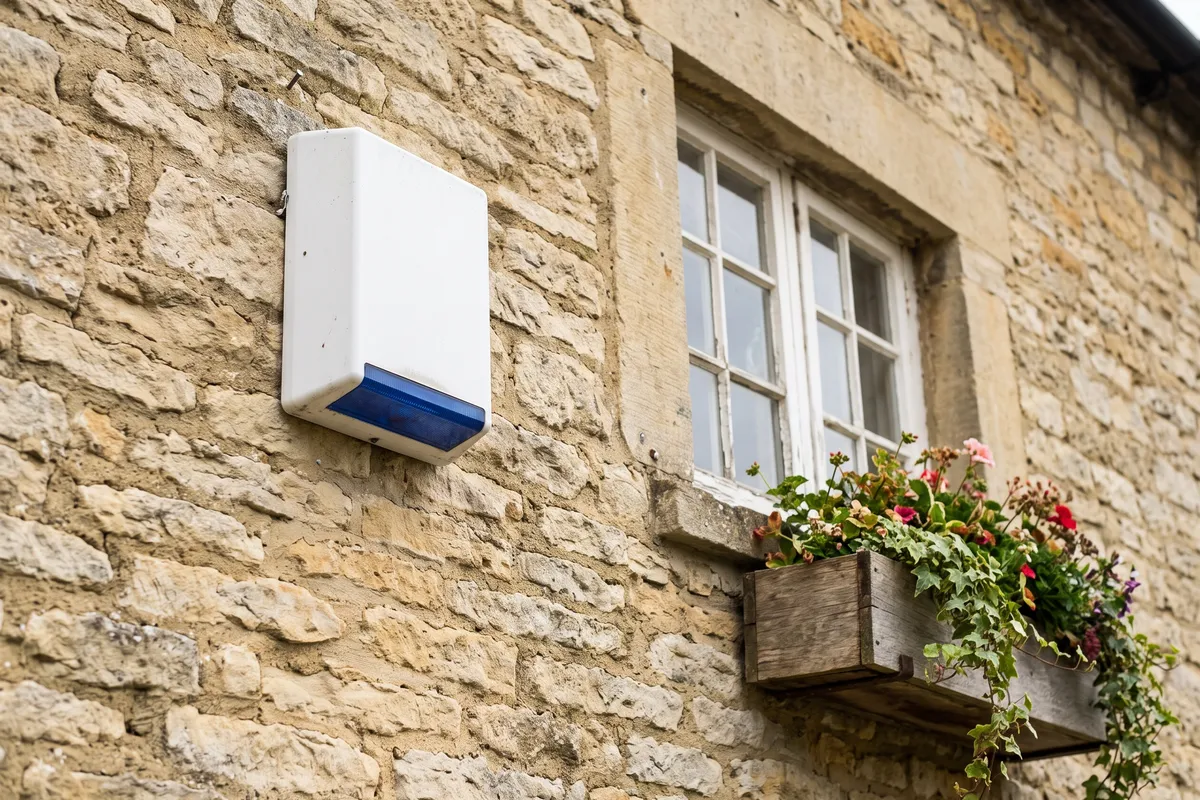
Is A Monitored Alarm Worth It For Your Home?
It depends on what you are protecting and what your insurer expects. BIBA says insurers who require a monitored system normally expect it to hold a URN, and that monitored systems are typically used at higher-risk homes, which it describes as those with significant amounts of contents or valuables. If your insurer sets an alarm condition, the cheapest alarm may not meet it, and BIBA warns against simply choosing the cheapest quotation.
For a lower-risk home with neighbours next door, an unmonitored alarm may be enough. If you want a call-out when you are away, a monitored system is the route, and you should expect a monthly fee, a visit to survey your home and a contract to read carefully.
Alarm monitoring is a service you buy from a security company, so compare it like any other contract: the monthly price, the term, who monitors, what the centre does when the alarm system activates and how it alerts your keyholders. Some security systems let you monitor the alarm yourself, which is cheaper, but only a staffed centre can ask the police to attend. If you are weighing a monitored alarm system against a bells-only alarm, price the monitoring over the whole contract, not just the fitting.
The Bottom Line
A monitored alarm tells a staffed centre when it activates, and a system that meets the police requirements can bring a police response. Monitoring costs about £15 to £40 a month on MyJobQuote's guide, on top of a fitted price of £680 to £1,140 on MyBuilder's.
Before you pay, check the installer and the monitoring centre are inspectorate-listed, ask how an activation is confirmed and who your keyholders will be, and keep the contract short. Tell your insurer first.
Compare home security quotesSources
- BIBA, intruder alarms: guidance for purchasers
- NPCC, Appendix H: police advice to members of the public seeking information on security companies
- Police Crime Prevention Initiatives, choosing an alarm
- NSI, NPCC 2025 policy update for police response to security systems
- MyJobQuote, burglar alarm cost
- MyJobQuote, home security cost
- MyBuilder, burglar alarm installation cost
Checked 26 November 2026.
How To Compare Quotes
Get at least three quotes and compare them line by line. Prices for the same job can differ a lot.
- A visit first. A good installer surveys the home before quoting, so the number of sensors or cameras and where they go are decided on site.
- The same list of parts on every quote: sensors, panel, siren, cameras, recorder, cabling and setup, each on its own line, with VAT shown.
- The standard and the contract. Ask which standard and grade the system meets, who monitors it, and how long any monitoring contract runs.
How Switchable works
 Check. Tell us your postcode and a few details about your home. It takes about two minutes.
 Compare. Local installers who cover your area get in touch with quotes.
 Switch. Go ahead with the quote that suits you, or none at all. There is no obligation.
Switchable is free to use. Installers pay us for each introduction.
More On Home Security
- Home security guideCosts, savings and grants in one place
- Burglar Alarm CostInstalled prices by type, monitoring fees and what to ask in a quote
- Home Security SystemsThe parts of a system, what each does and costs, and how to choose
- Wireless Alarm SystemWireless against wired: cost, fitting time, batteries and what to ask
- CCTV Installation CostCost by number of cameras, wired against wireless, storage and the rules
Monitored Alarm Systems: Your Questions.
What is a monitored alarm?
An alarm that signals a staffed alarm receiving centre as well as sounding a siren. The centre contacts your keyholders and, if the system holds a police reference number and the activation is confirmed, the police.
How much does alarm monitoring cost?
MyJobQuote's guide gives £15 to £25 a month for staffed monitoring and £25 to £40 with police response. MyBuilder's guide gives £180 to £540 a year. Ask what the fee covers and the length of the contract.
Do the police respond to every monitored alarm?
No. BIBA says the police attend only a confirmed activation from a system with a unique reference number, and that too many false alarms can curtail or withdraw police response.
What is a police URN?
A unique reference number the police issue against an alarm that meets their requirements. It lets the monitoring centre contact the police control room directly to ask for a response.
Who can install a monitored alarm that gets police response?
The police advice says only security companies approved by an independent inspectorate, the NSI or SSAIB, and listed with the local police force are permitted to offer police response. The inspectorates can tell you who is approved near you.
What are keyholders?
The people the monitoring centre calls when the alarm activates. BIBA says a police reference number needs at least two keyholders who can each reach the property within 20 minutes, and they can be a paid response company.
Can a monitored alarm system use cameras?
Some do. BIBA says confirmation can be achieved with detection devices plus cameras or microphones, but the most commonly used method is sequential confirmation, which needs two activations. A camera alone does not make an alarm monitored.
Does a monitored alarm lower my insurance?
It might, but we cannot promise it. BIBA says insurers may recognise an alarm that meets their criteria or offer a discount, and may require a monitored system with a police reference number, so ask your insurer first.
Get Your Free Quotes Today.
Compare quotes from installers in your area. It takes about two minutes and there is no obligation.