Solar Battery Storage.
A battery keeps the electricity your panels make by day for the evening. Here is what one costs, how long it lasts and how to tell whether it is worth it for your home.
Takes about two minutes. Installers pay us, so it is free for you.
- Battery cost range
- £1.5k-£10kdepends on type and size
- A 5kWh battery system
- £4,600around
- Typical battery lifespan
- 10-12 yrs
- VAT until 31 March 2027
- 0%on qualifying home batteries
Source: Energy Saving Trust, battery storage, 6 October 2026; HMRC VAT Notice 708/6, checked 17 November 2026.
What Does A Solar Battery Do?
Your panels make most of their electricity in the middle of the day, which is often when nobody is home. Anything you do not use is exported to the grid. A battery stores that surplus and gives it back in the evening, so more of what your roof makes is used in your own home.
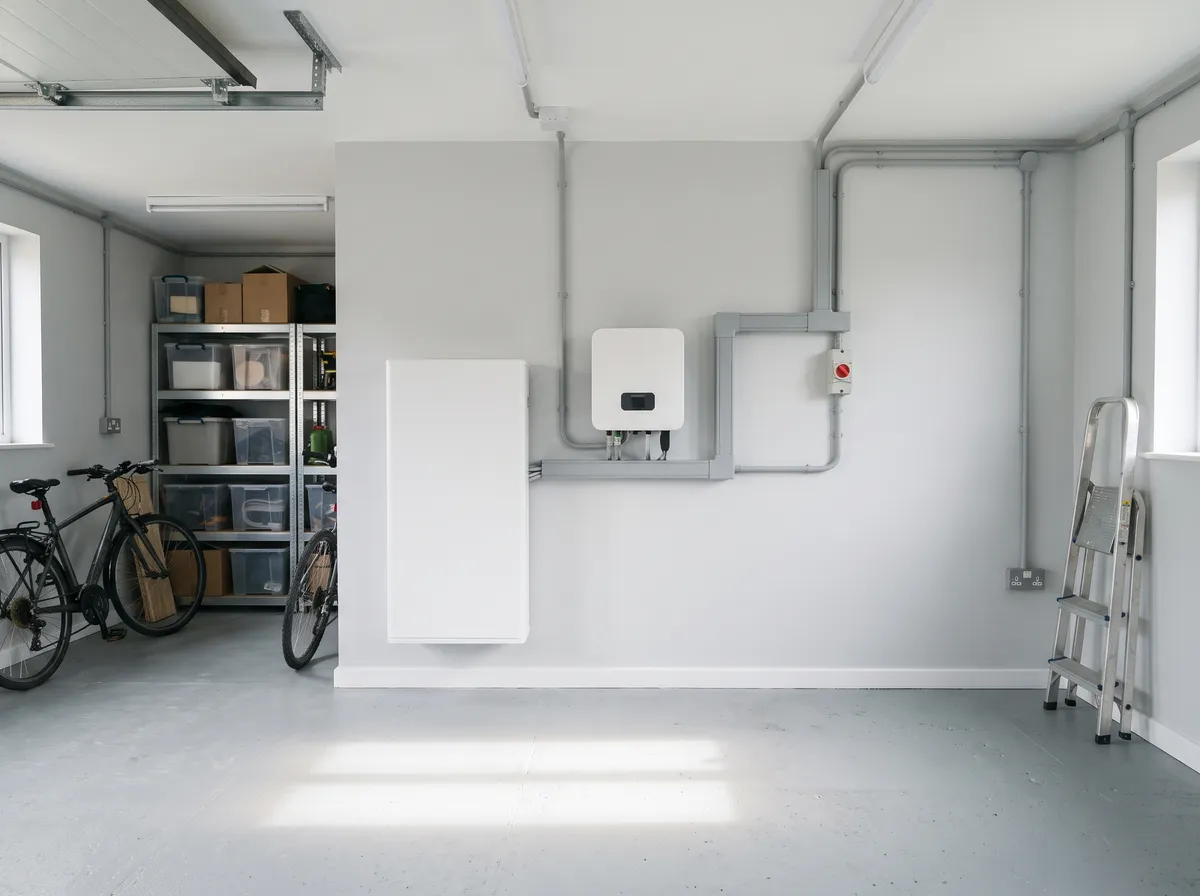
The Energy Saving Trust says a typical home battery is around 10 kWh and about the size of a small cabinet, slightly taller and wider than a washing machine. It stops discharging at a set level, maybe 20% of its total capacity, to protect itself.
Source: Energy Saving Trust, battery storage, 6 October 2026.
How Much Does A Solar Battery Cost?
The Energy Saving Trust says battery cost can range from £1,500 to £10,000, depending on the type and size. A 5kWh battery system is around £4,600.
Ask each installer for the usable capacity as well as the headline capacity, and for the price with and without installation, so quotes can be compared like for like. Our solar inverters guide explains why the inverter can change the total.
Source: Energy Saving Trust, battery storage, 6 October 2026.
Will A Battery Save Me Money?
Possibly, but not always enough to cover its cost. The Energy Saving Trust says savings can be significant but will not always justify the price, and it publishes no standard saving figure, so we have not invented one. Ask installers to work out a figure from your own electricity use.
It also says a battery saves more when it runs a heat pump than when it only stores surplus solar, and that some energy is lost in storage, so stored power is slightly less efficient than using it straight away.
For the wider picture on whether panels pay back, see are solar panels worth it?
Source: Energy Saving Trust, battery storage, 6 October 2026.
Is A Battery Right For My Home?
A battery tends to suit homes where little electricity is used while the panels are producing, such as when everyone is out all day. If you are home in the daytime and use most of what the panels make, there is less surplus to store.
The Energy Saving Trust advises fitting a battery at the same time as panels to save money. It says an electric car is generally not a substitute for a home battery.
Fitting both together is also the simplest route. Adding a battery to an existing system depends on your inverter, so ask the installer to check.
Source: Energy Saving Trust, battery storage, 6 October 2026.
What Are The Downsides?
The main one is the upfront cost, which the Energy Saving Trust says can make a battery unrealistic for some homes.
A battery also has a shorter life than panels. Its typical lifespan is about 10 to 12 years, against 25 years or more for panels, so a replacement comes first.
Size it to your use
A battery that rarely fills is capacity you paid for and do not use, so match it to your evening use rather than buying the largest unit.
Source: Energy Saving Trust, battery storage, 6 October 2026; Energy Saving Trust, solar panels, 16 November 2026.
Is There VAT Relief Or A Grant For A Battery?
Under HMRC rules, installing a storage battery in a home is zero-rated for VAT from 1 February 2024, as long as the battery is used only to store energy from supplied or microgeneration electricity. The zero rate runs to 31 March 2027, then VAT reverts to 5%. Your installer applies it on the quote.
The Energy Saving Trust says there are no dedicated solar panel grants from the UK Government. If you are on a low income, the Warm Homes: Local Grant can fund solar through some councils, if eligible, so ask your council what is included. See our solar panels guide for the current schemes.
Source: HMRC VAT Notice 708/6, page last updated 31 January 2024, checked 17 November 2026; Energy Saving Trust, solar panels, 16 November 2026.
How Do I Get A Battery Fitted?
The Energy Saving Trust recommends using MCS-certified installers and getting at least three quotes. Switchable compares and introduces: tell us about your home and local installers send you their prices, free and without obligation.
Your installer should confirm which inverter the battery works with, whether it provides back-up power in a cut, and the warranty. Ask for those in writing.
Source: Energy Saving Trust, battery storage, 6 October 2026.
What The Energy Saving Trust Says About Battery Costs
| Measure | Figure | What it means |
|---|---|---|
| Cost range | £1,500 to £10,000 | Depends on type and size |
| 5kWh battery system | Around £4,600 | A common starting point for comparing quotes |
| Typical home system | 10 kWh | Larger systems cost more |
| Typical lifespan | About 10 to 12 years | Shorter than panels, so it is replaced first |
Source: Energy Saving Trust, battery storage, 6 October 2026.
Get quotes for your homePros And Cons
Pros
- Raises how much of your own solar power you use
- Cuts evening electricity bought from the grid
- Saves more when it supports a heat pump, says the Energy Saving Trust
- Can be fitted with new panels in a single job
- Home batteries are zero-rated for VAT until 31 March 2027
Cons
- Upfront cost of £1,500 to £10,000 makes it unrealistic for some homes
- Lifespan of about 10 to 12 years is shorter than the panels
- Some energy is lost in storage
- Savings will not always cover the cost
- An older system may need a compatible inverter
How To Compare Quotes
Get at least three quotes and compare them line by line. Prices for the same job can differ a lot.
- The installer is MCS certified. You need an MCS-certified system to be paid for exported power under the Smart Export Guarantee.
- What is in the price: panels, inverter, any battery, scaffolding and waste removal.
- Warranties on the equipment and on the installation work, and who stands behind them.
How Switchable works
 Check. Tell us your postcode and a few details about your home. It takes about two minutes.
 Compare. Local installers who cover your area get in touch with quotes.
 Switch. Go ahead with the quote that suits you, or none at all. There is no obligation.
Switchable is free to use. Installers pay us for each introduction.
Solar Battery Storage: Your Questions.
Can I use a diverter instead of a battery?
Yes. A solar diverter sends surplus electricity to something like your immersion heater instead of exporting it, so you get hot water rather than stored power. A battery makes wider use of the surplus. Our solar diverter guide explains how they work. Ask installers to price both so you can compare.
Should I buy the biggest battery I can?
No. The battery should match your evening use and what your panels can charge. A battery that never fills is capacity you paid for and do not use. The Energy Saving Trust says a typical home system is about 10 kWh, so use your own electricity use as the starting point.
How long does a solar battery last?
The Energy Saving Trust says about 10 to 12 years is typical. That is shorter than the 25 years or more expected from panels, so plan for a replacement. Compare the warranty length and what it covers, and look at how the installer handles faults after the warranty ends.
Will a battery keep the lights on in a power cut?
Not always. Some batteries do not provide back-up at all, and others power only a few circuits. If this matters to you, ask the installer before you buy whether the system gives back-up, what it can run and for how long.
Can my electric car act as my home battery?
The Energy Saving Trust says generally not. A home battery is a separate unit designed to store surplus solar and release it in the evening. If you charge a car from your panels, read our guide to charging your car with solar.
Can I add a battery to panels I already have?
Often, but it depends on your inverter and your system. Some older systems need an inverter replaced or added to work with a battery. Ask an installer to check your set-up and quote for any extra equipment. You will also need to check it against your smart meter and export tariff.
Get Your Free Quotes Today.
Compare quotes from installers in your area. It takes about two minutes and there is no obligation.