Sunsynk Battery Review.
Sunsynk sells lithium iron phosphate home battery storage from about 5kWh, mostly as 48V low voltage units that pair with its own hybrid inverters, through a UK arm in Widnes. Its site lists 34 batteries and says each carries a 10-year warranty, while the datasheets and terms we read add conditions and show IP20 on some models. Here is the range, the specifications, the warranty and how it compares.
Takes about two minutes. Installers pay us, so it is free for you.
- Batteries on Sunsynk's batteries page
- 34Sunsynk, read 24 November 2026
- Energy of the G5.3 and SUN-BATT-5.32
- 5.32kWh4.79kWh usable on the G5.3 datasheet
- Warranty on the cells
- 10 yearsor 6,000 cycles, per Sunsynk's terms
- Rating on both 5.32kWh datasheets we read
- IP20while Sunsynk's page says IP65
Source: Sunsynk, batteries, read 24 November 2026; SUNSYNK-G5.3 datasheet v.3 (8 April 2023); Sunsynk manufacturer's warranty terms and conditions, PDF titled 19.08.22, read 24 November 2026.
In short
- Sunsynk's batteries page lists 34 batteries, all lithium iron phosphate, mostly 48V low voltage units that pair with its own hybrid inverters.
- Its page says 10 years as standard. The terms give cells ten years or 6,000 cycles, with labour excluded after year five. See the terms.
- Both 5.32kWh datasheets we read say IP20, an indoor rating, while the site says IP65. Check the model quoted.
- The G5.3 datasheet gives 5.32kWh with 4.79kWh usable and allows 32 units in parallel.
- We found no price for a Sunsynk battery we could stand behind, so get itemised quotes.
On this page (13)
Who Is Sunsynk?
Sunsynk designs hybrid inverters, batteries and all-in-one systems. Its site says it works with installers in more than 40 countries and lists offices in the UK, the Canary Islands, Poland, South Africa, Hong Kong, Australia and the USA. The UK arm is Sunsynk UK Ltd, in Widnes, Cheshire.
On Trustpilot, Sunsynk showed 4.6 on 532 reviews when we read it on 24 November 2026. Trustpilot says it does not fact-check reviews, and its own summary of recent reviews dwells on customer support by online chat. A search of the GOV.UK product safety alerts for "Sunsynk" on the same day returned no results.
Switchable is independent of Sunsynk and is not paid by it for this review. We do not test batteries or score them: we set out what the maker publishes and what to ask. Our method is on the how we review page. We compare and introduce, and your installer chooses and fits what you get.
Source: Sunsynk, batteries, read 24 November 2026; Trustpilot, Sunsynk, read 24 November 2026; GOV.UK product safety alerts search for Sunsynk, 24 November 2026.
What Is In The Sunsynk Battery Range?
Sunsynk's batteries page lists 34 products in two families. Its own text describes low voltage (48V) units from 5.1kWh to 10.2kWh, scalable to 81.6kWh, and high voltage stacks for larger homes and commercial sites. The page says every battery uses lithium iron phosphate (LiFePO4), has a built-in battery management system and works with Sunsynk hybrid inverters. Sunsynk sells the range for both residential and commercial installations, as a solar storage battery that sits beside solar panels in a PV system. Its key features, as Sunsynk lists them, are a ten-year warranty, scalable modular operation (units can be added to a system without replacing the existing ones), stable performance across temperatures from -10 to +50 degrees C, and a monitoring app. It does not give model-by-model specifications, so the figures in the next section come from datasheets.
| Series | Sizes listed | Notes |
|---|---|---|
| W Series | 5.32kWh, 10.24kWh, 10.64kWh | Listed in white and black |
| X Series | 5.12kWh, 10.24kWh, 16.07kWh | |
| L Series | 3.0kWh, 5.12kWh, 5.32kWh | |
| G Series | 5.12kWh, 5.32kWh | The G5.3 datasheet is in the next section |
| S Series | 5.12kWh, 5.32kWh, 10.65kWh, 16.07kWh | Includes rack-mounted versions |
| Radia | 5.12kWh, 10.49kWh, 16.07kWh | |
| ES Series and Maximus | 5.12kWh and 16kWh (ES); 5.12kWh (Maximus) | |
| GM, AR and Sunsynk-W HV | 5.12kWh (GM), 7.68kWh (AR), 5.1kWh (W HV) | High voltage |
Source: Sunsynk, batteries, read 24 November 2026. The page text gives a 5.1kWh to 10.2kWh range for low voltage units while the product list runs to 16.07kWh.
Sunsynk Battery Specs: What The Datasheets Say
Sunsynk's site did not give us a per-model datasheet to read without logging in, so we used two Sunsynk datasheets for 5.32kWh batteries, held on other sites. They are for different products and dates, and they differ on several points, which is why the table shows both. The older G5.3 sheet also carries a UK certification mark.
| Item | SUNSYNK-G5.3 (v.3, 8 Apr 2023) | SUN-BATT-5.32 (v.3, 6 Jun 2024) |
|---|---|---|
| Energy | 5.32kWh; usable 4.79kWh at 90% depth of discharge | 5,320Wh; usable not stated |
| Chemistry and voltage | Lithium iron phosphate (LFP), 51.2V, 104Ah | LiFePO4, 51.2V, 104Ah |
| Output | 50A recommended, 100A maximum, 150A peak for two minutes | 2.5kW nominal, 5kW maximum |
| Cycle life | At least 6,000 cycles at 90% depth of discharge, to 70% of capacity | 6,000 cycles at 80% depth of discharge, to 60% of capacity |
| Protection rating | IP20 | IP20 |
| Weight and size | 44kg; 440 x 600 x 133mm | 46.5kg; 450 x 520 x 185mm |
| Most in parallel | 32 units (170kWh) | 8 units |
| Warranty line | An energy limit of 16MWh to 70% end of life, whichever comes first | Not stated |
Source: SUNSYNK-G5.3 datasheet v.3 (8 April 2023) and SUN-BATT-5.32 wall-mounted datasheet v.3 (6 June 2024), a distributor copy, both read 24 November 2026. They are copies held on third-party file stores, not on Sunsynk's own site.
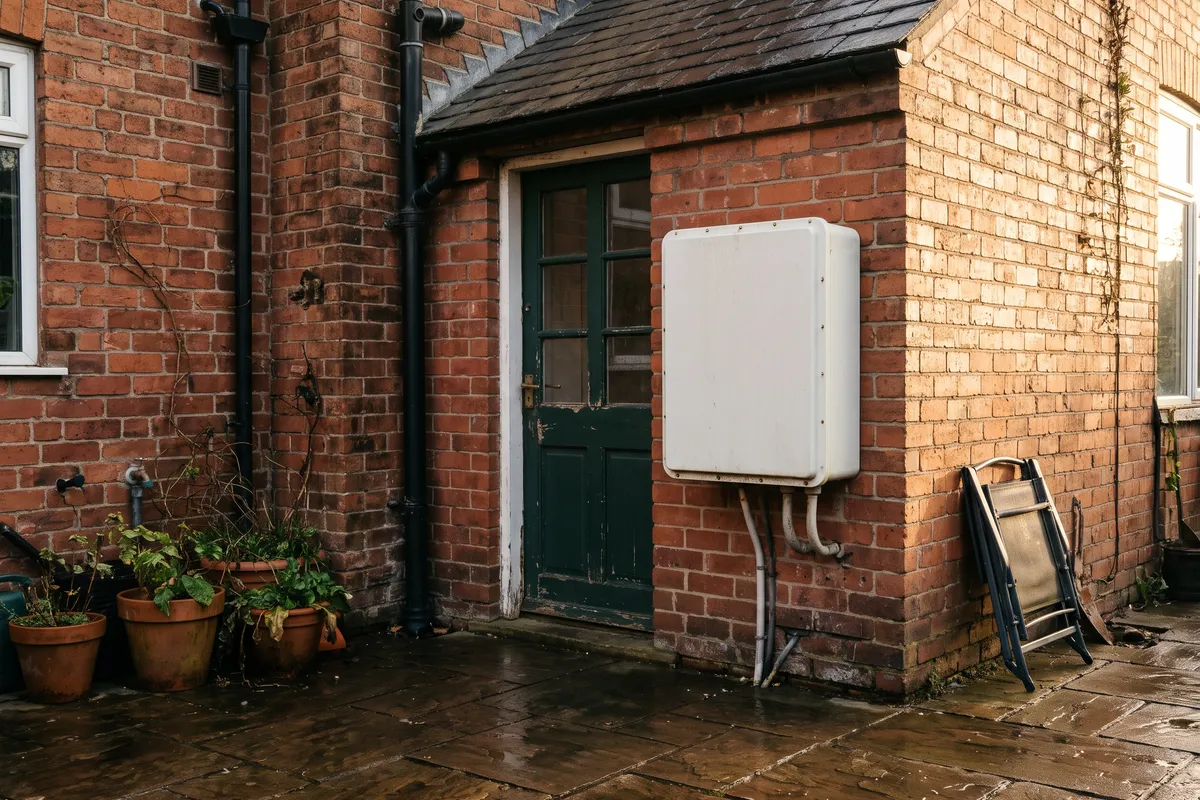
Two things stand out. The usable figure of 4.79kWh on the G5.3 sheet is 90% of 5.32kWh, so a datasheet's depth of discharge matters when comparing. And the ingress protection rating (IP rating) matters: IP20 means a unit meant for wall mounted indoors use, while Sunsynk's batteries page says all its batteries are IP65 rated and "suitable for indoor and sheltered outdoor installation". The two statements may refer to different models, so ask which one is quoted and see its own datasheet.
Source: Sunsynk, batteries; SUNSYNK-G5.3 datasheet v.3 (8 April 2023), read 24 November 2026.
Which Sunsynk Inverters Go With The Batteries?
Sunsynk says its batteries are designed and tested for its own hybrid inverters, and that using one with another brand's inverter needs a check with its technical team. Its site lists 83 inverters, mostly hybrids, and says all single-phase models include Wi-Fi monitoring. The figures below are from its range page and one datasheet. Our solar inverters guide explains hybrid and AC-coupled set-ups.
| Type | What Sunsynk lists | Notes |
|---|---|---|
| Single-phase hybrid | 3.6kW and up, in several families (Acure, Lynks, LP, ECCO and others) | Sunsynk's text says single-phase from 3.6kW to 8kW for homes; the list runs higher. Works with Sunsynk low voltage batteries |
| Three-phase hybrid | 6kW to 12kW in the LP and hybrid ranges | For homes with a three-phase supply |
| 8kW single-phase datasheet | 48V battery input, 190A maximum charge or discharge, 10.4kW maximum solar input, two MPPT, IP65, 32kg | Warranty on the sheet: 5 years, or 10 years when installed with a Sunsynk battery |
Source: Sunsynk, inverters and Sunsynk 8kW single-phase hybrid inverter datasheet v.22 (7 May 2025), a retailer copy, read 24 November 2026.
Sunsynk Battery Warranty: What It Covers And What To Check
Sunsynk's batteries page says each battery has a 10-year product warranty as standard. The manufacturer's terms we read are more detailed, and the detail is worth reading before you sign.
| Term | What the document says |
|---|---|
| Battery cells | A ten-year warranty or 6,000 cycles |
| Battery management system | Guaranteed for five years |
| After five years | A faulty cell is replaced free of charge, excluding labour |
| Inverter | Five years as standard; a further five years on major components, excluding labour and the LCD part |
| Conditions | Bought from Sunsynk or an authorised reseller, installed as the manual says, battery and inverter connected as one system, and used daily as energy storage with under 700 cycles a year |
| Claims | Through the seller, with the invoice, serial number, installation date and the logged data. The buyer pays for third-party testing if the claim is not proved |
Source: Sunsynk manufacturer's warranty terms and conditions, PDF titled 19.08.22, read 24 November 2026 as an image of the page. The 8kW inverter datasheet says 5 years, or 10 years when installed with a Sunsynk battery.
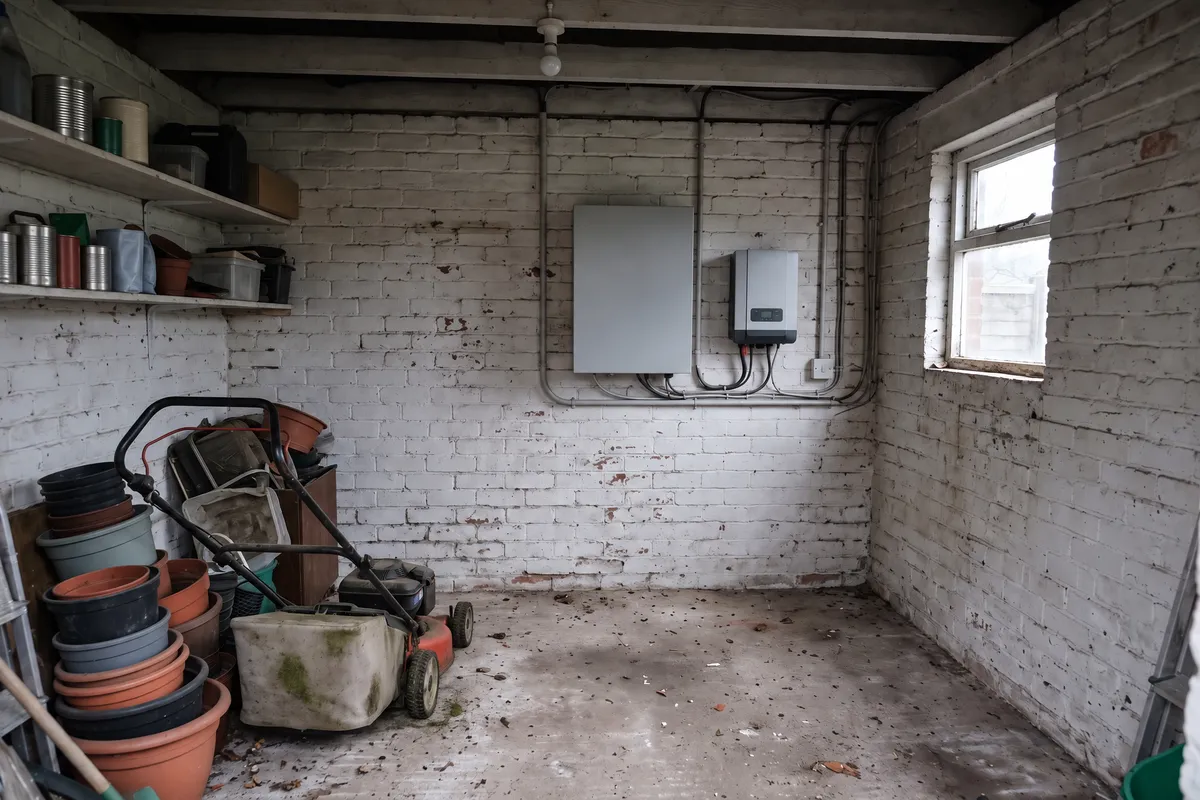
So the headline and the terms are not identical: labour is excluded from the later cell cover, and the cycles limit and the "one system" condition apply. Ask the installer who handles a claim and who stands behind the warranty if either business stops trading.
Source: Sunsynk, batteries, read 24 November 2026; Sunsynk 8kW single-phase hybrid inverter datasheet v.22 (7 May 2025), a retailer copy.
How Much Does A Sunsynk Battery Cost?
We could not read a UK consumer price for a Sunsynk battery that we could stand behind today, so there is no Sunsynk-specific figure here. Retail listings change often, and several 5.32kWh models are not interchangeable. The guides below are for any brand and are each guide's own figures, not averaged.
| Source and date | Size | Figure |
|---|---|---|
| Energy Saving Trust, 6 Oct 2026 | Any size | £1,500 to £10,000 |
| MyJobQuote, 23 Sep 2026 | 3 to 5kWh, installed | £3,500 to £5,000 |
| Sunsave, 12 Nov 2026 | 5kWh | £3,000 to £4,000 |
| MyJobQuote, 23 Sep 2026 | 10 to 15kWh, installed | £7,000 to £10,500 or more |
Source: Energy Saving Trust, battery storage; MyJobQuote, solar battery storage cost; Sunsave, how much does a solar battery cost. Sunsave is an installer.
A battery installed in a home is zero-rated for VAT until 31 March 2027, according to HMRC. Our solar battery cost guide sets out what changes the price and how a battery fitted with new panels differs from one added later.
Source: HMRC VAT Notice 708/6, read 24 November 2026.
How Does Sunsynk Compare With Other Home Batteries?
The table sets a Sunsynk battery beside three others, using only each maker's own figures. It is not a ranking, and the wording is each maker's, so the columns are not like for like.
| Battery | Capacity as published | Output as published | Chemistry | Warranty as published |
|---|---|---|---|---|
| Sunsynk SUNSYNK-G5.3 | 5.32kWh, 4.79kWh usable | 50A recommended, 100A maximum; no kW figure | LFP | Years not on the datasheet; an energy limit of 16MWh applies |
| Fox ESS EP12 | 11.52kWh nominal; usable not stated (90% depth of discharge) | Not stated | LFP | 10 years (page); policy ties the second five to registration |
| Huawei LUNA2000-10-S0 (Europe datasheet) | 10kWh usable | 5kW maximum, 7kW for 10 seconds | LiFePO4 | Not on the datasheet; refers to a warranty letter |
| Duracell Energy Dura5 | 4.6kWh usable (5.12kWh module) | 100A maximum; no kW figure given | LiFePO4 | 10 years, 8,000 cycles, 35MWh throughput |
Source: Each maker's own figures, read 24 November 2026: SUNSYNK-G5.3 datasheet v.3 (8 April 2023); Fox ESS UK, EP battery range; Huawei LUNA2000-5/10/15-S0 datasheet (Europe, version 01-202411); Duracell Energy Dura5 UK datasheet V5.7. Sizes differ, so a smaller battery is not worse. Not a ranking.
Our guide to choosing a solar battery has the wider datasheet table, including Tesla and Sigenergy. The Fox ESS battery review covers the other brand on this table that comes with its own inverter family.
Sunsynk Battery Pros And Cons
What counts in its favour
- A 10-year cell warranty is stated, with a UK arm and UK address behind it.
- A wide range: 34 batteries from 3kWh upwards.
- Scalable: the G5.3 datasheet allows 32 units in parallel (170kWh).
- Datasheets list 6,000 cycle life tests, and the G5.3 sheet carries a UK certification mark.
- Sunsynk shows 4.6 on Trustpilot from 532 reviews (24 November 2026), though Trustpilot does not fact-check them.
What to weigh up
- Labour is excluded from the later cell cover, and the terms set a cycles-per-year limit.
- Both 5.32kWh datasheets we read say IP20, which is an indoor rating, while the site says IP65.
- Datasheets differ by model and date, and we found none on Sunsynk's own pages without logging in.
- Sunsynk says its batteries are designed for its own inverters, so mixing brands needs a check.
- Backup in a power cut depends on the inverter set-up, not the battery alone.
Source: Sunsynk, batteries; SUNSYNK-G5.3 datasheet v.3 (8 April 2023); SUN-BATT-5.32 wall-mounted datasheet v.3 (6 June 2024), a distributor copy; Sunsynk manufacturer's warranty terms and conditions, PDF titled 19.08.22; Trustpilot, Sunsynk, 24 November 2026.
Who Does A Sunsynk Battery Suit?
On the published figures, a Sunsynk system suits homeowners who want a low voltage battery they can add to in 5kWh steps, fitted with a Sunsynk hybrid inverter as one job. The Energy Saving Trust says fitting a battery with new panels is usually cheaper, and that a battery saves more when it runs a heat pump, so a home with a heat pump may want several units. A battery stores electricity from solar panels for the evening, which raises self sufficiency, and it can charge from the grid on a cheap tariff. If your existing setup uses another brand's inverter, ask whether a Sunsynk battery is compatible before you commit.
It suits you less if you want to keep another brand's inverter, if you need an outdoor battery and the model quoted is rated IP20, or if you want a warranty without the cycles and labour conditions. Because installers choose what they fit, a Sunsynk quote is one of several you might see. The solar battery storage guide covers what a battery does and when it suits a home.
Source: Energy Saving Trust, battery storage, 6 October 2026.
How Do I Get A Sunsynk Battery Quote?
Get at least three quotes from MCS-certified installers, as the Energy Saving Trust recommends, and ask each for an itemised quote: the battery series and model, its usable kWh, the inverter, installation, the warranty terms for that model and who handles a claim. Switchable compares and introduces: tell us about your home and local installers send you their prices, free and without obligation.
Source: Energy Saving Trust, battery storage, 6 October 2026.
The Bottom Line
On its own papers, Sunsynk offers a wide, modular lithium iron phosphate range with a 10-year cell warranty that carries conditions, and an indoor protection rating on the two 5.32kWh datasheets we read. It is one of several makes your installer might quote, not a verdict on whether to buy.
Ask for the exact model, its usable kWh, its protection rating, the warranty terms and who handles a claim. Compare at least three itemised quotes, and see how the Fox ESS alternative reads on the same points.
Compare battery quotesHow To Compare Quotes
Get at least three quotes and compare them line by line. Prices for the same job can differ a lot.
- The installer is MCS certified. You need an MCS-certified system to be paid for exported power under the Smart Export Guarantee.
- What is in the price: panels, inverter, any battery, scaffolding and waste removal.
- Warranties on the equipment and on the installation work, and who stands behind them.
How Switchable works
 Check. Tell us your postcode and a few details about your home. It takes about two minutes.
 Compare. Local installers who cover your area get in touch with quotes.
 Switch. Go ahead with the quote that suits you, or none at all. There is no obligation.
Switchable is free to use. Installers pay us for each introduction.
More On Solar Panels
- Solar panels guideCosts, savings and grants in one place
- Best Solar Battery For A UK HomeHow to choose, and a datasheet comparison
- Solar Battery CostWhat a battery costs by size, and what changes the price
- Solar InvertersTypes, lifespan and warranties explained
- Solar Battery StorageWhat a battery costs and how long it lasts
Sunsynk Battery Review: Your Questions.
Is a Sunsynk battery any good?
Switchable does not test or rate batteries. On the published papers, Sunsynk lists lithium iron phosphate batteries with a 10-year cell warranty that carries conditions, and Trustpilot showed 4.6 on 532 reviews on 24 November 2026. Compare it with other makes on usable capacity, warranty terms and the protection rating of the exact model.
How long do Sunsynk batteries last?
Sunsynk's terms give the cells a ten-year warranty or 6,000 cycles, and its G5.3 datasheet gives a cycle life of at least 6,000 to 70% of capacity. The Energy Saving Trust says a typical home battery lasts 10 to 12 years. These are warranty and test figures, not a promise of life.
How much is a Sunsynk battery?
We could not confirm a current UK consumer price for a Sunsynk battery, so we do not give one. Price guides for any brand put an installed 5kWh battery at about £3,000 to £5,000, and installers quote the whole job including the inverter. Get itemised quotes.
Is a Sunsynk battery waterproof?
It depends on the model. Both 5.32kWh datasheets we read list IP20, which is an indoor rating, while Sunsynk's batteries page says all its batteries are IP65. Ask for the datasheet of the exact model quoted.
Which is the best solar battery in the UK?
There is no single best solar battery, because the right one depends on your evening use, your inverter and whether you want power in a cut. Our guide to choosing a solar battery sets maker datasheets side by side without ranking them.
Can I use a Sunsynk battery with another brand's inverter?
Sunsynk says its batteries are designed and tested for its own hybrid inverters and that you should check with its technical team before pairing one with another brand. Your installer should confirm compatibility in writing.
What warranty comes with a Sunsynk battery?
Sunsynk's page says 10 years as standard. Its terms say cells carry ten years or 6,000 cycles, the battery management system five years, and after five years a faulty cell is replaced free excluding labour.
Is Sunsynk the same as Fox ESS?
No. They are separate makers with their own batteries and inverters. Our Fox ESS battery review covers the other brand.
Get Your Free Quotes Today.
Compare quotes from installers in your area. It takes about two minutes and there is no obligation.