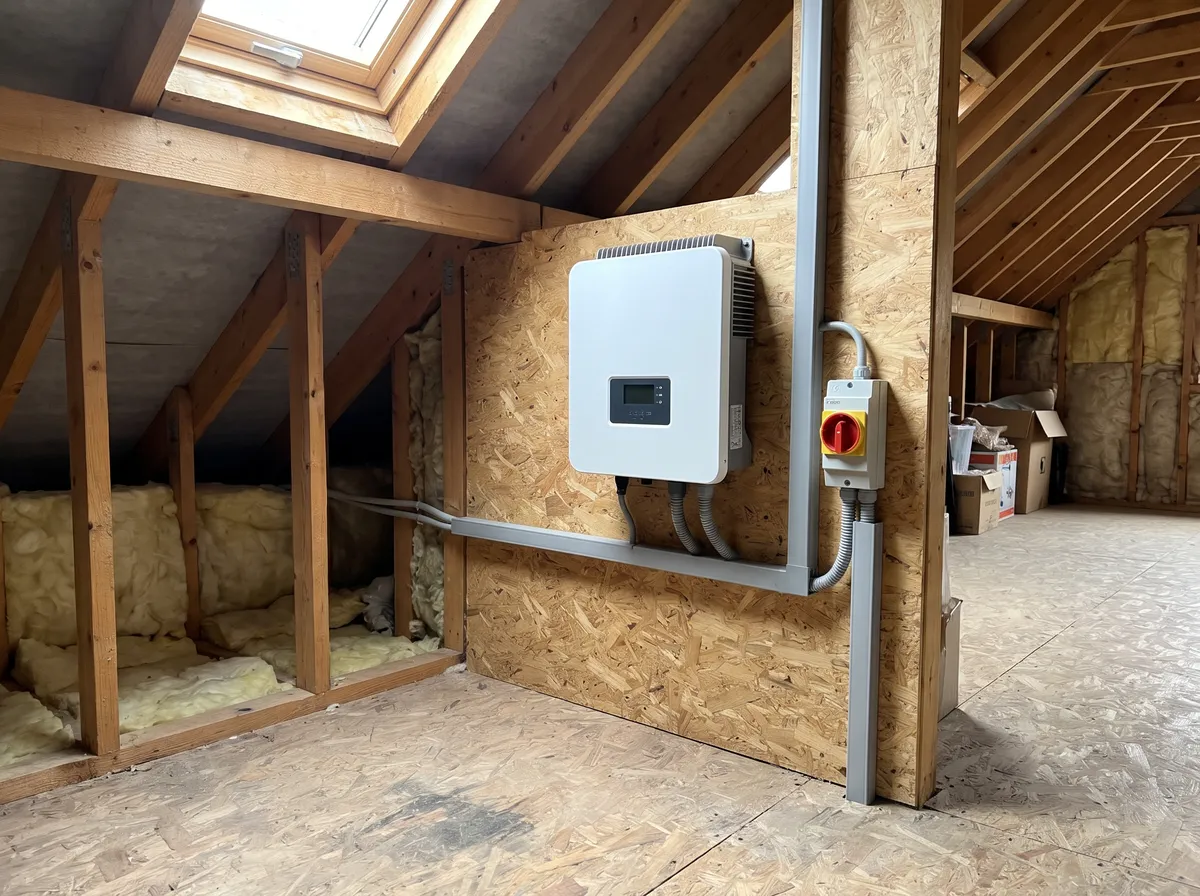
Solar Inverters.
The inverter turns the electricity your panels make into the kind your home uses. It is the part most likely to be replaced before the panels are.
Takes about two minutes. Installers pay us, so it is free for you.
- Typical time to replace
- 12 yrsaround, says the Energy Saving Trust
- Minimum inverter warranty
- 5 yrs
- Longest warranty extension
- 15 yrswhere available
- Solar panel lifespan
- 25+ yrs
Source: Energy Saving Trust, solar panels, 16 November 2026.
What Does A Solar Inverter Do?
Solar panels produce direct current (DC). Your home, and the grid, run on alternating current (AC). The inverter converts one into the other, so what your roof makes can power your appliances or be exported.
It also sits at the centre of the system. Most inverters show how much your panels are producing, and the type you choose affects how the system copes with shade and whether you can add a battery.
What Types Of Solar Inverter Are There?
String inverters
One unit, usually on a wall or in the loft, handles a whole string of panels. This is the simplest set-up. Shade on one panel can reduce the output of the string it is on.
Microinverters
A small inverter sits behind each panel. Panels work independently, which can help on roofs with shade or several faces.
Power optimisers
A small device on each panel tunes its output, and one central inverter does the conversion. It is a middle route between the two above.
Hybrid inverters
These handle both panels and a battery in one unit. If you plan to add storage, ask whether the inverter supports it. See our solar battery guide.
How Long Does A Solar Inverter Last?
The Energy Saving Trust says panels should last 25 years or more, but you will need to replace the inverter after around 12 years. That means budgeting for at least one inverter replacement in the life of your system.
When you compare quotes, ask the installer what a replacement is likely to involve, and whether the inverter type you are being quoted for is easy to swap.
Source: Energy Saving Trust, solar panels, 16 November 2026.
What Warranty Should An Inverter Have?
The Energy Saving Trust says most inverters carry a warranty of five years as a minimum, and it can often be extended by up to 15 years. Read what the warranty covers, whether it includes labour, and who you contact if it fails.
Panels, inverter and installation workmanship usually carry separate warranties. Ask for all three in writing.
Source: Energy Saving Trust, solar panels, 16 November 2026.
How Much Does An Inverter Cost?
The Energy Saving Trust does not publish a standalone inverter price, so we have not quoted one. The inverter is normally included in the price of your system, and it varies with the type and size.
If you are replacing an inverter on an older system, ask for the replacement priced separately, with the old unit removed. If you want to add a battery at the same time, see whether a hybrid inverter is the better choice.
How Do I Know If My Inverter Needs Replacing?
Check the display or app regularly. A fault message, a unit that has stopped, or output that has dropped without an obvious cause such as new shade are all reasons to call your installer.
Do not open an inverter yourself. It is connected to the mains and to the panels, and a qualified installer should deal with it.
Does My Inverter Affect Export Payments?
The Smart Export Guarantee pays you for electricity you export. You apply to a supplier, and you need an MCS-certified installation and a meter that can record half-hourly export readings, usually a smart meter. It applies in England, Scotland and Wales. See our smart meters and solar panels guide.
Source: GOV.UK, Smart Export Guarantee, checked 17 November 2026.
Pros And Cons
Pros
- Converts panel output into power your home can use
- Shows how much your panels are producing
- Microinverters and optimisers help on roofs with shade
- Hybrid inverters let a battery connect to the same unit
- Warranties start at five years and can often be extended
Cons
- Wears out sooner than the panels: around 12 years
- Replacement is an extra cost over the life of the system
- A string inverter can lose output when one panel is shaded
- Choosing the wrong type can limit a later battery upgrade
- Warranty terms differ, so read them before you sign
How To Compare Quotes
Get at least three quotes and compare them line by line. Prices for the same job can differ a lot.
- The installer is MCS certified. You need an MCS-certified system to be paid for exported power under the Smart Export Guarantee.
- What is in the price: panels, inverter, any battery, scaffolding and waste removal.
- Warranties on the equipment and on the installation work, and who stands behind them.
How Switchable works
 Check. Tell us your postcode and a few details about your home. It takes about two minutes.
 Compare. Local installers who cover your area get in touch with quotes.
 Switch. Go ahead with the quote that suits you, or none at all. There is no obligation.
Switchable is free to use. Installers pay us for each introduction.
More On Solar Panels
- Solar panels guideCosts, savings and grants in one place
- Solar Battery StorageWhat a battery costs and how long it lasts
- 3kW Solar Panel SystemsHow a 3kW array compares and pays back
- Small Solar PanelsPlug-in kits and compact systems explained
- Ground-Mounted Solar PanelsPlanning limits and frame versus roof
Solar Inverters: Your Questions.
Do I need a different inverter for a battery?
Not always, but the inverter has to work with the battery. A hybrid inverter handles both, while some systems add a separate battery inverter. Tell installers upfront if you want storage now or later, so they can quote with the right equipment. Ask whether adding one later would mean replacing the inverter.
Which type of solar inverter suits my roof?
It depends on your roof. A string inverter is the simplest, microinverters and optimisers suit roofs with shade or several faces, and a hybrid suits a battery. An installer should explain why they have chosen one type, so ask for that reasoning in the quote.
How long does a solar inverter last?
The Energy Saving Trust says to expect to replace it after around 12 years, well before the panels, which should last 25 years or more. Check the warranty length, which can be longer than five years, and keep your installer paperwork for when the time comes.
Can I replace my inverter myself?
No. An inverter connects to the mains and to the panels, so it should be replaced by a qualified, MCS-certified installer. A certified installation is also what you need for Smart Export Guarantee payments, so DIY work can put your export income at risk.
Will my panels keep working if the inverter fails?
The panels will still make electricity, but without a working inverter it cannot be used in your home or exported. That is why prompt repair matters. Contact your installer, check the warranty, and ask them how quickly they can respond.
Get Your Free Quotes Today.
Compare quotes from installers in your area. It takes about two minutes and there is no obligation.