Off-Grid Solar Systems.
An off-grid system makes and stores all of a property's electricity without a grid connection. The battery, not the panels, does most of the hard work and takes most of the cost.
Takes about two minutes. Installers pay us, so it is free for you.
- Typical battery lifespan
- 10-12 yrs
- Solar panel lifespan
- 25+ yrs
- Battery size, electric heat
- 3xagainst a heat pump, and three times the cost
Source: Energy Saving Trust, battery storage, 6 October 2026; Energy Saving Trust, solar panels, 16 November 2026.
What Is An Off-Grid Solar System?
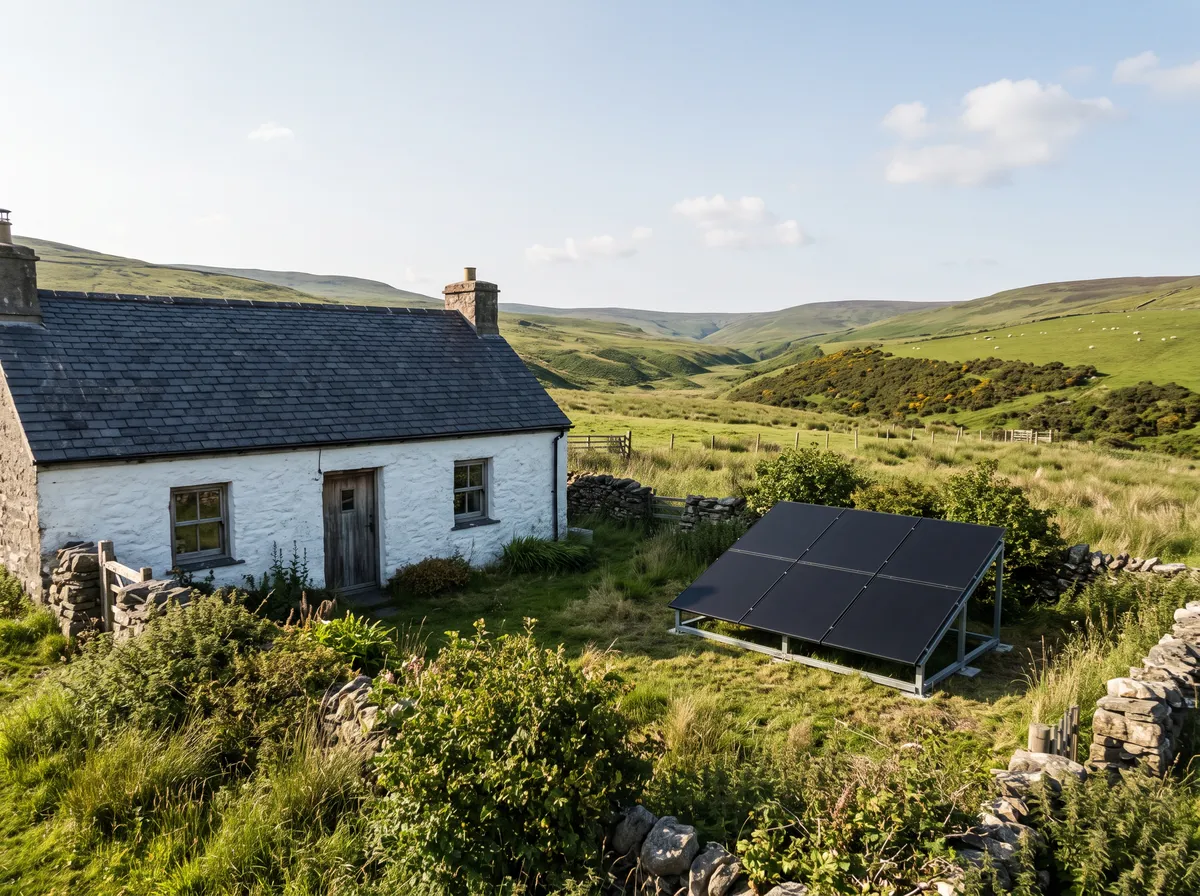
It is a system with no connection to the grid. Panels charge a battery, and an inverter turns the stored power into the supply your appliances use. Some systems add a generator for long dull spells.
Most home solar is grid-connected, which means you can still draw power when the panels are not making enough and export what you do not use. Our solar panels guide covers that route.
Who Is Off-Grid Solar For?
It suits properties a long way from the network, outbuildings, boats and caravans, and people who want to be independent of the grid. For a home that already has a connection, grid-tied solar is usually simpler and cheaper, because the grid acts as your back-up.
What Do I Need Besides Panels?
A battery bank, an inverter, a way to control charging, and in many cases a back-up source such as a generator. Battery sizing is the key decision, because the batteries have to cover your use through the dullest days.
The Energy Saving Trust says a typical home battery is around 10 kWh, and that the battery needed for regular electric heating is three times as big, and three times as expensive, as one for a heat pump. Heating is the biggest factor in how large an off-grid battery bank has to be.
Source: Energy Saving Trust, battery storage, 6 October 2026.
How Much Does An Off-Grid System Cost?
We have not found a primary-source price for a complete off-grid system, so we do not quote one. The Energy Saving Trust says battery cost ranges from £1,500 to £10,000 depending on type and size, and around £4,600 for a 5kWh system, but an off-grid home often needs more storage than a grid-connected one.
Ask installers to price each part, and say what their estimate of your use is based on.
Source: Energy Saving Trust, battery storage, 6 October 2026.
How Long Does An Off-Grid System Last?
Panels should last 25 years or more, says the Energy Saving Trust, but its figure for a battery is about 10 to 12 years and for an inverter around 12. In an off-grid system you are relying on them every day, so plan for replacement and ask for warranty details.
Source: Energy Saving Trust, solar panels, 16 November 2026; Energy Saving Trust, battery storage, 6 October 2026.
Do I Need Planning Permission?
Roof panels on a house are often permitted development, and a small ground-mounted array can be, but the limits are tight. See our ground-mounted panels guide and planning permission guide. Check with your council, especially in a conservation area or on a listed building.
Are There Grants Or VAT Relief?
The Energy Saving Trust says there are no dedicated solar panel grants from the UK Government. HMRC zero-rates installing solar panels and batteries in homes until 31 March 2027. Ask the installer whether that applies to your property. Because an off-grid system does not export, Smart Export Guarantee payments do not come into it.
Source: Energy Saving Trust, solar panels, 16 November 2026; HMRC VAT Notice 708/6, checked 17 November 2026.
Pros And Cons
Pros
- Power where there is no grid connection
- No dependence on a supplier for the electricity you make
- Panels should last 25 years or more
- Can be built up in stages
- No standing connection to pay for
Cons
- Large battery storage is the main cost
- Batteries last about 10 to 12 years
- Electric heating needs a battery three times the size of a heat pump's
- No grid back-up, so a long dull spell can mean no power
- No export payments, because you do not export
How To Compare Quotes
Get at least three quotes and compare them line by line. Prices for the same job can differ a lot.
- The installer is MCS certified. You need an MCS-certified system to be paid for exported power under the Smart Export Guarantee.
- What is in the price: panels, inverter, any battery, scaffolding and waste removal.
- Warranties on the equipment and on the installation work, and who stands behind them.
How Switchable works
 Check. Tell us your postcode and a few details about your home. It takes about two minutes.
 Compare. Local installers who cover your area get in touch with quotes.
 Switch. Go ahead with the quote that suits you, or none at all. There is no obligation.
Switchable is free to use. Installers pay us for each introduction.
More On Solar Panels
- Solar panels guideCosts, savings and grants in one place
- Solar Battery StorageWhat a battery costs and how long it lasts
- Ground-Mounted Solar PanelsPlanning limits and frame versus roof
- Small Solar PanelsPlug-in kits and compact systems explained
- 3kW Solar Panel SystemsHow a 3kW array compares and pays back
Off-Grid Solar Systems: Your Questions.
Can I go off-grid if I already have a connection?
You can, but most homes are better with a grid-connected system and battery, because the grid is your back-up. Off-grid only makes sense in particular cases, so compare quotes for both. Ask your network operator what disconnecting would involve. Ask your network operator what disconnecting would involve before you decide.
How big a battery does an off-grid home need?
It depends on your use and, above all, on heating. The Energy Saving Trust says a typical home system is around 10 kWh, and the battery needed for regular electric heating is three times as big as for a heat pump. An installer should size it from your actual use.
Do I need a generator as well?
Often, as a back-up for long dull spells, because there is no grid to fall back on. It depends on how much storage you fit and how much risk you will accept. Ask installers to explain what happens in a run of dark days.
How long do off-grid components last?
Panels should last 25 years or more, the Energy Saving Trust says, while batteries last about 10 to 12 years and the inverter around 12. Budget for replacements, and check warranty terms. Ask installers for warranty terms on each part, so you know what is covered if one fails.
Is off-grid solar cheaper than a grid connection?
It can be where the network is far away, but we have not found official figures to compare, so we do not claim it. Ask your network operator for a connection quote, and compare that with off-grid quotes. Ask your network operator for a connection quote and compare it with off-grid prices, because the right answer depends on how far the network is from the property.
Get Your Free Quotes Today.
Compare quotes from installers in your area. It takes about two minutes and there is no obligation.