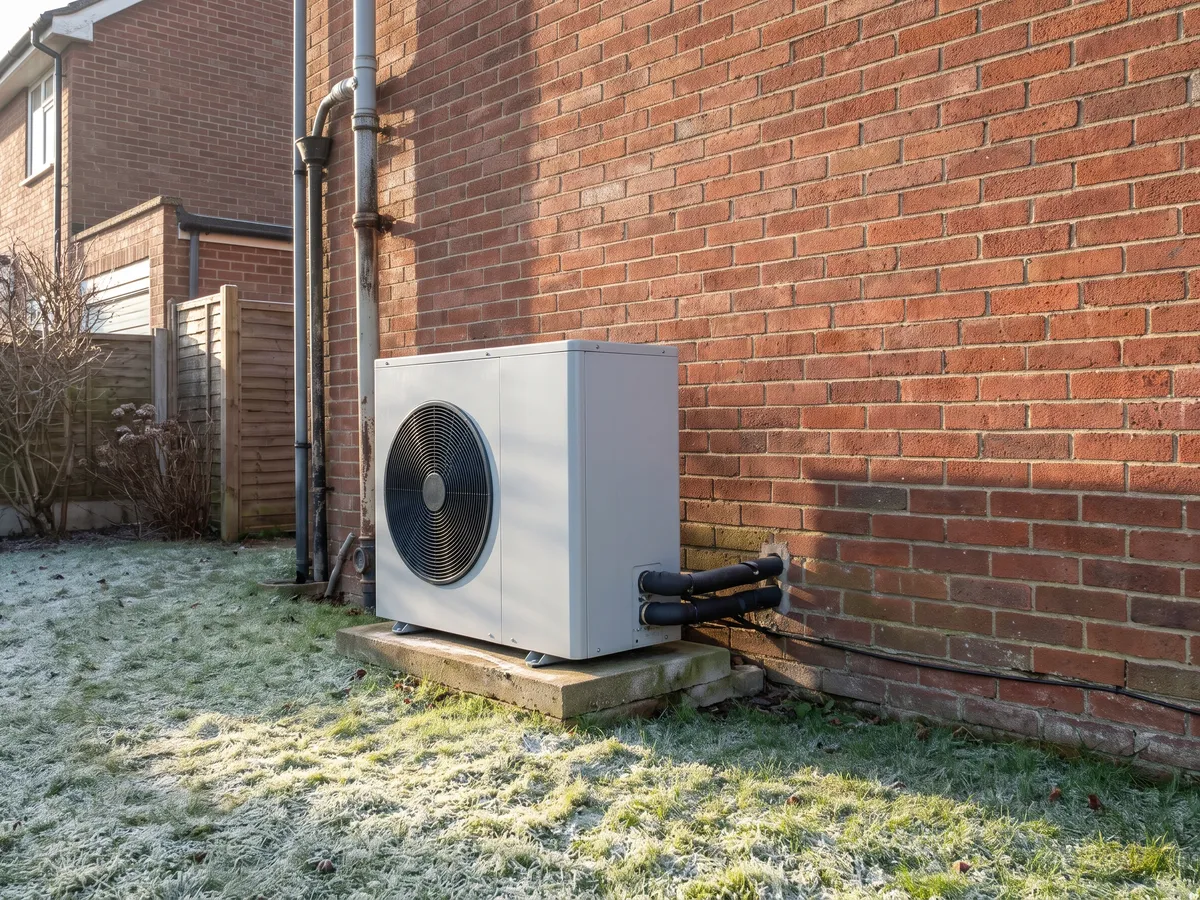
Best Air Source Heat Pump.
There is no single best air source heat pump: the right one is sized to your home's heat loss and fitted well. On the makers' own figures, Vaillant states the lowest sound power (48 to 51 dB(A)) and Grant the highest SCOP at 55C (up to 3.74). Here is how to choose, the models compared, and the £7,500 grant.
Takes about two minutes. Installers pay us, so it is free for you.
- Boiler Upgrade Scheme
- £7,500off an air source heat pump, England and Wales
- Lowest stated sound power
- 48 dB(A)Vaillant aroTHERM plus, smallest sizes
- Top flow temperature
- 75Cstated for four of the six ranges below
- Longest warranty headline
- 7 yearsconditions apply, see the table
Source: Mitsubishi Electric UK, Ecodan R290 product information sheets; Vaillant, aroTHERM plus tech sheet; Grant UK, Aerona 290; GOV.UK, Boiler Upgrade Scheme, all read 24 November 2026.
In short
- No one model is best for every home. The heat pump has to be sized to your home's heat loss, so get a survey before you pick a brand.
- On the makers' own figures, Vaillant states the lowest sound power (48 to 51 dB(A)) and Grant the highest SCOP at 55C (up to 3.74). See the table.
- Check SCOP, sound power, refrigerant, flow temperature, size range and warranty conditions before you compare prices.
- The Boiler Upgrade Scheme takes £7,500 off in England and Wales, and you need an MCS-certified installer to get it.
- A typical installed price is around £12,000 before the grant, says the Energy Saving Trust, so ask for at least three quotes.
On this page (10)
How to Choose an Air Source Heat Pump
Most buyers start with the brand. It is better to start with the home. A heat pump that is too small struggles on cold days, and one that is too big costs more and cycles on and off. An installer works out the size from a heat loss survey, then chooses a model from the range that fits.
Once you have a size, these are the checks that separate one heat pump from another. Each one is on the maker's datasheet, so ask the installer to show it to you.
| Check | What it tells you | What to look for |
|---|---|---|
| SCOP | Heat delivered for each unit of electricity over a year, at a stated flow temperature | Compare the figure at the flow temperature your radiators will need, usually the 55C one if you keep existing radiators |
| Sound power | How much noise the unit makes at source, in dB(A) | Use the sound power figure, not the quieter sound pressure at a distance, and not the low-noise mode |
| Refrigerant | The gas inside the circuit | R290 (propane, global warming potential 3) or R32. Both are sold in the UK |
| Output range | The sizes the maker offers, in kW | A range that includes the size your survey calls for, with room either side |
| Flow temperature | The hottest water the unit can send to radiators and the cylinder | Up to 75C on the models we read, which helps if your radiators stay as they are |
| Warranty | Cover length and what it depends on | Several makers tie their longest cover to the installer's status and a yearly service |
| MCS listing | Whether the product and installer are certified | Needed for the Boiler Upgrade Scheme grant |
Source: General checks; figures for each are in the table below. GOV.UK, Boiler Upgrade Scheme for the MCS requirement.
Switchable is independent of every brand named on this page and is not paid by any of them for it. We compare and introduce; we do not fit heat pumps. We take figures from each maker's own documents, and we say when we could not read one. How we review products.
Air Source Heat Pump Models Compared
This table sets six widely sold ranges side by side, using each maker's own UK documents. A gap means we could not read that figure from the maker, so we left it out rather than take it from a shop listing. Sound power is the figure at the unit; sound pressure at a distance is lower and not comparable.
| Range | Sizes (kW) | SCOP at 35C / 55C | Sound power dB(A) | Max flow | Warranty |
|---|---|---|---|---|---|
| Mitsubishi Electric Ecodan R290 (R290) | 5.2 to 11.5 | 4.35 to 4.71 / 3.38 to 3.51 | 54 to 58 | 75C | 3, 5 or 7 years by installer status; yearly service required |
| Vaillant aroTHERM plus (R290) | 3.5, 5, 7, 10, 12 | 4.36 to 5.03 / 3.06 to 3.63 | 48 to 51 | 75C | Up to 7 years (brochure; conditions not set out there) |
| Grant Aerona 290 (R290) | 4, 6.5, 9, 12, 15.5 | 4.56 to 5.08 / 3.33 to 3.74 | Not read | Not read | 7 years if fitted by a Grant G1 installer; terms apply |
| Daikin Altherma 4 H (R290) | Not read | Class A+++ at 35C; no SCOP on the UK page | Not comparable (28 dBA sound pressure at best) | Up to 75C | 2 years, 5 once the installer registers it, 7 with a Daikin Sustainable Home Expert |
| Samsung EHS Mono R290 (R290) | 5, 8, 12, 16 | Not read | Not read | Up to 75C | Not read |
| Viessmann Vitocal 150-A (R290) | 4.0 to 9.1 | Seasonal efficiency 175 to 190%, not given as SCOP | Not comparable (brochure gives 51 to 56 without saying which type) | 70C | 2 years; up to 7 with a paid extension that needs a service plan |
Source: Read 24 November 2026. Mitsubishi: Mitsubishi Electric UK, Ecodan R290 product information sheets, editions effective January and April 2025; output is at -7C air, 35C flow. Vaillant: Vaillant, aroTHERM plus tech sheet (December 2024), installer's quick guide (March 2024) and heat pump brochure (January 2026). Grant: Grant UK, Aerona 290. Daikin: Daikin UK, Altherma 4 and Daikin UK, warranty. Samsung: Samsung UK newsroom, EHS Mono R290, a 2023 press release, not a datasheet. Viessmann: Viessmann UK, Vitocal 150-A; output at 7C air, 35C flow. Makers may test under different conditions, so use these to shortlist and ask for the MCS performance estimate for your home.
Other makers sell heat pumps in the UK too. We only put a range in the table where the maker's own UK pages gave figures we could read. If you are quoted a model that is not here, ask the installer for the seven checks above and the datasheet.
Which Heat Pump Suits Which Home
Picks by use, using only the figures in the table above. They are shortlists, not verdicts: the survey decides.
For a quiet spot near a neighbour
Vaillant aroTHERM plus states 48 to 51 dB(A) sound power, against 54 to 58 for the Ecodan R290 range. Placement and distance still matter more than the model.
Sound power from the makers' documents, read 24 November 2026.
For keeping existing radiators
Grant Aerona 290 states up to 3.74 SCOP at 55C, against up to 3.63 for Vaillant and 3.51 for Mitsubishi's Ecodan R290. A higher 55C figure suggests less efficiency lost at a hotter flow.
Compare like for like: ask for the MCS estimate for your radiators.
For a small home or a very large one
Vaillant starts at 3.5 kW and Grant at 4 kW for small homes. Grant goes to 15.5 kW and Samsung to 16 kW for large ones. Smaller ranges leave less choice when you need to size up.
Source: figures in the table above, read 24 November 2026.
Noise and Planning Rules
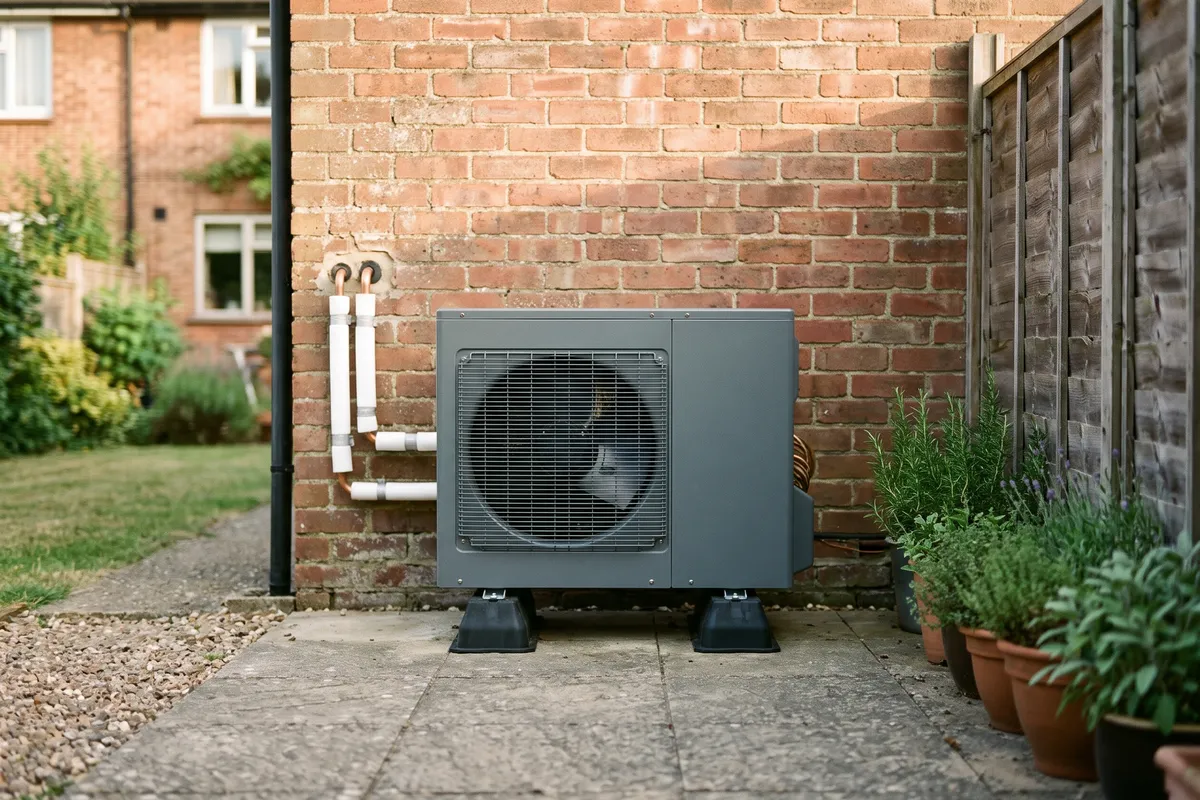
Heat pumps have an outdoor fan, so noise is worth a few minutes. Datasheets give a sound power in dB(A). The Mitsubishi Ecodan R290 sheets, for example, give 54 to 58 dB(A) sound power and 40 dBA sound pressure at 1 metre. The first number is what compares across makers.
In England, most air source heat pumps on a home can go up without a planning application under permitted development, and the rules changed on 29 May 2025. The old 1 metre boundary rule has gone, the volume limit is 1.5 cubic metres for a house, and a detached house can have two units. A listed building is excluded, and there are conditions where the unit faces a road or sits in a conservation area. Noise is now checked with an MCS 020(a) calculation, which MCS made mandatory for permitted development installations from 20 September 2025.
Outside England the rules can differ, so ask your council. Your installer runs the noise calculation as part of the design.
Source: legislation.gov.uk, Class G permitted development for air source heat pumps, text including the 2025 amendment; MCS, updated MCS 020, 20 March 2025; both read 24 November 2026. Planning rules change, so check with your council.
Refrigerant, Cylinder and Radiators
Refrigerant is the gas that carries the heat. Mitsubishi and Vaillant both list R290, a propane refrigerant with a global warming potential of 3, on their current units. R32 units are still sold, for example in Mitsubishi's Ecodan R32 range and Grant's Aerona3. We would not choose on refrigerant alone.
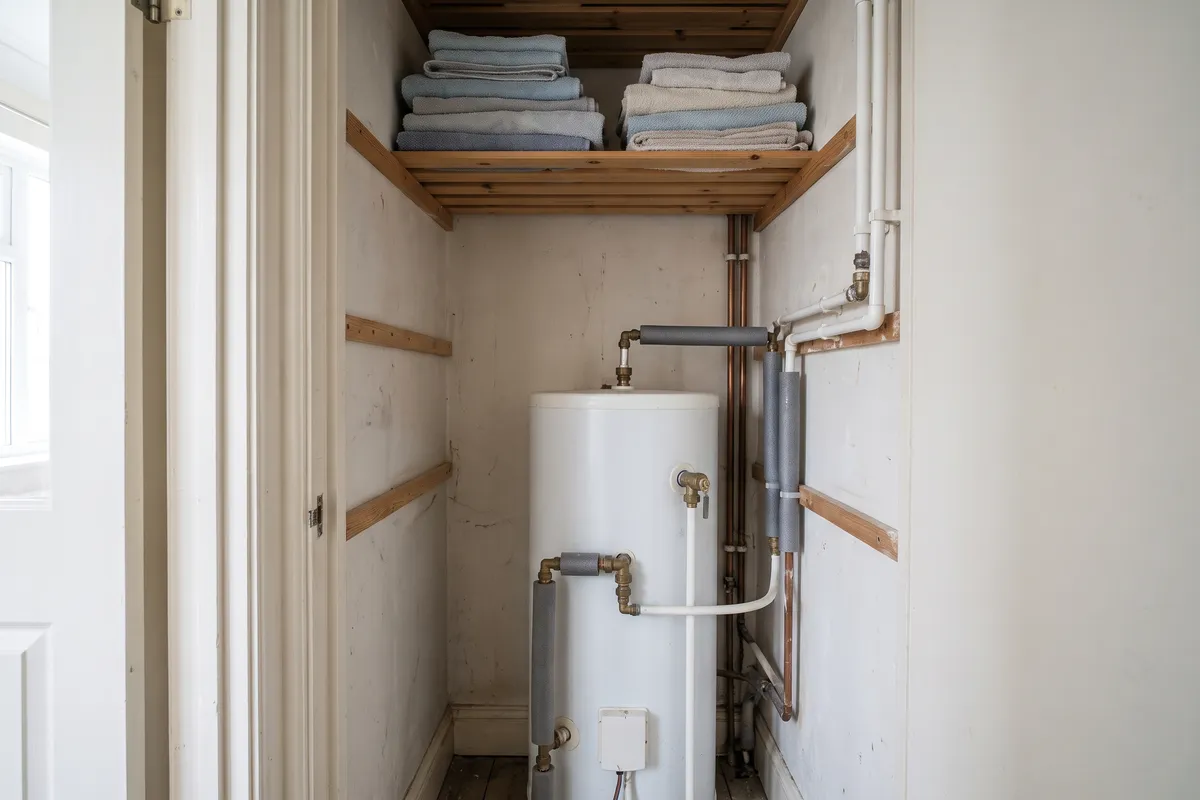
Inside, most homes switching from a combi boiler need a hot water cylinder and somewhere to put it, and some radiators may need to be bigger because a heat pump runs the water cooler than a boiler. Both come from the Energy Saving Trust, and both change the price, so ask each installer to itemise them.
Source: Energy Saving Trust, air source heat pumps, updated 20 October 2026; Mitsubishi and Vaillant sheets as above.
Warranty and MCS Certification
Look past the headline number. Of the ranges we read, none gives its longest cover to every buyer. Mitsubishi's runs 3, 5 or 7 years by the installer's status and needs a yearly service. Daikin's is 2 years, 5 once the installer registers the unit, and 7 with a Daikin Sustainable Home Expert. Grant's 7 years needs a Grant G1 installer, and Viessmann's 7 years is a paid extension.
MCS is the certification scheme for heat pumps and installers. For the Boiler Upgrade Scheme your quotes must come from MCS-certified installers, so make that your first question to any installer.
Source: maker warranty documents as listed under the table, read 24 November 2026; GOV.UK, Boiler Upgrade Scheme.
Boiler Upgrade Scheme: What You Can Get
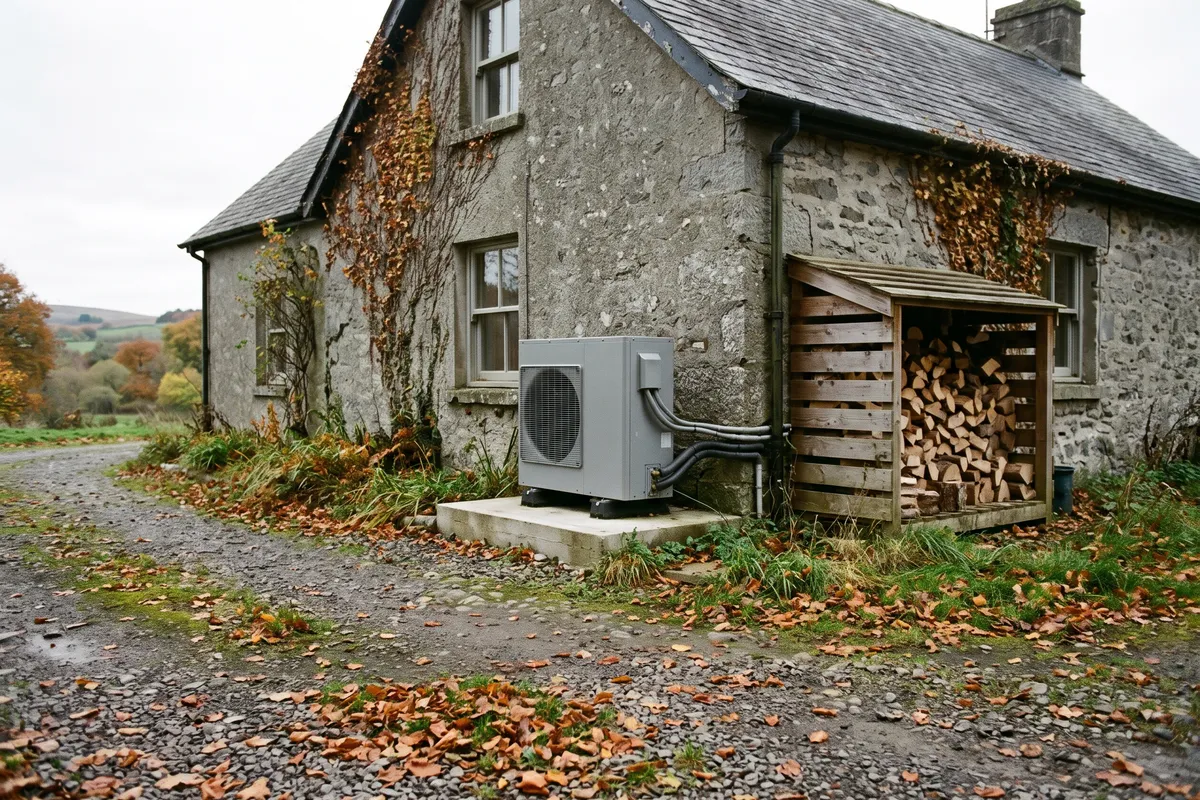
The Boiler Upgrade Scheme gives £7,500 off an air source heat pump in England and Wales, one grant per property, and your installer applies for you. If your home is heated by oil or LPG with no mains gas, the page adds £1,500 until March 2027, which Ofgem's page shows as a £9,000 grant. Hybrid systems do not qualify. The Energy Saving Trust puts a typical installed price at about £12,000, so the grant brings a typical job to around £4,500.
Source: GOV.UK, Boiler Upgrade Scheme and Ofgem, Boiler Upgrade Scheme, read 24 November 2026; Energy Saving Trust, air source heat pumps, updated 20 October 2026.
The Bottom Line
The best air source heat pump is the one sized to your home by a survey and fitted by a certified installer. On the makers' own figures, Vaillant states the lowest sound power, Grant the highest SCOP at 55C, and Mitsubishi, Vaillant, Daikin and Samsung all state flow temperatures up to 75C.
Warranty length depends on who fits it, so compare the conditions, not the headline. The Boiler Upgrade Scheme takes £7,500 off in England and Wales, so get at least three quotes for the same size and compare them line by line.
Compare heat pump quotesHow To Compare Quotes
Get at least three quotes and compare them line by line. Prices for the same job can differ a lot.
- The installer is MCS certified. You need an MCS-certified installer to get a Boiler Upgrade Scheme grant, and the installer applies for it.
- A heat loss survey first. The heat pump should be sized to your home, room by room, before you get a price.
- What is in the price: the heat pump, hot water cylinder, any radiator upgrades, removing the old system, and the grant taken off.
How Switchable works
 Check. Tell us your postcode and a few details about your home. It takes about two minutes.
 Compare. Local installers who cover your area get in touch with quotes.
 Switch. Go ahead with the quote that suits you, or none at all. There is no obligation.
Switchable is free to use. Installers pay us for each introduction.
More On Heat Pumps
- Heat pumps guideCosts, savings and grants in one place
- Air Source Heat Pump CostWhat an air source heat pump costs, and the grant
- Heat Pump vs BoilerCosts, running costs, space and noise compared side by side
- Mitsubishi Ecodan ReviewEcodan range, specs, warranty and how it compares
- Ground Source Heat Pump CostWhat a ground source heat pump costs
Best Air Source Heat Pump: Your Questions.
What is the best air source heat pump for a UK home?
It depends on your home's heat loss, so a survey comes first. On the makers' own figures, Vaillant aroTHERM plus states the lowest sound power (48 to 51 dB(A)), and Grant Aerona 290 the highest SCOP at 55C (up to 3.74). Compare quotes for the same size and read the warranty conditions.
Is a Mitsubishi or Daikin heat pump better?
The UK pages we read do not settle it. Mitsubishi publishes SCOP, sound power and sizes for its Ecodan R290 range, while Daikin's Altherma 4 UK pages give a flow temperature of up to 75C and an A+++ class at 35C but no SCOP. Our Ecodan review sets out the Mitsubishi figures.
How loud is an air source heat pump?
The datasheets we read give 48 to 58 dB(A) sound power at the unit, and Mitsubishi's Ecodan R290 sheets give 40 dBA sound pressure at 1 metre. How loud it sounds to you depends on where it sits, so ask the installer to place it away from bedroom windows and neighbours.
Do I need planning permission for a heat pump?
Usually not in England, where most air source heat pumps on homes count as permitted development, with changes from 29 May 2025. Listed buildings are excluded and other conditions apply, and the rules can differ outside England, so check with your council.
What does SCOP mean on a heat pump?
SCOP is the heat a heat pump delivers over a year for each unit of electricity it uses, at a stated flow temperature. A SCOP of 4 means 4 units of heat for every 1 unit of electricity. A higher figure at 55C matters if you keep existing radiators.
Is R290 better than R32?
Both are sold in the UK. R290 is propane with a global warming potential of 3 on the Mitsubishi and Vaillant sheets, and the R290 units we read list flow temperatures up to 75C. We would choose on size, noise, SCOP and warranty first.
How much is the Boiler Upgrade Scheme grant?
£7,500 off an air source heat pump in England and Wales, with an extra £1,500 until March 2027 for homes heated by oil or LPG with no mains gas, according to GOV.UK. Your installer applies for it, and hybrid systems do not qualify.
Do I need an MCS-certified installer?
Yes, if you want the Boiler Upgrade Scheme grant: quotes must come from MCS-certified installers. Switchable introduces you to local installers who then quote; we do not fit heat pumps ourselves.
Get Your Free Quotes Today.
Compare quotes from installers in your area. It takes about two minutes and there is no obligation.