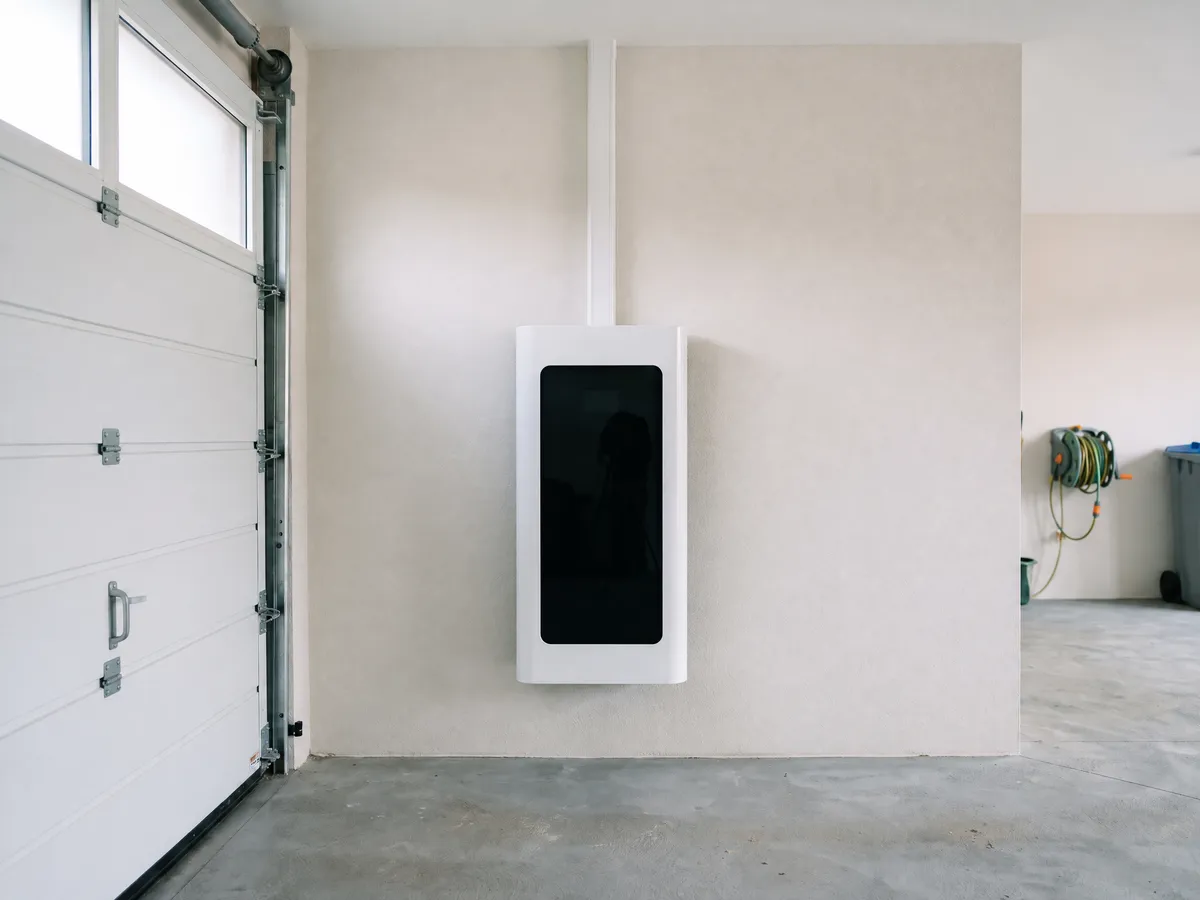
Tesla Powerwall 3 Review.
The Tesla Powerwall 3 is a 13.5kWh home battery storage unit with a built-in solar inverter. Tesla's UK datasheet gives it up to 11.04kW of power output and a 10-year warranty, and it is sold through Tesla certified installers. Two UK price guides put a full installation at about £8,000 to £10,500 in 2026. Here are the specifications, what 13.5kWh means for a typical home, how it compares and who it suits.
Takes about two minutes. Installers pay us, so it is free for you.
- Nominal battery energy
- 13.5kWhTesla UK datasheet, 2024
- Highest AC output setting
- 11.04kWsettings run from 3.68kW up
- Warranty, with 80% of capacity kept
- 10 yearsUK terms, effective 3 December 2025
- Typical installed price, one guide
- £9,500 to £10,500EnergyPlus, September 2026
Source: Powerwall 3 datasheet, UK edition, 2024, a reseller copy; Tesla Powerwall warranty, European warranty region, effective 3 December 2025 (read from an Internet Archive copy taken 13 September 2026); EnergyPlus, Powerwall 3 installation cost, updated 6 September 2026.
In short
- The Powerwall 3 stores 13.5kWh with a solar inverter built in, and Tesla's UK datasheet lists output settings from 3.68kW up to 11.04kW.
- On Ofgem's 2026 typical use of 2,500kWh a year, one unit holds about two days of an average home's electricity. See the working.
- Tesla's UK warranty is 10 years, keeping 80% of capacity, but it needs an internet connection, registration and a Tesla certified installer.
- Two 2026 price guides put an installed unit at £7,999 and £9,500 to £10,500. Tesla publishes no UK price.
- Backup in a power cut needs a Backup Gateway 2, which one guide puts at about £1,170 installed.
On this page (13)
What Is The Tesla Powerwall 3?
The Powerwall 3 is Tesla's current home battery. It stores 13.5kWh and, unlike most batteries, has the solar inverter built into the same unit, so one box handles the panels, the battery and the connection to your home. Tesla's UK page, which we read from a copy archived on 18 June 2026 because Tesla's site blocks automated reading, describes it as a compact home battery that stores energy from solar or from the grid, and dates the Powerwall 3 to September 2023.
Many people search for the "Tesla Powerwall" without the 3. Tesla's current UK warranty document still covers the older Powerwall 2 AC alongside the Powerwall 3 and its expansion unit, so you may meet both in the second-hand market or on an existing install. A new quote today will be for the Powerwall 3, and this page is about that model.
Switchable is independent of Tesla and is not paid by it for this review. We do not test batteries or score them: we set out what the maker publishes, what the price guides say and what to ask. Our method is on the how we review page. We compare and introduce, and your installer chooses and fits what you get.
Source: Tesla UK, Powerwall page, archived copy captured 18 June 2026.
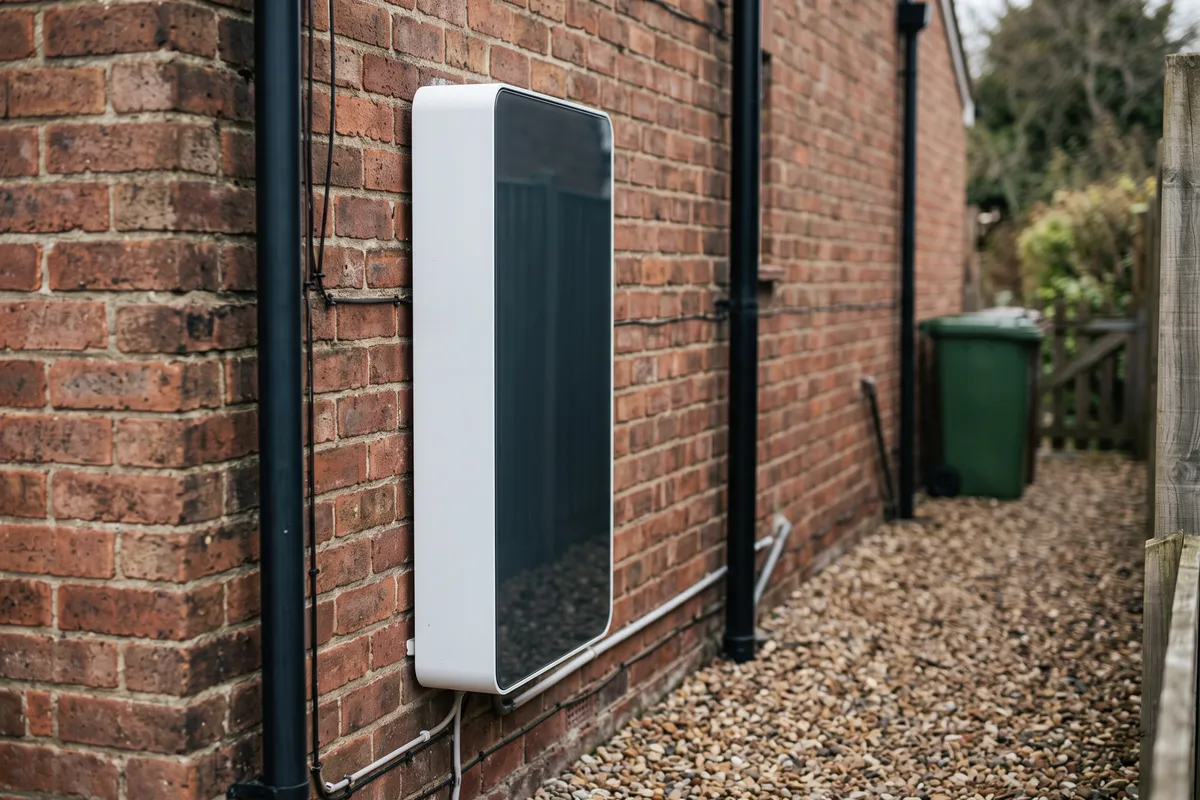
Tesla Powerwall 3 Specs: What The UK Datasheet Says
Tesla's UK datasheet is dated 2024. Tesla's own file would not load for automated reading, so the figures below are from a copy held by a UK distributor. Values are at 25 degrees C and the start of the battery's life.
| Item | What the datasheet says |
|---|---|
| Nominal battery energy | 13.5kWh AC. A separate usable figure is not given |
| AC output at 230V | Eight settings: 3.68, 5, 6, 7, 8, 9, 10 and 11.04kW, each with its own current and protective device rating |
| Charge power | AC up to 5kW for a single unit; DC 5kW. Up to 8kW with up to three expansions |
| Solar input | Up to 20kW of panels, three trackers, 60 to 480V working range |
| Efficiency | 97.5% solar to home or grid (weighted test); 89% solar to battery to home or grid |
| Heavy loads | Starts motors up to 185A locked rotor current |
| Backup in a power cut | Needs the Backup Gateway 2, the supported islanding device |
| Grid type and compliance | Single phase, 50Hz; G98, G99 and G100 listed |
| Size and weight | 1,105 x 609 x 193mm; 130kg; floor or wall mounted |
| Protection and noise | IP67 for battery and power electronics, IP55 wiring compartment; indoor or outdoor; under 50dB(A) typical at 1m |
| Temperature | -20 to 50 degrees C, with reduced output possible above 40 |
| Scaling | Up to four Powerwall 3 units and up to three 13.5kWh expansions, seven units in all |
| Connectivity | Wi-Fi, Ethernet and 4G; the customer is expected to provide internet |
Source: Powerwall 3 datasheet, UK edition, 2024, a reseller copy, read 26 November 2026.
Three things matter more than the headline. First, the 11.04kW figure is the top of eight settings, not a promise for every home, so ask which one is quoted. Second, 13.5kWh is the nominal energy and the datasheet does not split out how much is usable, so a like-for-like comparison with a battery that quotes usable kWh needs care. Third, the built-in solar inverter means the Powerwall 3 is a different kind of purchase from a battery that needs a separate inverter: our solar inverters guide explains why.
The built-in solar inverter is also why the unit can take panels directly: the datasheet lists a solar input of up to 20kW across three trackers, so a solar array can feed the battery and the home through the one box, and excess solar energy that the home does not use can be held as stored energy for the evening. If you already have an existing solar system with its own inverter, the picture changes, which is why the quote check below asks how it connects. The unit also carries more than panel power: a single Powerwall can be charged from the grid on a cheap overnight tariff, and the datasheet lists a working range of minus 20 to 50 degrees C, with reduced output possible above 40, so it is specified for cold temperatures in a garage or on an outside wall.
Powerwall 3 Capacity: What 13.5kWh Means For A Typical UK Home
Ofgem measures a typical home's electricity use for the price cap. From 1 July 2026 its medium figure is 2,500kWh a year, down from 2,700kWh. Spread evenly, that is about 6.8kWh a day (2,500 divided by 365). One Powerwall 3 therefore holds roughly two days of that average home's electricity, so its storage capacity is large for the typical house. Homes that use more, for example with an electric car or a heat pump, get less cover. The table is our own arithmetic, not Tesla's or Ofgem's, and real days are uneven.
Source: Ofgem, typical domestic consumption values from 1 July 2026.
| Yearly electricity use | Average per day | One full Powerwall 3 covers |
|---|---|---|
| 2,500kWh (Ofgem medium, 2026) | 6.8kWh | About 2 days |
| 4,000kWh (our example) | 11.0kWh | About 1.2 days |
| 5,500kWh (our example, heat pump or electric car) | 15.1kWh | About 0.9 of a day |
Source: Ofgem's 2,500kWh medium value; the other two rows are illustrations, not published averages. Daily figures are the yearly figure divided by 365.

Two more numbers help. Charging at the datasheet's 5kW AC limit, a flat battery refills in about 2.7 hours (13.5 divided by 5, before losses), which fits inside a typical overnight cheap-rate window. And at the top 11.04kW setting a full battery would empty in about 1.2 hours if everything ran flat out, which almost no home does. For a typical home the battery is rarely the limit; for a home with an electric car and a heat pump, one Powerwall 3 is closer to a day's use, and the expansion option exists for that reason.
A bigger battery only pays if you use what it stores. A 13.5kWh unit on a 2,500kWh home will often sit part full, so ask the installer to size the battery from your own meter data, not the headline figure. Our solar battery storage guide covers sizing.
How Is The Powerwall 3 Bought In The UK?
Tesla does not sell the Powerwall 3 as a box you fit yourself. Tesla's UK page says to request a quote from Tesla and be connected to a Tesla Certified Installer, and Tesla's warranty applies to a Powerwall bought from Tesla or a Tesla certified installer and installed in the European warranty region, which includes the UK. One price guide says Octopus Energy is the main authorised installer and sells it at a published price; we could not read Octopus's own page, so treat that as unconfirmed.
The warranty also excludes installation, commissioning or repair by anyone other than Tesla or a Tesla certified installer. If an installer says they can fit a Powerwall 3 but is not Tesla certified, ask in writing how the warranty would stand. The system also needs a Backup Gateway 2 if you want it to run the home in a power outage, and the installer should say whether that means whole house backup or only chosen circuits.
How Much Does A Tesla Powerwall 3 Cost In The UK?
Tesla does not publish one fixed UK price, according to one installer's guide, and the Powerwall 3 is quoted by each installer. The two guides below are the most recent we could read, and they are not averaged. They also describe different bundles.
| Source and date | What it covers | Figure |
|---|---|---|
| EnergyPlus, updated 6 September 2026 | Typical fully installed: battery, inverter, Backup Gateway, labour, 0% VAT | £9,500 to £10,500 (quotes £8,500 to £12,000) |
| EnergyPlus, September 2026 | Unit only; labour and hardware; Backup Gateway installed | £6,500 to £7,800; £1,500 to £2,500; about £1,170 |
| ExpertSure, prices verified October 2026 | Standalone unit installed via Octopus Energy, from its April 2026 pricing | £7,999 |
| ExpertSure, October 2026 | Battery plus four solar panels, installed via Octopus Energy | £12,362 |
| EnergyPlus; ExpertSure, 2026 | Second 13.5kWh expansion pack | About £4,700 installed; £3,773 with the first install, £5,909 added later |
Source: EnergyPlus, Powerwall 3 installation cost (an installer) and ExpertSure, Tesla Powerwall cost (a comparison site that says it may earn a commission). Both are 2026 guides, not Tesla's own prices.
The guides differ by about £1,500 to £2,500 on a standalone install. ExpertSure's description lists the battery, labour and grid connection and does not mention a gateway; EnergyPlus includes one. That is the reason to ask each installer to itemise. On EnergyPlus's typical figure, £9,500 to £10,500 over 13.5kWh works out at roughly £700 to £780 per kWh of nominal capacity; ExpertSure's £7,999 is about £590. That is our arithmetic, and the Powerwall 3 includes an inverter that other batteries price separately.
A battery installed in a home is zero-rated for VAT until 31 March 2027, then returns to 5%, according to HMRC. Our solar battery cost guide sets out what changes the price and compares guides for batteries of other sizes.
Source: EnergyPlus, Powerwall 3 installation cost; ExpertSure, Tesla Powerwall cost.
Source: HMRC VAT Notice 708/6.
Tesla Powerwall 3 Warranty: What It Covers
Tesla's UK warranty gives the Powerwall 3 ten years, and it is tied to capacity as well as faults. These are the terms in Tesla's European warranty document, effective 3 December 2025 (revision 1.16). We read it from an Internet Archive copy taken on 13 September 2026, so check for a newer version.
| Term | What the document says |
|---|---|
| Faults | Free from defects for ten years from the initial installation date |
| Capacity | 13.5kWh at installation; at least 80% of 13.5kWh at ten years in the UK, for solar self-consumption, time-based control and backup, with unlimited cycles |
| Other uses | 80% at ten years or 37.8MWh of aggregate throughput at the battery's AC output |
| Internet and registration | Must stay connected and registered for the full ten years. Tesla may not be able to honour all ten if not, but says it will honour at least four |
| Who fits it | Bought from Tesla or a Tesla certified installer; installation or repair by anyone else can void it |
| Remedy | Tesla chooses repair, replacement or a refund at the market price of an equivalent product |
| Who can claim | The end user, or a later owner with proof of ownership |
Source: Tesla Powerwall warranty, European warranty region, effective 3 December 2025. Read from an archived copy dated 13 September 2026.
The throughput limit is easier to judge with numbers. 37.8MWh is 37,800kWh, or 2,800 full cycles of 13.5kWh, which is about 280 a year over ten years. A battery used for the listed purposes has no cycle limit, so the cap matters only if your use falls outside them. The practical conditions are the internet connection and the certified installer: a Powerwall in a garage with no signal needs a wired or other connection plan before you sign.
How Does The Powerwall 3 Compare With Other Home Batteries?
The table sets the Powerwall 3 beside three batteries from other makers, using only each maker's own published figures. It is not a ranking, the batteries are different sizes and the makers state things differently.
| Battery | Capacity as published | Output as published | Inverter | Warranty and protection |
|---|---|---|---|---|
| Tesla Powerwall 3 | 13.5kWh nominal AC; usable not stated | 3.68 to 11.04kW settings | Built in; up to 20kW of panels | 10 years, 80% at 10 years; IP67 battery, IP55 wiring |
| Fox ESS EP12 | 11.52kWh nominal, 90% depth of discharge | Not stated on the page | Needs a compatible Fox ESS hybrid inverter | 10 years; IP65 |
| SolarEdge Home Battery 400V | 9.7kWh usable at 100% depth | 5kW continuous; 7.5kW for 10 seconds in backup | Needs a SolarEdge Home inverter | 10 years; IP55 |
| Enphase IQ Battery 5P | 5.0kWh usable per unit | 3.2kVA per unit | Six microinverters inside each battery | 15 years or 6,000 cycles; IP55 |
Source: Each maker's own figures, read 26 November 2026: Powerwall 3 datasheet, UK edition, 2024, a reseller copy; Fox ESS UK, EP battery range; SolarEdge Home Battery 400V for Europe datasheet DS-000164-EU, 9 July 2024, a distributor copy; Enphase IQ Battery 5P UK datasheet, 21 September 2023, a retailer copy. Sizes differ, so a smaller battery is not worse. Not a ranking.
The main difference is the inverter. The Powerwall 3 and Enphase 5P carry their own, while the Fox ESS and SolarEdge batteries pair with their makers' inverters, so the quote for those includes an inverter line. Read our reviews of the Enphase battery, the SolarEdge battery and the Fox ESS battery, or the wider guide to choosing a solar battery.
Tesla Powerwall 3 Pros And Cons
What counts in its favour
- 13.5kWh and a built-in inverter in one unit, which can mean fewer boxes on the wall.
- A 10-year warranty that keeps 80% of 13.5kWh at ten years in the UK, with no cycle limit for the main uses.
- Datasheet output settings up to 11.04kW and starting for motor loads up to 185A.
- IP67 for the battery and power electronics, rated for indoor or outdoor fitting.
- Modular: up to three 13.5kWh expansions behind a unit.
What to weigh up
- At 130kg and 1,105mm tall, it needs a strong wall or floor spot and careful handling to place.
- Tesla publishes no UK price, and the two guides we read differ by a few thousand pounds.
- The full ten years depends on an internet connection, registration and a Tesla certified installer.
- Backup needs a separate Backup Gateway 2, which one guide puts at about £1,170 installed.
- Usable capacity is not given separately, and the datasheet lists a single-phase grid type.
Source: Powerwall 3 datasheet, UK edition, 2024, a reseller copy; Tesla Powerwall warranty, European warranty region, effective 3 December 2025.
Who Does The Tesla Powerwall 3 Suit?
On the published figures, the Powerwall 3 suits a home that wants one large battery with the inverter included, especially where new solar panels are going on at the same time, since the built-in inverter can take the place of a separate one. It also suits a home with high use (an electric car, a heat pump) where 13.5kWh is not too big, and a home that wants backup in a power cut and will pay for the gateway.
It suits you less if you have a typical 2,500kWh home and only want to shift a few evening kWh, because a smaller battery may cost less for the same saving. It is also less simple if you already have panels and an inverter you want to keep: ask the installer whether the Powerwall 3 would replace your inverter, sit alongside it, or need extra equipment. We have not found a UK source that settles that, so do not assume. If you have a three-phase supply, ask how it would be connected.
What To Check In A Powerwall 3 Quote
- Output setting. Which of the eight kW settings is quoted, and why.
- Backup. Whether the Backup Gateway 2 is included, and whether it backs up the whole home or chosen circuits.
- Existing solar. If you have panels, how they connect and what happens to the old inverter.
- Certification. That the installer is Tesla certified, and who registers the warranty with Tesla.
- Internet. How the unit will stay connected at its location, wired or Wi-Fi.
- Expansion price. The price of a second unit now against later: ExpertSure's guide puts it at £3,773 with the first install and £5,909 retrofitted.
- Fixing. Wall or floor, and what the wall must carry at 130kg.
- Price. VAT shown at 0% until 31 March 2027, and a single itemised total.
Get at least three quotes from MCS-certified installers where panels are included. Switchable compares and introduces: tell us about your home and local installers send you their prices, free and without obligation.
The Bottom Line
On Tesla's own papers, the Powerwall 3 is a large, all-in-one battery with a 10-year warranty that keeps 80% of its capacity in the UK, sold only through certified installers and at a price that varies by quote. The ten years rely on an internet connection and a certified install, and 13.5kWh is more than a typical home uses in a day.
Ask for the output setting, the gateway, the way existing panels connect and an itemised total. Compare at least three quotes, including one for the Enphase or Fox ESS route, before you decide.
Compare battery quotesSources
- Ofgem, summary of changes to the energy price cap, July to September 2026 (revised TDCV)
- Tesla energy library, Powerwall 3 datasheet, UK edition (Tesla blocked automated reading; the reseller copy was read)
Checked 26 November 2026.
How To Compare Quotes
Get at least three quotes and compare them line by line. Prices for the same job can differ a lot.
- The installer is MCS certified. You need an MCS-certified system to be paid for exported power under the Smart Export Guarantee.
- What is in the price: panels, inverter, any battery, scaffolding and waste removal.
- Warranties on the equipment and on the installation work, and who stands behind them.
How Switchable works
 Check. Tell us your postcode and a few details about your home. It takes about two minutes.
 Compare. Local installers who cover your area get in touch with quotes.
 Switch. Go ahead with the quote that suits you, or none at all. There is no obligation.
Switchable is free to use. Installers pay us for each introduction.
More On Solar Panels
- Solar panels guideCosts, savings and grants in one place
- Best Solar Battery For A UK HomeHow to choose, and a datasheet comparison
- Solar Battery CostWhat a battery costs by size, and what changes the price
- Solar Battery StorageWhat a battery costs and how long it lasts
- Fox ESS Battery ReviewThe Fox ESS range, warranty and price sources, and how it compares
Tesla Powerwall 3 Review: Your Questions.
How much does a Tesla Powerwall 3 cost in the UK?
Tesla publishes no UK price. Two 2026 guides give £7,999 for a standalone install via Octopus Energy (ExpertSure, October 2026) and £9,500 to £10,500 for a typical full install with the gateway (EnergyPlus, September 2026). Get itemised quotes, as the bundles differ.
Is the Tesla Powerwall 3 worth it?
Switchable does not recommend one battery over another. The datasheet gives 13.5kWh, a built-in inverter and a 10-year warranty, but the saving depends on your own use and tariff. Ask for a payback figure worked from your meter data.
How many Powerwalls do I need?
Most homes start with one. On Ofgem's 2026 typical use of 2,500kWh a year, one 13.5kWh unit holds about two days of average use, and Tesla's datasheet allows up to three expansions of 13.5kWh each behind it.
Will a Powerwall 3 work in a power cut?
Tesla's datasheet lists the Backup Gateway 2 as the supported islanding device, so backup needs that gateway. Ask the installer whether the quote includes it and whether it covers the whole home or chosen circuits.
What warranty does the Tesla Powerwall 3 have?
Tesla's UK warranty is ten years from installation, with at least 80% of 13.5kWh kept at ten years for the main uses and no cycle limit. It needs an internet connection, registration and a Tesla certified installer.
What is the difference between Powerwall 2 and Powerwall 3?
Tesla's UK page says the Powerwall 3, released in September 2023, has an integrated solar inverter. Both are 13.5kWh and both are covered by the same UK warranty document. Ask your installer which one is being quoted.
Can I buy a Tesla Powerwall directly from Tesla?
Tesla's UK page says to request a quote and be connected to a Tesla Certified Installer. Its warranty applies to units bought from Tesla or a certified installer, so a fit by anyone else can put the warranty at risk.
Does the Powerwall 3 need solar panels?
The datasheet describes it as a battery with an integrated inverter and lists a solar input of up to 20kW, but it does not say panels are required. Ask the installer whether you would use it with panels, with a grid-charged tariff or both.
Can I add a Powerwall 3 to an existing solar system?
Tesla's papers do not say, and we have not found a UK source that settles it. The datasheet describes a battery with an integrated inverter and a solar input of up to 20kW, so the installer has to say whether the Powerwall 3 would replace your current inverter, sit alongside it or need extra equipment. Ask for that in writing before you sign.
Can the Powerwall 3 run my whole house in a power cut?
Only with the Backup Gateway 2, which the datasheet lists as the supported islanding device. Ask the installer whether the quote gives whole house backup or protects chosen circuits, and how long the usable storage would last at your loads.
Does the Powerwall 3 work in cold temperatures?
The datasheet lists an operating range of minus 20 to 50 degrees C, with output possibly reduced above 40 degrees. It is rated IP67 for the battery and power electronics and for indoor or outdoor fitting, so a garage or outside wall is allowed, though your installer must follow Tesla's installation rules.
Get Your Free Quotes Today.
Compare quotes from installers in your area. It takes about two minutes and there is no obligation.