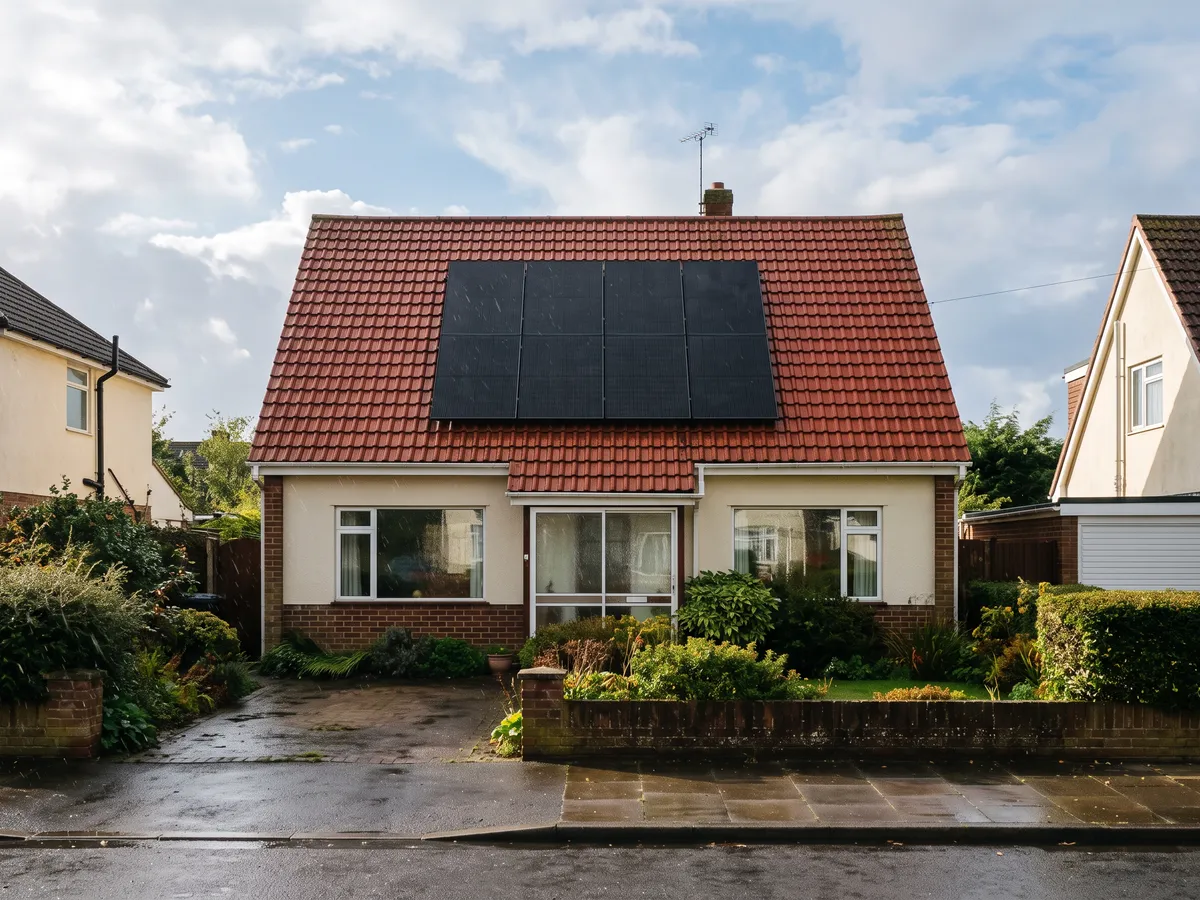
Solar Panel Repair.
Most solar faults are an inverter problem, not a panel problem: in a 2024 Which? survey of its members, 15% of owners reported an inverter fault and 3% faulty wiring or connections. Here is what each common fault usually means, what you can safely check from the ground, when it needs an engineer, repair against replace with dated prices, and who to contact if your installer, or the maker of your inverter or battery, has gone.
Takes about two minutes. Installers pay us, so it is free for you.
- Owners who reported an inverter problem
- 15%Which? member survey, April 2024
- Fault diagnosis and repair call-out
- £120-£250+MyJobQuote, 12 October 2026
- Inverter replacement
- £800-£1,500MyJobQuote, 12 October 2026
- Minimum installer workmanship guarantee
- 2 yrsMCS and the RECC code
Source: Which?, the most common solar panel problems, 25 July 2024; MyJobQuote, solar panel maintenance cost, page updated 12 October 2026; MCS, insurance backed guarantee products; RECC, the Renewable Energy Consumer Code, read 26 November 2026.
In short
- An inverter fault is the most common problem owners report: 15% in a Which? member survey, against 3% for faulty wiring or connections.
- From the ground you can read the inverter display and app, check the consumer unit and look at the roof. Never open a box, climb up or touch wiring.
- Named price guides put a diagnosis at £80 to £250, a part such as an isolator at £80 to £450 and an inverter swap at £800 to £2,000.
- If your installer has ceased trading, the MCS and FHIO dispute route does not apply, but an insurance-backed guarantee may. Find the certificate first.
- If the maker of your equipment has failed, ask your installer in writing who now supports it. Our GivEnergy page sets out one live case.
On this page (10)
What Are The Most Common Solar Panel Faults?
Solar repairs are specialist work. Panels have no moving parts, so faults in a solar panel system usually sit in the equipment around them, and older systems with a 12-year-old inverter are the likeliest to need an engineer. Which? surveyed over 2,000 of its members with solar in April 2024: 68% had no technical problems, 15% had an inverter problem and 3% faulty electrical connections or wiring. The table gives what each fault usually means, in general terms, so you can describe it to an engineer. It is not a way to diagnose your own system.
Source: Which?, the most common solar panel problems, 25 July 2024.
| What you notice | What it usually means | Who deals with it |
|---|---|---|
| A fault light or error message on the inverter | The inverter has detected a problem on the panel side, the grid side or inside itself. The message or code points to which; your manual lists them | An engineer. Photograph the display first |
| No output, dark inverter display | A tripped breaker or an isolator that has been turned off, or a failed inverter | You can look (see below), then an engineer |
| Panels producing but the generation meter not moving | A faulty generation meter, per Which?. The panels still make power, but it is not being counted | Your installer or electrician |
| Output stopped, then returned, or the app shows offline | A monitoring or Wi-Fi link problem, or a fault that clears itself and returns | Check the app, then your installer if it repeats |
| Cables chewed or nests under the panels | Birds or squirrels. Which? advises watching for nesting, which can cause pest damage; the SMA inverter warranty we read excludes pest and rodent damage | An engineer, then bird proofing |
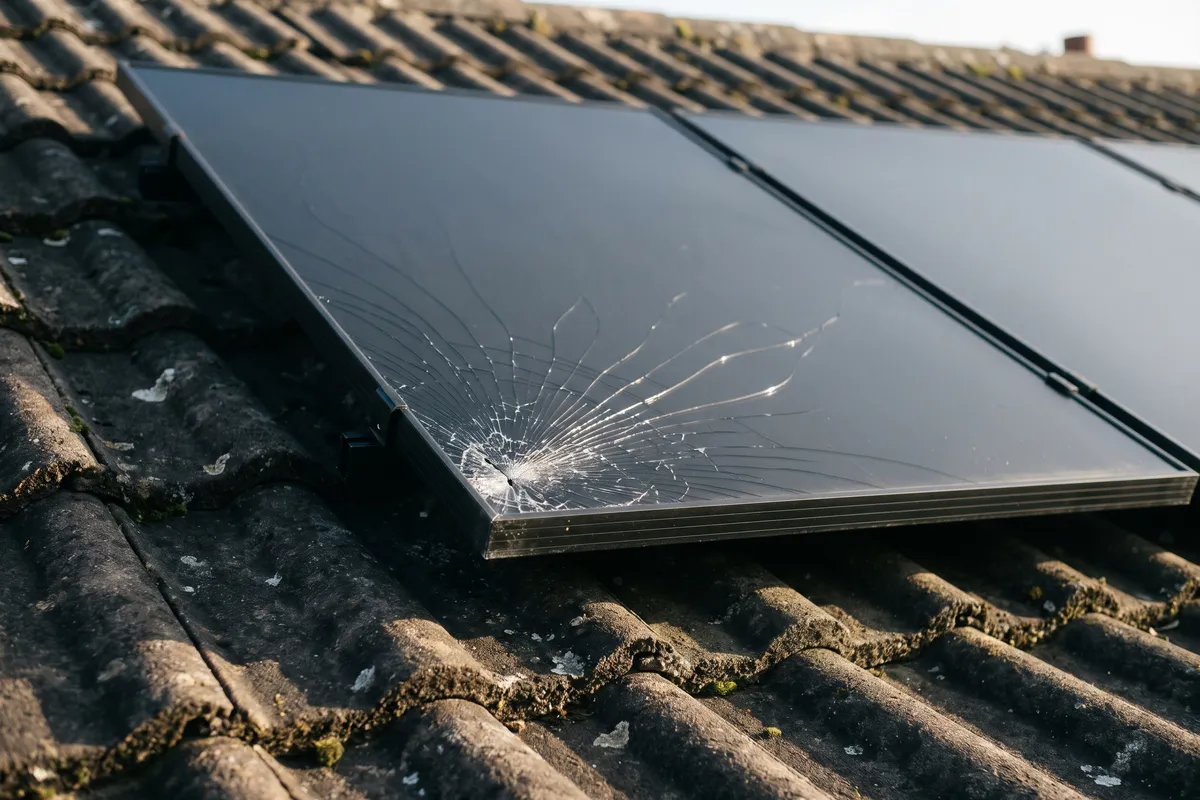
| A cracked panel, or a cell running hot | Impact or wear to the panel. A heat-camera survey is how hot cells are found | An engineer; do not touch it |
| A battery that will not charge or drains fast | A setting, a lost link between battery and inverter, or a fault (see the battery section) | Check the app, then an engineer |
Damaged solar panels and faulty panels have a few common causes. Accidental damage, such as a slipped panel or a crack after strong winds or a falling branch, is physical damage that an engineer must inspect, and it is worth checking whether your home insurance covers it. Loose connections and faulty electrical connections show up as reduced energy generation or a fault message. Hot spots, where one cell runs hotter than the rest, are what a heat-camera survey is used to find. A manufacturing defect is a matter for the manufacturer warranties, so keep your proof of purchase and photographs. A sudden drop in output can also be as simple as new shade from nearby trees or bird droppings, which is why it helps to compare the monitoring app with the same month last year before assuming a fault.
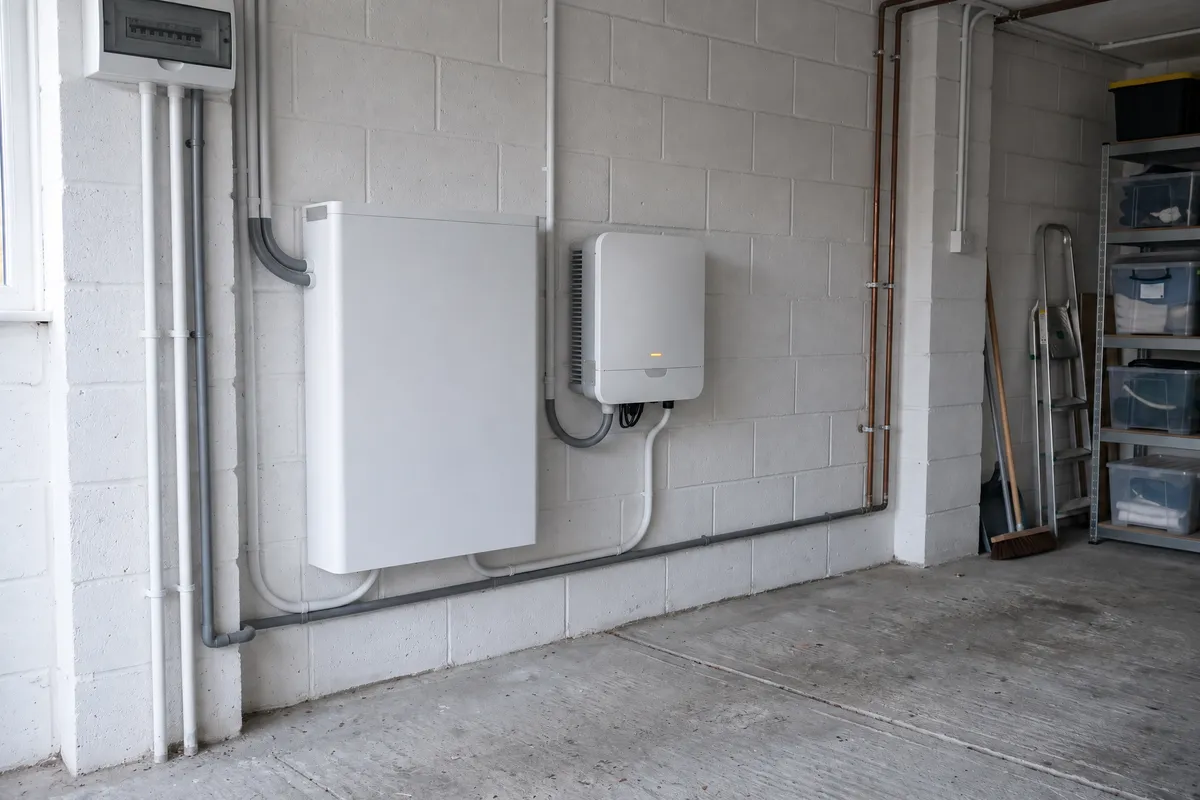
Our solar inverters guide covers inverter types, lifespan and warranty, so this page does not repeat it. For routine checks and when the inverter is likely to need replacing, see solar panel maintenance.
What Can I Safely Check From The Ground?
Look and read; do not open or touch anything.
- The app and the inverter display. Is it showing generation? Is there a fault light or code? Photograph the display and screenshot any alarm log with the date.
- The consumer unit. Is the switch for the solar circuit down? Your handover pack or manual says whether you may switch it back on. If it trips again, leave it off.
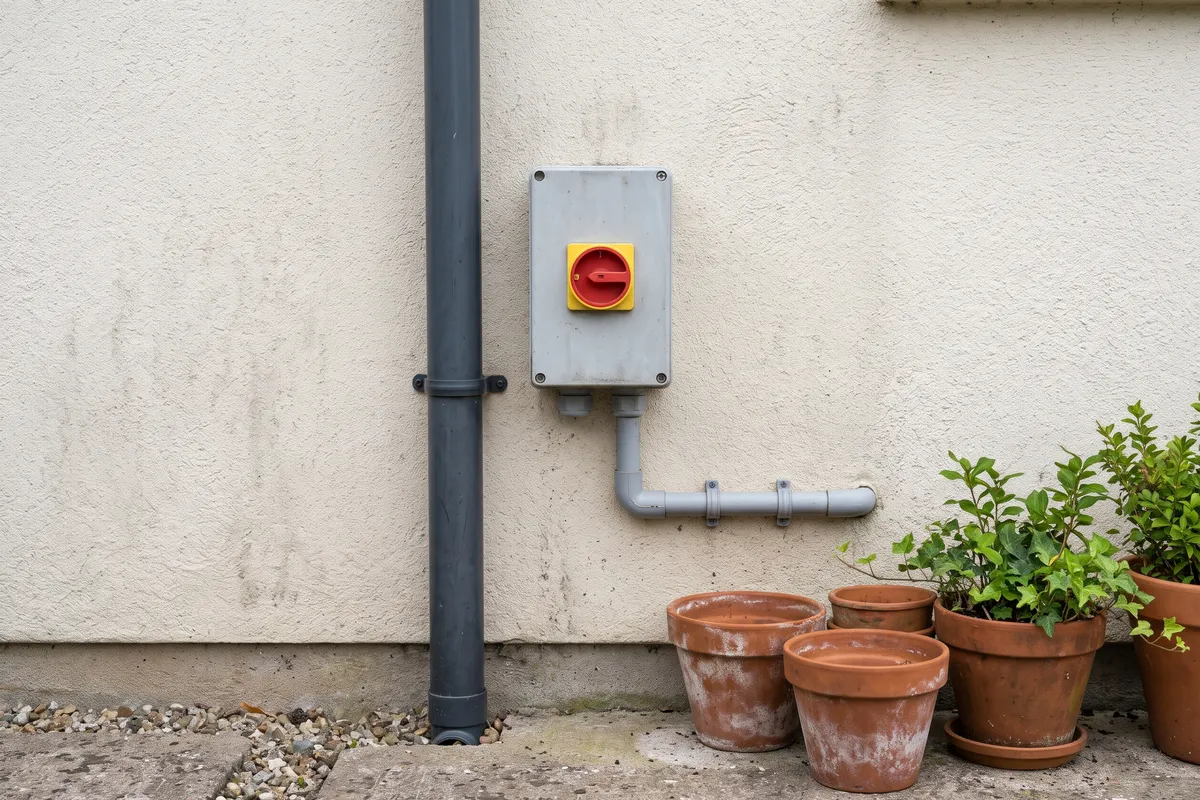
- The isolator. Look at the AC isolator next to the inverter or meter. Is it where your handover pack says it should be? Never open the box, and leave any DC isolators and the box next to them alone.
- The roof, from the ground. Slipped or cracked panels, nests, debris, scorch marks, new shade.
Switch the system off at the isolator, if it is safe to reach, and call an engineer the same day for a burning smell, smoke, melted plastic, buzzing or arcing, a hot enclosure or repeated breaker trips. Call 999 for a fire. Never touch connections or wiring, open the inverter or battery, or go onto the roof: the panels make electricity whenever there is daylight.
HSE's guidance on working at height says to avoid it where reasonably practicable and to use competent people where it cannot be avoided, so do not put a ladder against the panels either.
Repair Or Replace: What Do Guides Say It Costs?
No official body publishes repair prices, so the table shows what named UK price guides publish. They are each guide's own figures, not Switchable's, and we have not averaged them. The guides disagree on the inverter by £500, so treat them as a range to test quotes against.
| Guide and date | Item | Price |
|---|---|---|
| MyJobQuote, page updated 12 Oct 2026 | Fault diagnosis and repair call-out | £120 to £250+ |
| MyJobQuote, page updated 12 Oct 2026 | Component repairs: isolators, connectors, wiring | £80 to £250 |
| MyJobQuote, page updated 12 Oct 2026 | Inverter replacement | £800 to £1,500 |
| MyJobQuote, page updated 12 Oct 2026 | Scaffolding or access equipment | £300 to £800+ |
| BestBuilders, Q3 2026, updated July 2026 | Diagnostic call-out | £80 to £150 |
| BestBuilders, Q3 2026, updated July 2026 | Isolator or wiring fault | £150 to £450 |
| BestBuilders, Q3 2026, updated July 2026 | String inverter replacement | £800 to £2,000 |
| BestBuilders, Q3 2026, updated July 2026 | Micro-inverter or optimiser, each | £150 to £400 |
| BestBuilders, Q3 2026, updated July 2026 | Single panel replacement | £250 to £500 |
| Energy Saving Trust, page last updated 7 Jan 2026 | Inverter replacement | Around £800 |
Source: Each guide's own figures, read 26 November 2026: MyJobQuote, solar panel maintenance cost; BestBuilders, solar panel repair cost; Energy Saving Trust, solar panel cleaning and maintenance. Switchable has not averaged or adjusted them. London and the South East can cost more.
Worked through: say a 12-year-old string inverter fails. On the guides above a replacement is £800 to £2,000. If an engineer quotes a repair that costs a large part of that, a new unit with a fresh warranty, usually five years at minimum on the Energy Saving Trust's account, is worth pricing alongside it. If the fault is a £80 to £250 part, repair is the obvious route. Ask every engineer for both prices, in writing, and for the age of the part against its warranty.
VAT: HMRC's 0% rate until 31 March 2027 is for installing equipment, and the notice does not mention repairs or replacement parts, so ask for VAT to be shown on the quote.
Source: Energy Saving Trust, solar panels, page last updated 1 October 2026; HMRC VAT Notice 708/6, page last updated 31 January 2024.
Is My Solar Battery Not Charging Or Draining Fast?
A battery that will not charge is often not a dead battery. SolaX's own troubleshooting guide, dated 13 July 2026, says a communication fault is most often a loose or damaged data cable between battery and inverter, a firmware mismatch, the battery's own protection switching it off, or a storm surge. It also lists heat, dust and a battery left at a very low charge for a long time.
From the ground you can check the app: is the inverter online, is the battery in the mode and schedule you expect, and is there an alarm log to screenshot. SolaX's guidance is that anything involving opening the battery or inverter, firmware updates or reseating plugs is for an approved installer, and that several different fault types at once, or a fault returning within 24 hours of a restart, is a reason to call. Your own maker's manual sets out its restart steps.
For what a battery should do day to day, see our solar battery storage guide.
Who Do I Contact First, And What If The Installer Has Gone?
Start with the installer who fitted it, in writing. Both MCS and the RECC code say the same: complain to the installer first, and MCS calls 14 days a reasonable time to expect a response. What happens next depends on whether the installer is still trading.
| Your situation | Who to contact | What the scheme says |
|---|---|---|
| Installer still trading, MCS certified | The installer in writing, then MCS, then the dispute service | MCS acknowledges a complaint in 5 working days. The Furniture and Home Improvement Ombudsman (FHIO) is the free dispute route, open 12 weeks after your complaint or within 12 months of MCS finishing it. FHIO excludes claims over £10,000 and contracts under the original MCS scheme unless signed after 1 January 2025 and the installer agrees to join |
| Installer has ceased trading | The insurer named in your paperwork, or the liquidator | FHIO cannot consider a dispute against an installer that has ceased trading. For homes, MCS requires an insurance-backed guarantee that covers the installation if the installer stops trading within the guarantee term, up to 10 years, and says approved financial protection products will replace these under its redeveloped scheme. RECC says the paperwork may still give cover |
| Installer is a RECC member | The installer in writing, then Green Homes Dispute Resolution | The code requires a written workmanship guarantee of at least two years, honoured through insurance if the member stops trading, and that it passes to a new owner. You can escalate if you are unhappy with the final reply or hear nothing in 10 working days |
| Installer is a HIES member | The installer, then HIES | HIES works to a code approved by the Chartered Trading Standards Institute and lists insurance-backed guarantees as a homeowner service. We could not read its process, so check its own pages |
| The equipment itself is faulty | The maker, through your installer where you can | Maker warranties are separate. SMA says a claim is reported by the owner or their electrically qualified representative to its service centre. Trina asks for proof of purchase |
Source: MCS, what to do if things go wrong; FHIO, dispute resolution for MCS; MCS, insurance backed guarantee products; RECC, the Renewable Energy Consumer Code; RECC, consumer support; HIES; SMA limited factory warranty (COM-RES-GB-en-88), purchases after 20 May 2026; Trina Solar global limited warranty, June 2026 edition, all read 26 November 2026. Terms differ by scheme and date: yours are the ones in your contract.
Do not let anyone else open or repair equipment before you have read the warranty. SMA's warranty excludes unauthorised repairs and pest and rodent damage, and Trina's excludes service by technicians who are not qualified where the panels are installed. Keep the invoice and serial numbers, and photograph the fault with the date.
If The Maker Of Your Inverter Or Battery Has Failed
Two warranties can be in play: your installer's workmanship guarantee, and the maker's equipment warranty. A maker failing does not end the installer's guarantee, but it can leave the equipment warranty, spare parts and firmware in doubt. The practical steps are the same whichever brand it is.
- Ask your installer in writing whether they will keep supporting the system and who supplies parts now.
- Check whether your workmanship guarantee is insurance-backed, and keep the certificate.
- Screenshot the app settings and download any history while the app still works.
- If a replacement inverter is needed, ask whether it will work with your existing battery and monitoring.
GivEnergy is the live case. Our GivEnergy battery and administration guide sets out, dated and sourced, what the administrator's filings and the company's own pages say about the warranty, the app and servicing as at 26 November 2026. We have not checked other brands for similar problems.
What Should I Check In A Repair Quote?
- Whether the diagnosis fee is credited against the repair.
- A repair price and a replace price, itemised, with the age of the part against its warranty.
- Whether roof access or scaffolding is included.
- Whether the engineer is MCS certified, and the number so you can check it.
- What guarantee comes with the repair. The RECC code requires members to agree charges and conditions in writing before repair work, and a different business doing the repair must give its own guarantee for it.
- Whether a matching panel is still available if one has to be replaced.
- VAT shown separately.
The Bottom Line
Most solar faults are in the inverter, not the panels, and the first job is to read the display and app and to check the consumer unit from the ground. Do not open anything or go on the roof. Named price guides put a diagnosis at £80 to £250, a part repair at £80 to £450 and an inverter replacement at £800 to £2,000.
Ask for a repair price and a replace price, and read the warranty before anyone works on the system. If your installer has gone, look for the insurance-backed guarantee first: the MCS dispute route does not cover an installer that has ceased trading.
Compare solar quotesSources
- MCS, what to do if things go wrong
- FHIO, dispute resolution for MCS
- MCS, insurance backed guarantee products
- MCS, MIS 3002 solar PV installation standard, issue 6.0
- RECC, the Renewable Energy Consumer Code
- RECC, consumer support
- HIES
- HSE, working at height
- Which?, the most common solar panel problems
- HMRC VAT Notice 708/6
- SMA limited factory warranty (COM-RES-GB-en-88), purchases after 20 May 2026
- Trina Solar global limited warranty, June 2026 edition
- SolaX Power Australia, troubleshooting battery communication faults
- MyJobQuote, solar panel maintenance cost
- BestBuilders, solar panel repair cost
- Energy Saving Trust, solar panel cleaning and maintenance
- Energy Saving Trust, solar panels
Checked 26 November 2026.
How To Compare Quotes
Get at least three quotes and compare them line by line. Prices for the same job can differ a lot.
- The installer is MCS certified. You need an MCS-certified system to be paid for exported power under the Smart Export Guarantee.
- What is in the price: panels, inverter, any battery, scaffolding and waste removal.
- Warranties on the equipment and on the installation work, and who stands behind them.
How Switchable works
 Check. Tell us your postcode and a few details about your home. It takes about two minutes.
 Compare. Local installers who cover your area get in touch with quotes.
 Switch. Go ahead with the quote that suits you, or none at all. There is no obligation.
Switchable is free to use. Installers pay us for each introduction.
More On Solar Panels
- Solar panels guideCosts, savings and grants in one place
- Solar InvertersTypes, lifespan and warranties explained
- GivEnergy Battery And Administration: What We KnowGivEnergy in administration: the warranty, app and what to ask, dated
- Solar Battery StorageWhat a battery costs and how long it lasts
- How Much Electricity Does A Solar Panel Produce?kWh per panel and per 4kW system, by region, roof direction, pitch and month
Solar Panel Repair: Your Questions.
Why are my solar panels not working?
The panels themselves rarely fail. Which? says a complete stop suggests a fault in the inverter, the wiring or the generation meter. Look at the inverter display and the consumer unit from the ground, photograph any fault message and call an engineer.
What does a fault light on my solar inverter mean?
It means the inverter has detected a problem, and the code or colour tells an engineer which. Your manual lists the codes for your model. Photograph the display, do not open the unit and contact your installer, as the inverter may still be under warranty.
Can I repair solar panels or an inverter myself?
No. Panels make electricity in daylight and an inverter connects to the mains, so repairs are for a qualified engineer. DIY work can also void a maker's warranty, as both warranties we read exclude unauthorised repairs or unqualified service.
How much does solar panel repair cost?
MyJobQuote puts a diagnosis and repair call-out at £120 to £250 or more and a component repair at £80 to £250 (12 October 2026). BestBuilders' Q3 2026 figures are £150 to £450 for an isolator or wiring fault and £250 to £500 for one panel. An inverter swap is £800 to £2,000 across the guides.
What causes a sudden drop in solar panel output?
Common causes are new shade from nearby trees, bird droppings, a tripped breaker or isolator, an inverter fault and a faulty generation meter. Check the monitoring app and the consumer unit from the ground, photograph any fault message and call an engineer if output does not recover.
Does home insurance cover damaged solar panels?
It may cover accidental damage, but policies differ, so read yours or ask your insurer. A manufacturing defect is a warranty matter, not an insurance claim, so keep the invoice, serial numbers and photographs of the fault with its date.
Is it worth repairing a solar inverter or replacing it?
Ask for both prices. A cheap part on an inverter within its warranty is worth repairing. If the unit is around 12 years old and the repair is a large share of the £800 to £2,000 guide range, a new one with a fresh warranty is worth pricing.
Who do I contact if my solar installer has gone out of business?
Check your paperwork for an insurance-backed workmanship guarantee and contact the insurer or liquidator. The MCS dispute route through FHIO excludes installers that have ceased trading. RECC says the guarantee may still give cover.
My solar battery is not charging. What should I check?
Check the app: is the inverter online, and is the battery in the mode and schedule you expect. A communication fault is often a data cable or firmware issue rather than a dead battery, according to SolaX. Do not open the battery; call an installer if the fault returns or several alarms show at once.
Where can I find solar panel repair near me?
Switchable compares and introduces: tell us what is wrong and we pass your details to companies that repair solar systems in your area. Ask whether the engineer is MCS certified, get a written quote and check the points in our repair quote list.
Get Your Free Quotes Today.
Compare quotes from installers in your area. It takes about two minutes and there is no obligation.