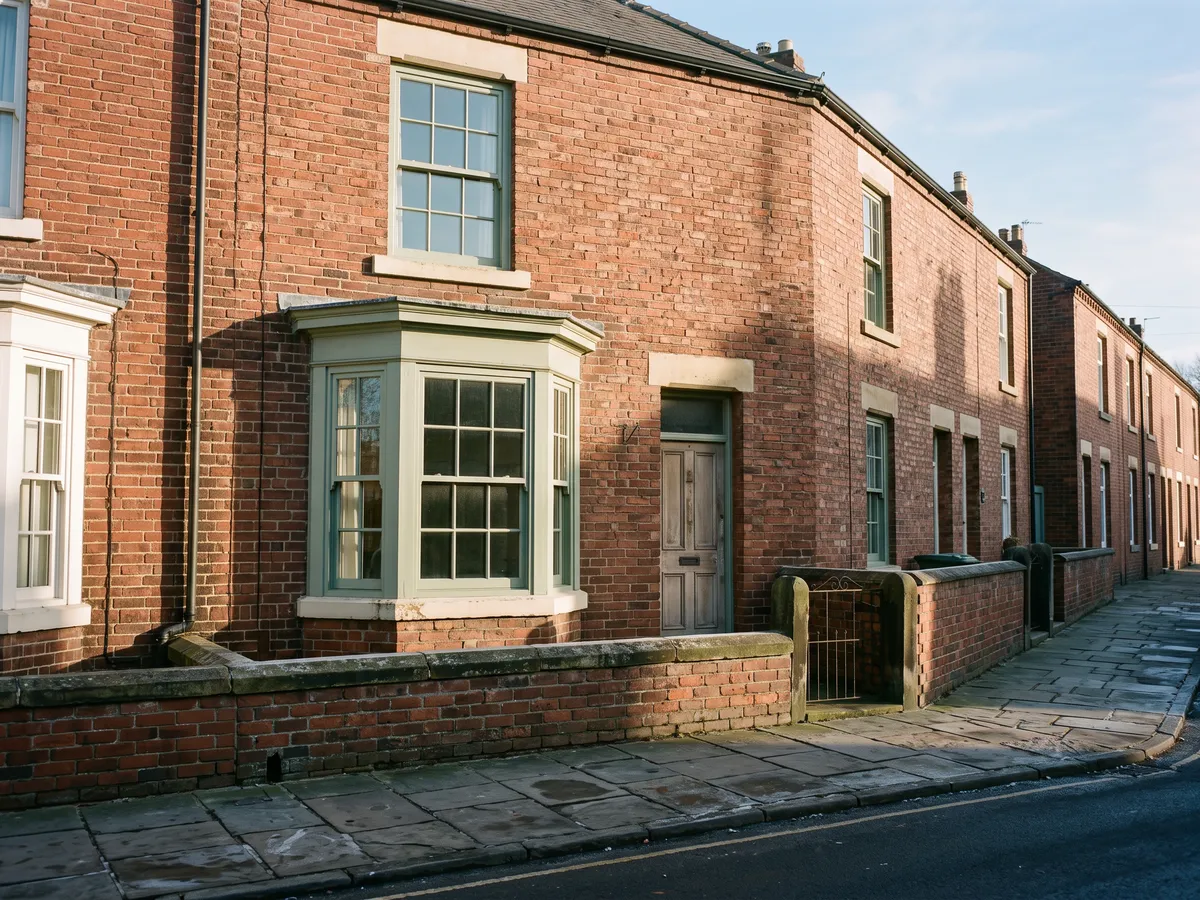
Sash Windows.
Repair is the cheaper first move for sound timber sashes: BestBuilders puts draught-proofing at £150 to £350 a window against £1,200 to £2,500 to replace in softwood. A fitted uPVC sash costs £700 to £1,100 in MyJobQuote's guide, but a listed building or a conservation area with an Article 4 direction may not allow one. This guide is for owners of period and modern homes deciding whether to repair, draught-proof or replace sash windows: it sets out the costs, the listed building and conservation area rules, and what to ask in a quote.
Takes about two minutes. Installers pay us, so it is free for you.
- Draught-proofing, per window
- £150 - £350BestBuilders, Sept 2026, UK average
- uPVC sash, fitted
- £700 - £1,100MyJobQuote, Oct 2026
- Timber sash, fitted
- £1,500 - £2,000MyJobQuote, Oct 2026
- Secondary glazing, per opening
- £300 - £500MyJobQuote, Oct 2026
Sources: BestBuilders, sash window cost guide, last updated 7 September 2026; MyJobQuote, new windows cost guide, last updated 20 October 2026. The prices are guide figures, not Switchable's, and the guides do not always say what the scope includes.
In short
- Sticking or rattling timber sashes are often repairable: FMB Home Picks (Jan 2026) gives £120 to £160 to replace cords and £400 or more where parts of the frame need replacing.
- A fitted replacement is £700 to £1,100 in uPVC and £1,500 to £2,000 in timber at MyJobQuote (Oct 2026). Six windows come to £4,200 to £6,600 in uPVC or £9,000 to £12,000 in timber at those rates.
- BestBuilders (Sept 2026) puts refurbishing six sashes on a 3-bed terrace at £3,000 to £6,000 against £4,500 to £18,000 to replace them.
- Replacing windows in a listed building needs listed building consent, and an Article 4 direction can take away the usual planning rights in a conservation area. See what each situation allows.
- A replacement sash must still reach a U-value of 1.4 W/m²K or Window Energy Rating Band B, and in a bedroom it must keep the escape opening the old window gave.
On this page (11)
Repair, Draught-Proof Or Replace Sash Windows?
Most sash problems come down to four faults: broken cords, a stuck or swollen sash, gaps that let draughts in, and rot in the sill or lower rail. Each has a cheaper fix than a new window, and only rot through the frame makes replacement the obvious answer. The table puts the options side by side with each guide's own figure.
| Option | What it is | Guide figure |
|---|---|---|
| Draught-proofing only | Seals fitted round the sashes | BestBuilders (Sept 2026): £150 to £350, £250 to £450 in London and the South East |
| Replace the cords | New sash cords so the sashes balance again | FMB (Jan 2026): £120 to £160. BestBuilders (Sept 2026): about £150 for all four cords |
| Cord and pulley overhaul with draught-proofing | Repair plus seals, original window kept | BestBuilders (Sept 2026): £250 to £450 |
| Full overhaul or refurbishment | Repairs, easing, repainting, new seals | BestBuilders (Sept 2026): £350 to £650 overhaul, £650 to £1,200 full refurbishment |
| Secondary glazing | A second pane fitted inside the original window | MyJobQuote (Oct 2026): £300 to £500 per opening. BestBuilders (Sept 2026): £180 to £400 |
| Replace with uPVC | New window and often a new box | MyJobQuote (Oct 2026): £700 to £1,100 fitted. BestBuilders (Sept 2026): £600 to £1,200 |
| Replace with softwood timber | New painted timber sashes | BestBuilders (Sept 2026): £1,200 to £2,500 fitted. MyJobQuote (Oct 2026): from about £1,500 |
Source: BestBuilders, sash window cost guide, 7 September 2026 (its figures are for double-glazed windows, fitted, repairs per window); FMB Home Picks, sash windows, 12 January 2026; MyJobQuote, new windows cost guide, 20 October 2026; read 26 November 2026. Each is the guide's own figure, not Switchable's, and none are averaged. The two cord figures differ.
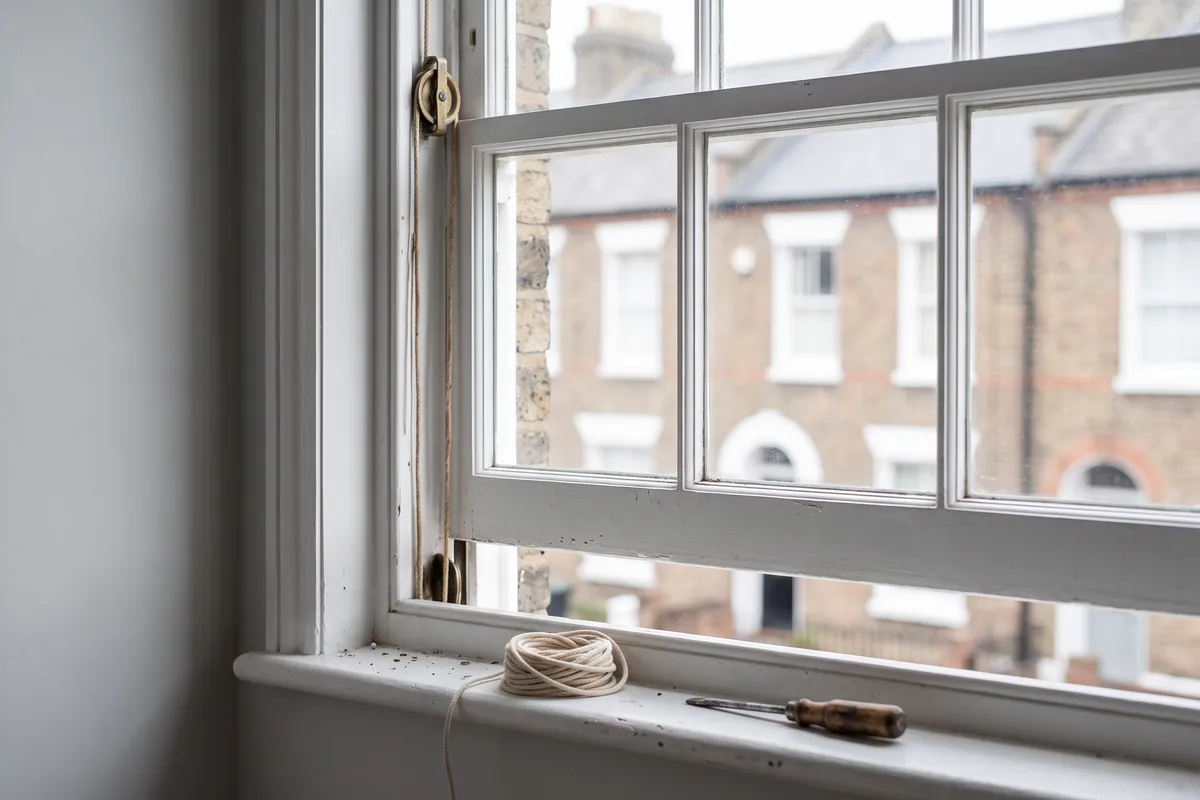
Take a six-window 3-bed terrace. BestBuilders says refurbishing all six costs £3,000 to £6,000, against £4,500 to £18,000 to replace them, and it describes repair as 40 to 60% cheaper than replacement. The replacement range is wide because it runs from uPVC to hardwood, so the comparison that matters is repair against the material you would actually choose.
Source: BestBuilders, sash window cost guide, 7 September 2026, the page's own worked example for a 3-bed terrace.
The slim double-glazing retrofit is the middle route: BestBuilders gives £600 to £1,500 a window to fit sealed units into the existing sashes. Only a joiner who has seen the sash can say whether the frame will take the extra weight, so ask for that in writing before you pay.
Box Sash Versus Vertical Sliding Sash
A box sash is the traditional timber window: two sashes slide in a hollow frame, balanced by weights hidden in the box on cords and pulleys. A vertical sliding window is the modern equivalent, usually uPVC, balanced by spring mechanisms instead of weights. They look alike from the street, which is why a quote for one can be priced very differently from a quote for the other.
Box sash
Weights on cords run over pulleys inside the frame. FMB says a wooden sash window with proper maintenance could last centuries, and that neglect brings dampness and mould.
FMB Home Picks, Jan 2026
Spring-balanced sliding sash
Spring (torsion) balances replace the weights. FMB says they are more common today and considerably more reliable than weights and pulleys.
FMB Home Picks, Jan 2026
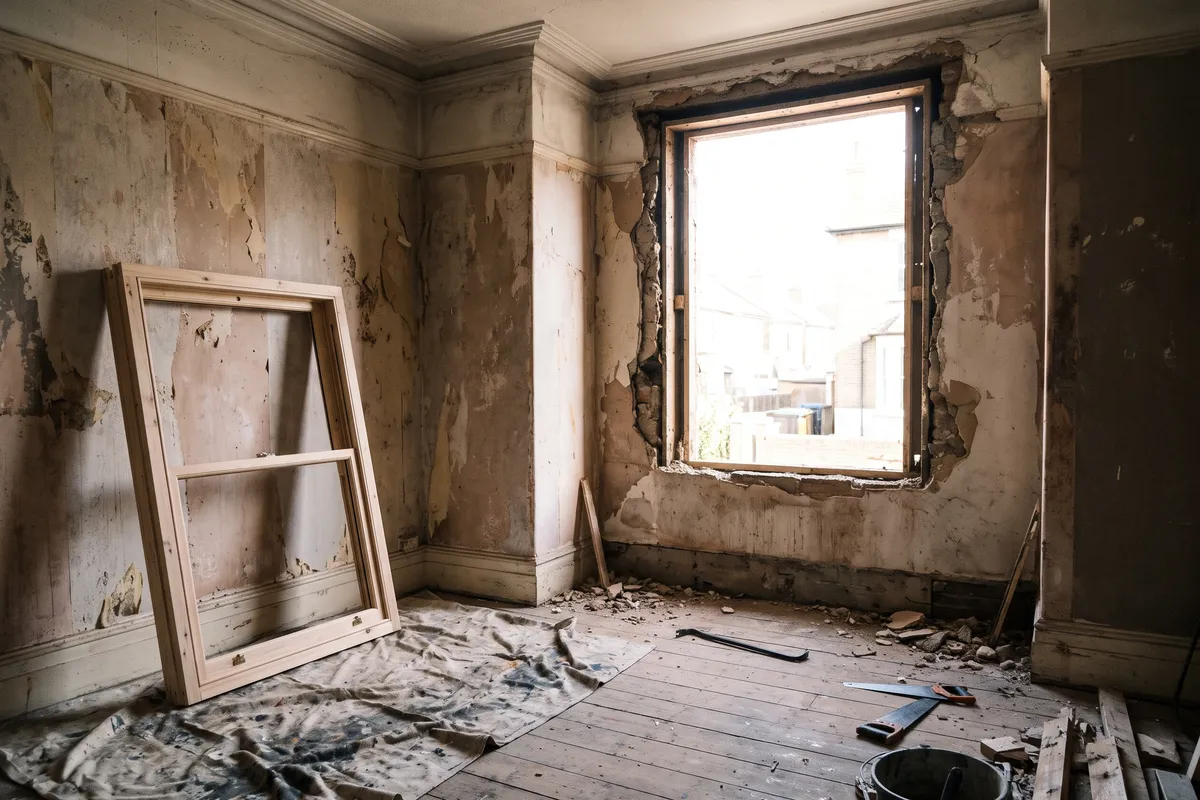
Ask each installer whether the price includes removing the old box, plaster repair, a new sill and upper-floor scaffolding. ExpertSure puts upper-floor scaffolding at £600 to £1,200 for a typical terrace front, and says large landing or stairwell sashes, about 1,000 x 1,400mm or more, cost 50 to 80% more than standard sizes.
Source: ExpertSure, sash windows cost, prices verified November 2026.
Georgian, Victorian And Modern Sliding Sash Windows
Bristol City Council's traditional windows guidance dates sliding sash windows in Britain to the late 17th century, with weights on cords running over pulleys hidden in the frame. In the 18th century the classic Georgian style settled on six panes over six, with glazing bars slimmed down for elegance, and the box sash replaced the earlier solid frames. After the window tax ended in 1845, Victorian sash windows with larger panes became common, and sash horns strengthened the sashes that now carried bigger panes and fewer glazing bars. Knowing which period your home belongs to tells you what a council will expect a replacement to copy.
Modern sash windows are a different build. Bristol says a plastic sash-appearance window with applied glazing bars and horns opens and is constructed differently from timber, so a uPVC sliding sash windows quote is not a like-for-like copy of a traditional timber sash window. For the same reason, compare what each installer means by the bottom sash and top sash: whether both slide, or only one, changes the price and the look.
Timber Versus uPVC Sash Windows
The guides put timber at two to three times the price of uPVC for a sash. Timber needs repainting from time to time, while uPVC needs little upkeep. FMB describes a maintained timber sash as lasting centuries. None of the guides we read gives a like-for-like U-value for the two, so compare the Window Energy Rating label of the exact windows quoted rather than the frame material.
| What to compare | uPVC sash | Timber sash |
|---|---|---|
| Fitted price, about 900 x 1,200mm | MyJobQuote (Oct 2026): £700 to £1,100 | MyJobQuote (Oct 2026): £1,500 to £2,000 |
| Price per window, two sizes | FMB (Jan 2026): £805 for 600 x 900mm, £915 for 900 x 1,200mm | FMB (Jan 2026): £2,450 for 600 x 900mm, £2,775 for 900 x 1,200mm |
| Upkeep | The sash guides we read do not price upkeep | MyJobQuote (Oct 2026): periodic repainting or varnishing, and 40 years or more with proper care for timber windows in general |
| Conservation area or listed building | Bristol City Council: consent unlikely where uPVC replaces traditional timber joinery. ExpertSure (Nov 2026): frequently refused in conservation areas | Usual choice where the original is timber. Listed building consent is still needed for replacement |
| Slim glazing bars | Bristol City Council: double glazing can be unacceptable where the original glazing bars are too narrow | Same limit applies to timber double glazing |
Source: MyJobQuote, new windows cost guide, 20 October 2026; FMB Home Picks, sash windows, 12 January 2026 (fitting is not stated for its prices); Bristol City Council, making alterations to a listed building, undated; ExpertSure, sash windows cost, prices verified November 2026; read 26 November 2026. The two price guides differ by more than £1,000 on timber, so compare quotes for the same specification.
Six windows at MyJobQuote's rates come to £4,200 to £6,600 in uPVC and £9,000 to £12,000 in timber. That is simply six times the per-window range, our arithmetic, and ExpertSure reaches the same totals. Scaffolding comes on top in both cases.
Double glazed sash windows raise a separate question in older homes. Bristol says slim-profile double glazing is typically 8.2 to 16mm thick, will be resisted in listed buildings with typical Georgian sashes, and may be acceptable in later Victorian buildings, where it works better in 1-over-1 windows than in multi-pane ones. Where timber windows survive, the council's guidance treats secondary glazing as the preferred option, and cites research that low-emissivity secondary glazing can cut heat loss through the window as a whole by over 60%. For a new uPVC sash, FMB gives £930 for a triple glazed 600 x 900mm window against £805 double glazed.
Source: FMB Home Picks, sash windows, January 2026, per window; Bristol City Council, traditional windows guidance and repairs.
On upkeep, FMB says uPVC needs less maintenance, while timber sashes need repainting every 5 to 8 years, which it prices at £150 to £350 a window done professionally. That low maintenance is part of the case for uPVC where the council allows it, and part of the case against timber where it is not wanted.
Listed Buildings And Conservation Areas
Sash windows are where the planning rules bite hardest, because the window is often the feature that makes a street look the way it does. The position depends on whether the home is listed, in a conservation area, or under an Article 4 direction, and councils interpret the details differently. Ask the council before you order anything.
| Your home | What the sources say |
|---|---|
| Not listed, no designation | Planning Portal: new windows of similar appearance to the originals do not usually need planning permission, and nor does installing internal secondary glazing. Building regulations still apply. |
| In a conservation area | Planning Portal: there may be extra restrictions. GOV.UK planning guidance: other work to unlisted buildings generally follows the normal rules, though some permitted development rights are more restricted. |
| Article 4 direction | Planning Portal: a council can withdraw permitted development rights, so you may need planning permission for work that would otherwise not need it. Ask your council whether one covers your street. |
| Listed building | Planning Portal: listed building consent for any significant works, inside or outside. GOV.UK planning guidance: consent is needed for alterations that affect special character, there is no application fee, and doing the work without it is a criminal offence. Bristol City Council: replacing windows will probably need consent or a Certificate of Lawfulness. |
| Repair, draught-proofing, secondary glazing | Bristol City Council: like-for-like repairs, draught-proofing and secondary glazing that loses no original fabric are usually covered by a Certificate of Lawfulness. Other councils may differ, so ask yours. |
Source: Planning Portal, planning permission for doors and windows, undated; GOV.UK, conserving and enhancing the historic environment, 23 July 2019; Bristol City Council, making alterations to a listed building, undated; read 26 November 2026.
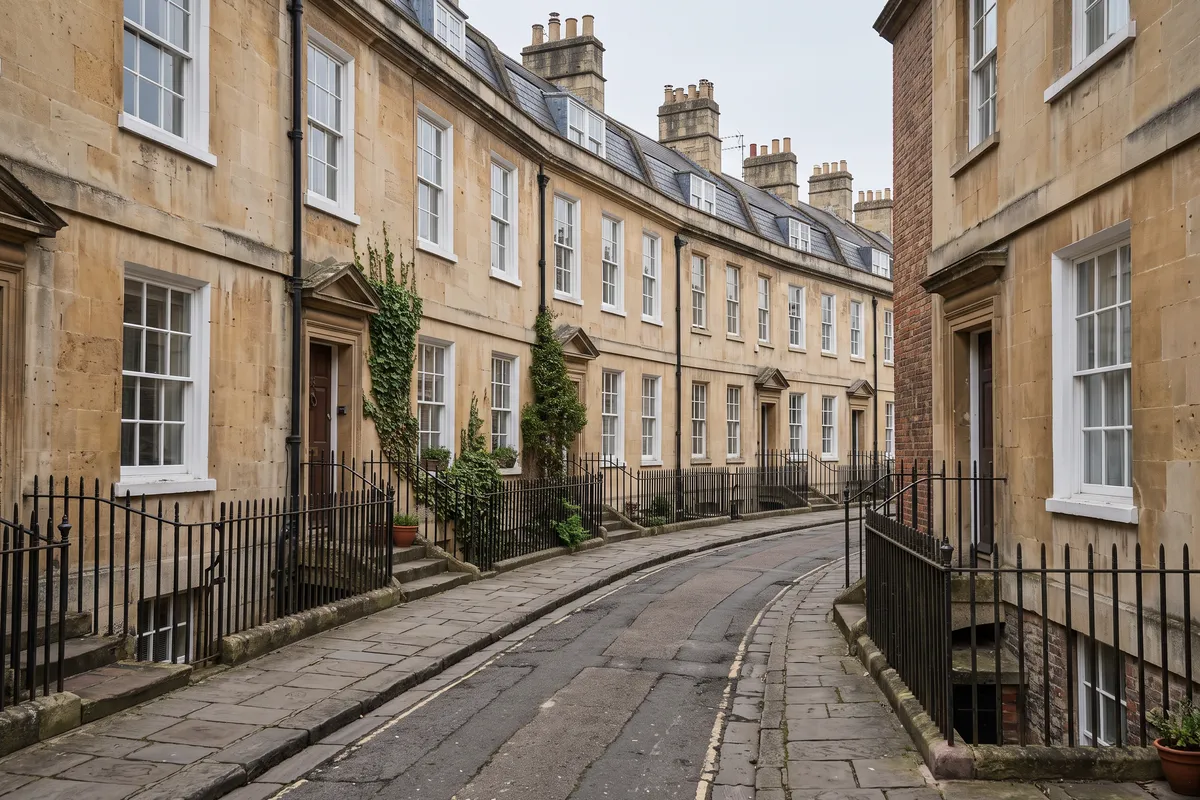
The building regulations have a matching exemption. Approved Document L says work to listed buildings and homes in conservation areas need not comply fully with the energy rules where that would unacceptably alter their character. Where a window cannot reach the standard for that reason, it should not exceed a centre-pane U-value of 1.2 W/m²K, or single glazing should be supplemented with low-emissivity secondary glazing.
Source: Approved Document L, Volume 1, 2021 edition incorporating 2023 amendments, paragraphs 0.8 and 4.10. The 2026 edition takes effect on 24 March 2027.
Building Regulations, Certificates And Bedroom Escape
Replacement windows are controlled fittings, so building regulations apply even where planning permission does not. An installer registered with a competent person scheme, such as FENSA or CERTASS, can certify the work, otherwise building control inspects it. Planning Portal says a registered installer gives you a certificate when the work is complete, and you should keep it.
| Rule | What it says | Source |
|---|---|---|
| Energy standard | A window U-value of 1.4 W/m²K or Window Energy Rating Band B minimum. Timber windows had a 1.6 allowance until 14 June 2023, which has ended | Approved Document L, Table 4.2 |
| Escape from bedrooms | A replacement should give at least the same potential for escape as the window it replaces | Approved Document B, paragraph 2.19 |
| Escape opening | At least 0.33m² unobstructed, at least 450mm high and 450mm wide, with the bottom of the opening no more than 1,100mm above the floor | Approved Document B, paragraph 2.10 |
| Who certifies | A competent person scheme installer, or building control | Planning Portal |
Source: Approved Document L, Volume 1, 2021 edition incorporating 2023 amendments; Approved Document B, Volume 1, 2019 edition incorporating amendments to 2026 (GOV.UK page updated 16 September 2026); Planning Portal, building regulations for doors and windows, undated; read 26 November 2026.
A sash only opens about half its height, because the two sashes overlap. Work the escape rule through for a 600mm wide opening: 0.33m² divided by 0.6m means at least 550mm of clear opening height. A 1,200mm tall window can give around 600mm, which passes. A 900mm tall one gives about 450mm, 0.27m², which does not. That is our arithmetic, not a ruling, so ask the installer to confirm in writing that a first-floor bedroom sash meets paragraph 2.10.
What To Check In A Sash Window Quote
Sash quotes vary more than casement quotes because the scope varies, so the cheapest figure is often the narrowest job. Ask each installer to quote the same list.
The box
Does the price remove the old box and make good the plaster, or fit the new sashes inside the existing box? Both are legitimate, but they are different jobs at different prices.
The look
Ask for the glazing bar pattern, the sightline and the horn detail in a drawing. A replacement that does not match is what councils refuse.
The balance
Weights and cords, or spring balances, and what guarantee covers them. FMB says spring balances are more reliable, which is worth asking each installer to back with a guarantee term.
The paperwork
The Window Energy Rating label, the FENSA or CERTASS certificate, and for a listed building the consent reference. Ask for the escape opening of any bedroom sash.
Which Route Suits Which Home
The right answer depends less on the window than on the building and how much of the original is left.
Repair and draught-proof
Suits sound timber sashes in a listed building or conservation area, or anyone who wants to keep the original. Less suited to frames with widespread rot, where repair stops being cheaper.
Secondary glazing
Suits listed homes and noisy roads, because the original window stays. It adds a second pane to clean, and councils differ on what needs consent.
Replacement in timber
Suits conservation areas and homes where the original is badly rotted. It costs roughly double uPVC in MyJobQuote's guide and needs repainting.
Replacement in uPVC
Suits unprotected homes where the budget matters. It is the cheaper replacement in every guide here, but it is the one councils most often refuse in a conservation area.
Switchable is independent of any window maker or installer and is not paid by one for this page. Some installers we introduce customers to may also fit these windows. Read more on how we write our pages. For the other two styles, see our guides to tilt and turn windows and casement windows, which also compares all three in one table.
The Bottom Line
If your sashes are sound timber, repair and draught-proofing is the cheaper first step: BestBuilders (Sept 2026) gives £150 to £350 a window against £1,200 to £2,500 to replace in softwood. In a listed building or a conservation area it is often the only route the council will accept, with secondary glazing as the usual add-on.
If you do replace, compare quotes for the same scope: the old box, the glazing bars, the energy rating label and the bedroom escape opening. Ask the council about listed building consent or an Article 4 direction before you order, because doing the work without listed building consent is a criminal offence.
Compare window and door quotesSources
- GOV.UK, Approved Document B, fire safety, page updated 16 September 2026
- Planning Portal, building regulations for doors and windows
- GOV.UK, conserving and enhancing the historic environment, 23 July 2019
- Bristol City Council, traditional windows guidance and repairs
- FMB Home Picks, sash windows, January 2026
Checked 26 November 2026.
How To Compare Quotes
Get at least three quotes and compare them line by line. Prices for the same job can differ a lot.
- A price for each window and door. One total hides where the money goes, so ask for every window and door on its own line.
- The same specification on every quote: frame material, glass, energy rating, and whether the old frames are removed and made good.
- A competent person scheme certificate. Ask whether the installer is registered with Fensa, Certass or another scheme and will certify the work, and whether the 20% VAT is in the price.
How Switchable works
 Check. Tell us your postcode and a few details about your home. It takes about two minutes.
 Compare. Local installers who cover your area get in touch with quotes.
 Switch. Go ahead with the quote that suits you, or none at all. There is no obligation.
Switchable is free to use. Installers pay us for each introduction.
More On Windows And Doors
- Windows and doors guideCosts, savings and grants in one place
- Tilt And Turn WindowsHow they work, where they suit, escape rules and cost against casement
- Casement WindowsStandard and flush casements, materials, prices and how they compare
- Double Glazing CostUnits, triple and secondary glazing prices
- New Windows CostPer-window prices by material, from named guides
Sash Windows: Your Questions.
Can I replace sash windows with uPVC?
In a home with no listing and no restrictions, yes, if the new windows look similar to the originals. In a conservation area or listed building it is often refused: Bristol City Council says consent is unlikely where uPVC replaces traditional timber joinery. Ask your council first.
How much does it cost to replace a sash window?
MyJobQuote (October 2026) gives £700 to £1,100 for a fitted uPVC sash and £1,500 to £2,000 for timber, for about 900 x 1,200mm. BestBuilders (September 2026) gives £600 to £1,200 for uPVC and £1,200 to £2,500 for softwood. The guides disagree, so get written quotes for the same scope.
Is it cheaper to repair sash windows than replace them?
Usually, for sound timber. BestBuilders (September 2026) says repair and refurbishment is 40 to 60% cheaper than full replacement, and FMB (January 2026) gives £120 to £160 for new cords. Where the frame is rotten through, replacement may be the better value.
Do I need listed building consent to replace sash windows?
Yes in a listed building: the Planning Portal says listed building consent is needed for any significant works, and Bristol City Council says replacing windows will probably need it. Doing the work without consent is a criminal offence, so ask your council before ordering.
Does secondary glazing need planning permission?
The Planning Portal says installing internal secondary glazing does not usually need planning permission. In a listed building it is a separate question: Bristol City Council covers it with a Certificate of Lawfulness where no original fabric is lost, and you should ask your own council.
Can a sash window be a bedroom escape window?
It can, if the opening is at least 0.33m², at least 450mm high and wide, and no more than 1,100mm above the floor (Approved Document B). A sash only opens about half its height, so a short or narrow one may fall short. Ask the installer to confirm the clear opening.
How long do timber sash windows last?
FMB says a wooden sash window with proper maintenance could last centuries, and MyJobQuote says timber windows can last 40 years or more with care. Neither is a guarantee, so ask a joiner or installer what covers the frame and the finish.
What U-value must replacement sash windows meet?
In England, 1.4 W/m²K or Window Energy Rating Band B (Approved Document L). Listed buildings and conservation areas can use a centre-pane U-value of 1.2 W/m²K or secondary glazing where full compliance would unacceptably alter the character.
How much does it cost to fix a stuck sash window?
FMB (January 2026) gives about £100 where the fix is stripping paint, and £250 or more where the counterbalance needs repair or replacement. New cords are £120 to £160 a window.
How often should timber sash windows be repainted?
FMB says every 5 to 8 years, with professional painting at £150 to £350 a window. It also says wooden windows must not be pressure washed and that cleaners should know they are sashes so they dry them thoroughly.
Are sash windows dearer than casement windows?
Yes, even in uPVC. MyJobQuote (October 2026) gives £700 to £1,100 for a fitted uPVC sash against £350 to £550 for a casement of about 900 x 1,200mm. FMB also says sash windows cost more than casements.
Can I have double glazed sash windows in a period home?
Often, but it depends on the building. Bristol City Council says slim-profile double glazing will be resisted in listed buildings with Georgian sashes and may be acceptable in later Victorian ones, with secondary glazing the preferred option. Ask your council before ordering.
Get Your Free Quotes Today.
Compare quotes from installers in your area. It takes about two minutes and there is no obligation.