Plug-In Solar Panels In The UK.
Plug-in (balcony) solar kits became legal to buy and use in Great Britain on 27 August 2026. They are capped at 800W, plug into a normal socket and cost from about £336 to £999. On the figures we worked through, a kit on a south-facing balcony saves roughly £75 to £150 a year depending on how much of the power you use yourself, so payback is slow. Here is the legal position, what is on sale and when a rooftop system makes more sense.
Takes about two minutes. Installers pay us, so it is free for you.
- Date plug-in solar became legal in Great Britain
- 27 Aug 2026SI 2026/848 on legislation.gov.uk
- Maximum AC output of a plug-in kit
- 800Wone kit per household
- Kit prices MoneySavingExpert listed
- £336 to £9991 or 2 panels, 20 October 2026
- To tell your network operator after connecting
- 28 daysper MoneySavingExpert and London Fire Brigade
Source: legislation.gov.uk, SI 2026/848; DESNZ interim product specification, version 2.0; MoneySavingExpert, plug-in solar panels, updated 20 October 2026; London Fire Brigade, all read 26 November 2026.
In short
- Plug-in solar has been legal in Great Britain since 27 August 2026. MoneySavingExpert says it is not yet available in Northern Ireland. See the rules.
- The kit must be 800W or less, meet the government's interim product specification, plug straight into a socket, and be the only one in the home. Batteries are not covered.
- On our worked figures a kit saves about £75 to £150 a year on a south-facing balcony, against £336 to £999 to buy, so payback is roughly five to ten years, in line with MoneySavingExpert.
- A typical 4.5kWp rooftop system makes six to seven times as much electricity but costs about £7,600 and needs an installer.
- British Gas sells three packages at £649, £749 and £999. Check the mounting suits your balcony before you buy.
On this page (14)
What Are Plug-In Solar Panels?
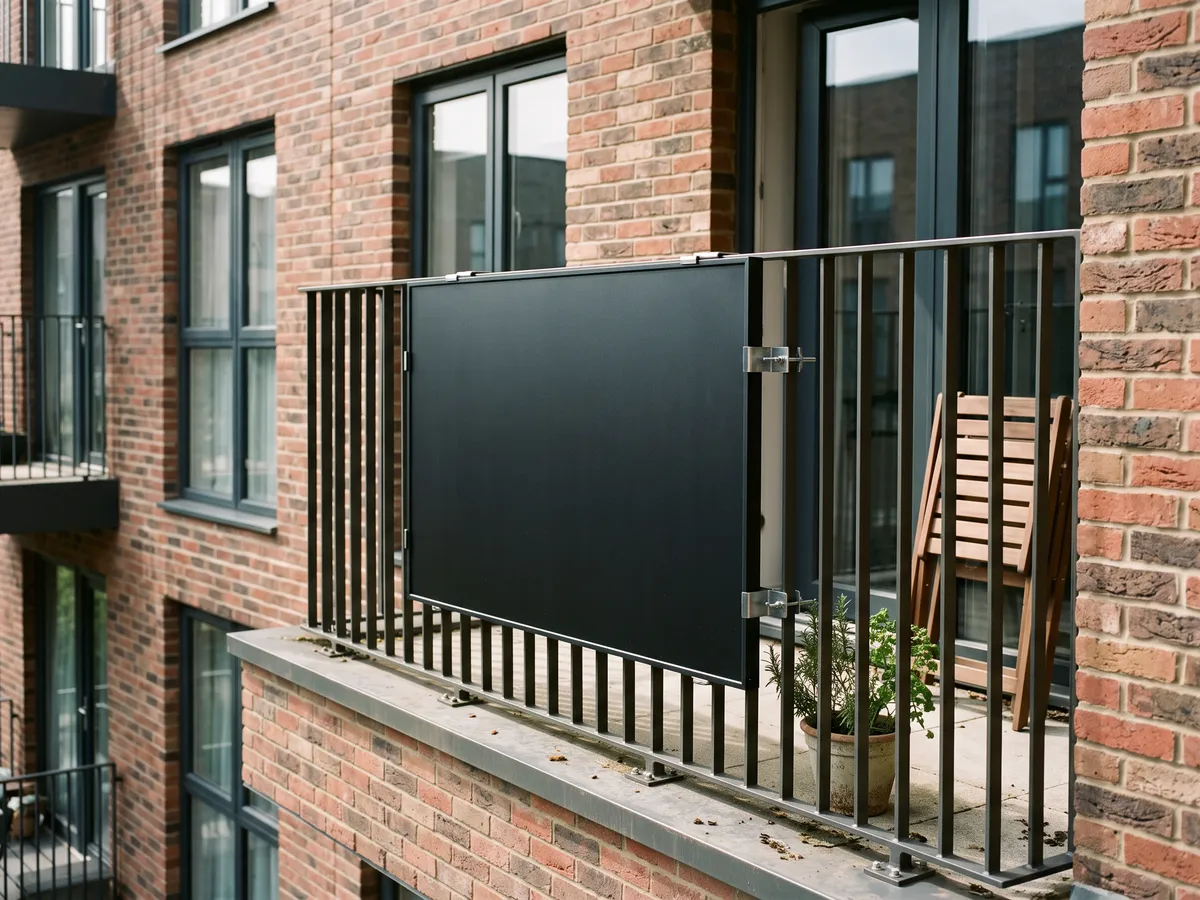
A plug-in solar kit is one or two solar panels, a small inverter and a lead with an ordinary three-pin plug. You fix the panels to a balcony railing, a garden stand, a shed roof or a wall, and plug the lead into a socket. The power the panels make is used by whatever is running in your home, so you buy less from your supplier.
The government's specification defines a plug-in device as at least one panel, a grid-following inverter, a lead with a BS 1363 plug, and a mounting system. MoneySavingExpert says the inverter limits kits to 800VA, even where the panels are rated higher: some kits carry panels rated up to 1,260W.
Are Plug-In Solar Panels Legal In The UK?
Yes, in Great Britain, since 27 August 2026. The change came through a statutory instrument, SI 2026/848, made on 16 July 2026, which lets a plug-in generator of up to 800W be connected through a standard plug and socket, provided it complies with the Plug-in Solar Device Interim Product Specification. The timeline in the government's consultation page is: consultation opened 16 June 2026, closed 30 June with 466 responses, government response on 16 July, in force 27 August.
| Rule | What it says | Where it comes from |
|---|---|---|
| Size | Maximum rated AC output 800W (the specification says 800VA, single phase) | SI 2026/848; DESNZ specification |
| Product | Must comply with the interim product specification, version 2.0, July 2026. GOV.UK points buyers to the Energy Networks Association's list of accredited devices | SI 2026/848; GOV.UK |
| Plug | A standard BS 1363 plug straight into a fixed socket. Do not use extension leads or adaptors | DESNZ specification; London Fire Brigade; MoneySavingExpert |
| How many | One plug-in device per household under the current network rules | DESNZ specification, note on G98 |
| Batteries | Plug-in batteries and solar-plus-battery kits are outside the specification | DESNZ specification, scope |
| Tell the network operator | Within 28 days of connecting. The regulations themselves set no notification duty, so this comes from the network rules | MoneySavingExpert; London Fire Brigade; legislation.gov.uk |
| Planning (England) | Permitted development rules changed on 27 August 2026. Plug-in solar is blocked on wooden structures and cladding for fire risk | Planning Portal |
| Landlords and freeholders | Check whether you need permission from a landlord, building owner or freeholder | GOV.UK |
Source: legislation.gov.uk, SI 2026/848; DESNZ Plug-in Solar Device Interim Product Specification v2.0; GOV.UK, households can save as plug-in solar panels come to market; Planning Portal, 28 August 2026; MoneySavingExpert; London Fire Brigade, read 26 November 2026.
Two limits to know. The specification's own footnote says the network rules it relies on, known as G98, apply to Great Britain only, that Northern Ireland has separate connection rules, and that applying the specification there needs further consideration. That fits MoneySavingExpert's note that kits are not yet available there. We did not check the Scottish or Welsh planning position, so ask your council. And when we read the consultation page, last updated 3 September 2026, it said consumer guidance would be published alongside the start of the rules but linked none.
The IET wiring regulations, BS 7671, are still the national standard for the wiring in your home: the specification cites the 2018 edition with Amendment 4 (2026), and itself sets the conditions under which those circuits may be used for plug-in solar.
Is Plug-In Solar Safe?
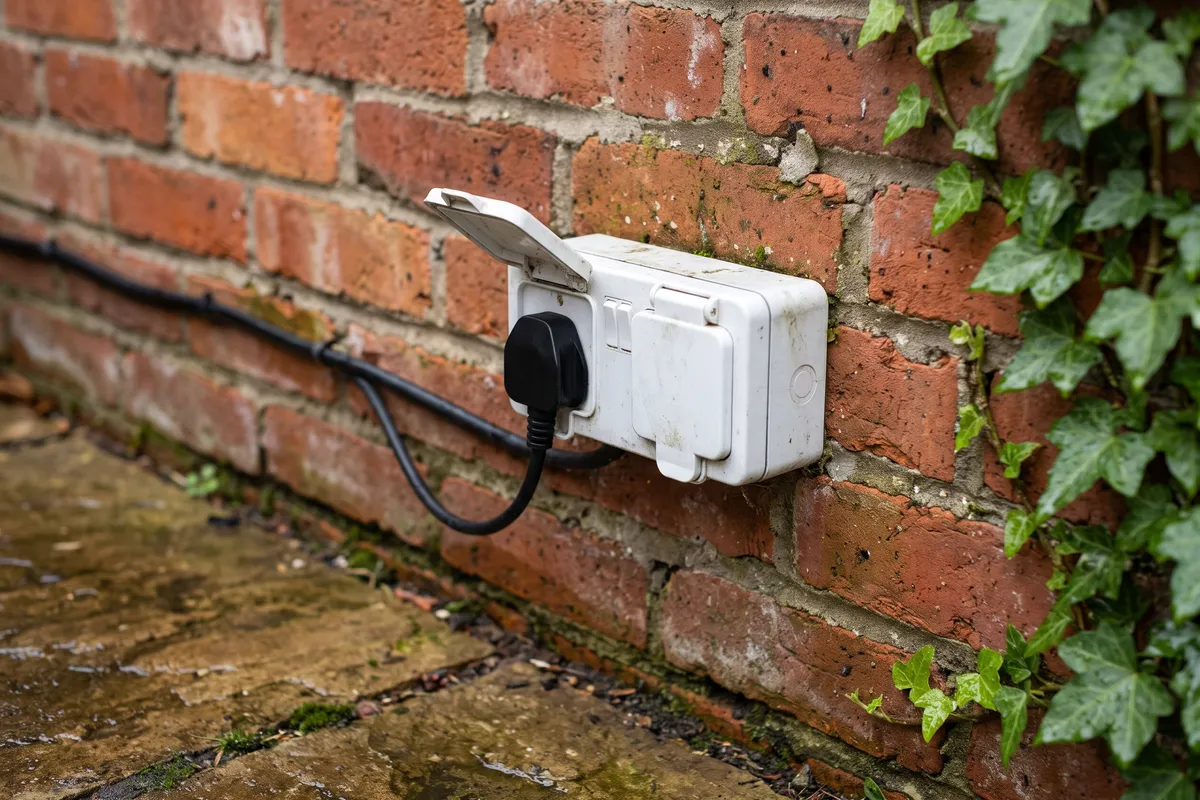
The government says independent testing found compliant panels safe and compatible with UK wiring, and the specification cites a DESNZ-commissioned study that found products used in Germany are safe on UK circuits within defined limits. London Fire Brigade is more cautious in practice: do not plug a kit into an extension lead, adaptor or overloaded socket, use an outdoor socket rated at least IP65 fitted by a competent person, keep panels off shared balconies, walkways and fire escape routes, and stop using the system and call 999 if you smell burning.
MoneySavingExpert recommends having your wiring checked first, for example with an electrical installation condition report, and prices a wiring check at £100 to £250 and an outdoor socket at £140 to £260. Those costs are on top of the kit and push payback out.
Source: MoneySavingExpert, plug-in solar panels, updated 20 October 2026, read 26 November 2026.
How Do Plug-In Solar Panels Work Day To Day?
The panels generate electricity from daylight, and the small inverter turns it into the mains current your sockets use. Whatever is running in the home at that moment takes the power, so you use more of your own electricity and buy less from your energy supplier. British Gas says a kit generates in cloud and in winter too, but output is lower when days are short, so the saving comes from running the washing machine or a laptop charger during daylight hours rather than at night.
Four practical points follow, all from British Gas's own plug-in solar page:
- Power cuts: the kit is designed to switch off in a power cut, so it will not keep the home running when the grid is down.
- Larger loads: it can run alongside an EV charger, but at 800W it adds only a little to car charging.
- Wiring: no electrician is needed to plug it in, but the home's wiring should be in good condition with RCD or RCBO protection that works with two-way flow. Ask a qualified electrician if you are unsure.
- Existing rooftop solar panels: British Gas says that if your total generating capacity would go above 3.68kW, you need approval from your distribution network operator (DNO) before connecting.
Export is a separate question. British Gas says plug-in solar is not eligible for the Smart Export Guarantee (SEG) itself, although its Export Premium tariff can pay British Gas customers for excess electricity sent back. Check whether your own supplier pays anything before counting on export tariffs, and treat any export income as a bonus, not part of the payback sum.
Source: British Gas, plug-in solar panels explained, read 26 November 2026. British Gas sells the kits, so check its points against the government specification.
What Plug-In Solar Panels Are On Sale?
GOV.UK names Currys, B&Q, Screwfix, Amazon, Argos, Wickes and British Gas as retailers stocking kits. MoneySavingExpert's price list of 20 October 2026 also names City Plumbing, EcoFlow, Octopus, Very, Wilko, Homebase and Plumbnation.
British Gas sells its own 800W kit in three packages. Centrica's press release of 28 August 2026, as reproduced by Energy-pedia, marked the launch with a giveaway of 30 units worth about £500 each, and said eligible British Gas customers would be paid for exported power from a scheme due in a few weeks. Our British Gas solar panels page covers its rooftop offer.
| Source | Kit | Price |
|---|---|---|
| MoneySavingExpert, 20 October 2026 | One-panel kits | £336 to £848 |
| MoneySavingExpert, 20 October 2026 | Two-panel kits | £456 to £999 |
| British Gas, page read 26 November 2026 | Solar Start: kit only, you install it | £649 |
| British Gas, page read 26 November 2026 | Solar Assist: kit plus an engineer visit to set up and connect at ground level | £749 |
| British Gas, page read 26 November 2026 | Solar Ready: Solar Assist plus an installed outdoor socket | £999 |
Source: MoneySavingExpert, plug-in solar panels, 20 October 2026; British Gas, plug-in solar panels explained, undated page. Prices change, so check the retailer. Not averaged and not a ranking.
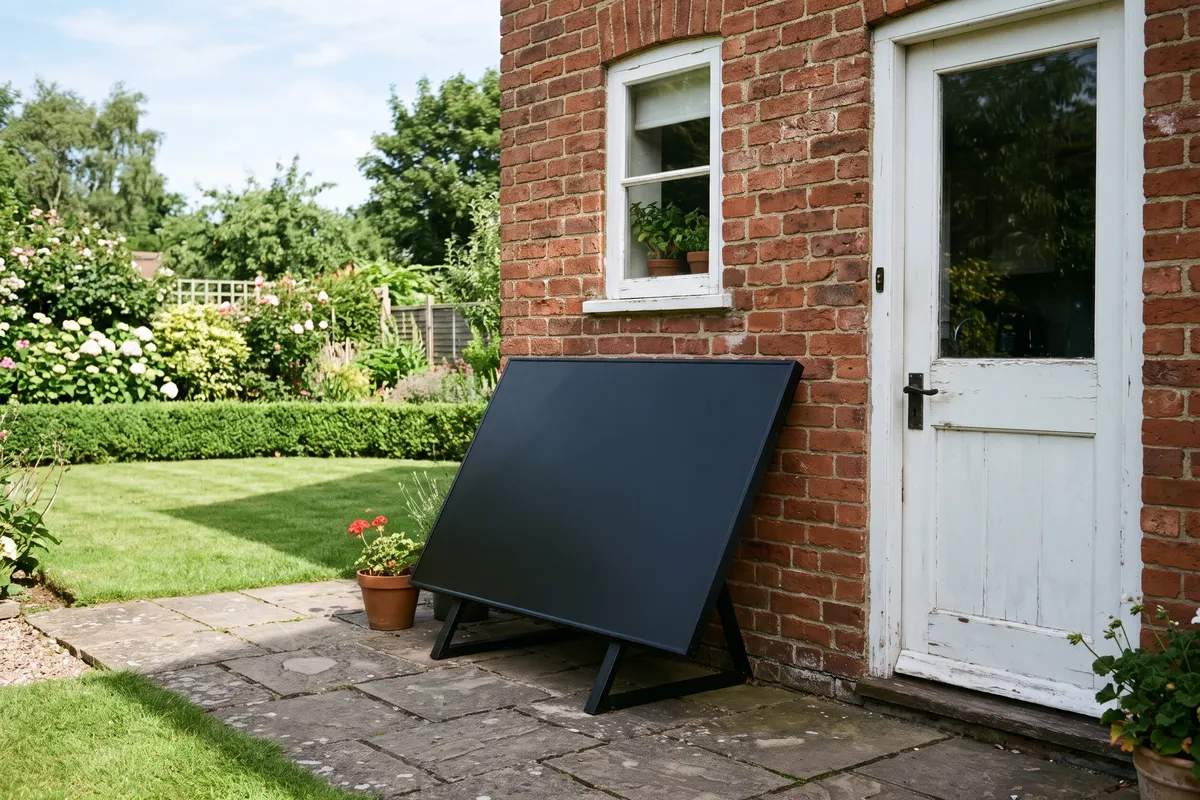
Before you buy, check four things. Is the kit on the Energy Networks Association's list of accredited devices? Is the inverter capped at 800W? Does the mounting suit your wall, railing or ground? And what does the warranty cover? On that third point, British Gas says its mounting brackets are not suitable for balconies and that its engineers will not set panels up on a wall or roof.
How Much Does A Plug-In Solar Panel Save?
The official headline is up to £110 a year, which British Gas's release, citing the government research, ties to a south-facing panel at a 30 degree tilt with little shade and daytime use. MoneySavingExpert says government figures suggest up to about £100 and stresses that real-world data is scarce. British Gas shows an illustrative £147 a year, assuming 700kWh generated, 80% to 95% of it used in the home, an import rate of 26.322p per kWh and a home using 2,500kWh a year.
We worked it from a modelling tool instead. The table uses the European Commission's PVGIS to estimate the yearly output of a 0.93kW panel, the size British Gas assumes, then applies British Gas's own import rate at two levels of self-use. A panel on a balcony railing stands upright, which gives less than a tilted one.
| Where and how it is mounted | Output a year | Saving if you use 50% of it | Saving if you use 80% of it |
|---|---|---|---|
| Manchester, balcony railing facing south | 601kWh | £79 | £127 |
| Edinburgh, balcony railing facing south | 636kWh | £84 | £134 |
| London, balcony railing facing south | 692kWh | £91 | £146 |
| Manchester, balcony facing south-east | 563kWh | £74 | £119 |
| Manchester, 30 degree tilt facing south | 818kWh | £108 | £172 |
| London, 30 degree tilt facing south | 943kWh | £124 | £199 |
Source: European Commission PVGIS 5.3 (SARAH3 solar data 2005 to 2023, 14% system losses, no shading), our calculation for 0.93kW; import rate 26.322p per kWh as assumed by British Gas. Real output is a little lower where the 800W inverter caps the tilted cases.
Two things drive the result: where you put the panel and how much you use while it generates. At the average of 7.4kWh a day that MoneySavingExpert quotes, a home uses about 2,700kWh a year, so a balcony panel making 600kWh is about 22% of that. Work out your own saving by multiplying the output by the share you use and by your unit rate.
Payback follows. A £649 British Gas Solar Start kit saving £79 a year takes about eight years, and one saving £127 about five (£649 divided by the saving, our arithmetic). MoneySavingExpert gives five to ten years and says extras such as a wiring check and an outdoor socket lengthen that. Exported power earns little: MoneySavingExpert names British Gas and Octopus as suppliers that may pay for it but expects small amounts.
Source: MoneySavingExpert, plug-in solar panels, updated 20 October 2026; GOV.UK, read 26 November 2026.
What Does MoneySavingExpert Say About Plug-In Solar?
MoneySavingExpert's plug-in solar guide, updated on 20 October 2026, is cautious. It puts a kit at £500 to £1,200 and says payback could be around five to ten years, depending on the home. It recommends a wiring check, a weatherproof outdoor socket and no extension leads, says renters need their landlord's permission, notes that current UK rules do not support batteries with plug-in solar, and expects panels to last 20 to 30 years with inverter warranties of 10 to 12 years.
We did not find a recorded statement from Martin Lewis himself on plug-in solar that we could check, so we rely on the published MoneySavingExpert guide. Read it in full at MoneySavingExpert.
When Does A Rooftop System Make More Sense?
A plug-in kit makes sense where you cannot put anything on a roof: a flat, a rented home, a roof facing the wrong way or one in shade. If you own the house and the roof is suitable, a rooftop system makes far more electricity.
| Plug-in kit | Typical rooftop system | |
|---|---|---|
| Size | 800W maximum output, one per home | 4.5kWp, the typical home size quoted by MoneySavingExpert |
| Output a year (modelled) | About 560 to 940kWh | About 4,000kWh in Manchester and 4,600kWh in London, south-facing at 35 degrees |
| Cost | £336 to £999 | About £7,600 |
| Saving a year | About £75 to £150 on our figures | £190 to £330, per MoneySavingExpert |
| Battery | Not covered by the rules | Possible |
| Installation | Plug in, notify the network operator | MCS-certified installer, scaffold, network paperwork |
Source: PVGIS 5.3 for the 4.5kW output, our calculation; MoneySavingExpert, solar panels, updated 25 November 2026, citing the Energy Saving Trust for £7,600 and the 4.5kWp size; MoneySavingExpert, plug-in solar panels for kit prices.
MoneySavingExpert says a rooftop system could take at least 10 years to pay back at current price cap rates, against five to ten for a plug-in kit, so the kit pays back faster per pound but saves far less in total. If you have a roof and a bill of a few hundred pounds a year to cut, get rooftop quotes before you decide.
Plug-In Solar Pros And Cons
What counts in its favour
- Legal in Great Britain since 27 August 2026, with a published product specification.
- No roof needed, so it works for flats and homes where a rooftop system is not possible.
- Kits start from about £336 and can be unplugged and taken with you.
- No installation cost in the government's framing, though a wiring check and a socket may be needed.
- Cuts the electricity you buy while the sun is out.
What to weigh up
- Output is small: roughly 560 to 940kWh a year on our modelling, a fraction of a rooftop system.
- Payback is five to ten years on MoneySavingExpert's figures and longer with extras.
- One kit per household, and no battery.
- You must tell your network operator within 28 days, and renters need permission.
- Not available in Northern Ireland yet, and England's planning rules bar plug-in solar on wooden structures and cladding.
Who Do Plug-In Solar Panels Suit?
On the published figures, a plug-in kit suits a flat dweller or renter with a south or south-east facing balcony or garden wall, someone who is home in the daytime or has a steady daytime load, and someone who wants a low-cost start without a survey or scaffold. It may not suit a home with a heavily shaded or north-facing outlook, a balcony the landlord or freeholder will not allow it on, or a household that expects to add a battery.
How Do I Get Quotes For A Full Rooftop System?
Get at least three quotes from MCS-certified installers and ask each for an itemised quote: the number and rating of the panels, the inverter, the price per kW, installation, any battery, the warranty terms and who files the network paperwork. Switchable compares and introduces: tell us about your home and local installers send you their prices, free and without obligation. Switchable is independent of every retailer named here and is not paid by any of them for this guide; our method is on the how we review page.
The Bottom Line
Plug-in solar is now legal in Great Britain and cheap to try, but small: on our figures a kit saves roughly £75 to £150 a year, which is about five to ten years to pay back, in line with MoneySavingExpert. It suits flats and rented homes more than owners of suitable roofs.
Check the kit is on the Energy Networks Association's list, plug it in directly, tell your network operator within 28 days and get landlord permission if you rent. If you own a suitable roof, compare how much a rooftop system produces and get quotes before you decide.
Compare solar quotesSources
- GOV.UK, plug-in solar consultation and government response, updated 3 September 2026
- Centrica press release on British Gas plug-in solar, 28 August 2026, as reproduced by Energy-pedia
- British Gas, plug-in solar panels explained, read 26 November 2026
Checked 26 November 2026.
How To Compare Quotes
Get at least three quotes and compare them line by line. Prices for the same job can differ a lot.
- The installer is MCS certified. You need an MCS-certified system to be paid for exported power under the Smart Export Guarantee.
- What is in the price: panels, inverter, any battery, scaffolding and waste removal.
- Warranties on the equipment and on the installation work, and who stands behind them.
How Switchable works
 Check. Tell us your postcode and a few details about your home. It takes about two minutes.
 Compare. Local installers who cover your area get in touch with quotes.
 Switch. Go ahead with the quote that suits you, or none at all. There is no obligation.
Switchable is free to use. Installers pay us for each introduction.
More On Solar Panels
- Solar panels guideCosts, savings and grants in one place
- British Gas Solar Panels: What The Offer IncludesWhat British Gas includes, its prices and export rates, and how to compare it
- How Much Electricity Does A Solar Panel Produce?kWh per panel and per 4kW system, by region, roof direction, pitch and month
- Best Solar Panels UKHow to choose, and six home panels compared from their datasheets
- Free Solar Panels UK: What Is TrueWho can get free panels, the pensioner rules and how to spot a scam
Plug-In Solar Panels In The UK: Your Questions.
Are plug-in solar panels legal in the UK?
Yes in Great Britain, since 27 August 2026, under SI 2026/848. The kit must be 800W or less and meet the government's interim product specification. MoneySavingExpert says kits are not yet available in Northern Ireland.
How much do plug-in solar panels cost?
MoneySavingExpert listed one-panel kits from £336 to £848 and two-panel kits from £456 to £999 on 20 October 2026. British Gas sells three packages at £649, £749 and £999. A wiring check and outdoor socket can add £240 to £510 on MoneySavingExpert's figures.
How much can plug-in solar panels save?
The government says up to £110 a year in good conditions, and MoneySavingExpert says up to about £100. On our worked figures a south-facing balcony panel saves roughly £75 to £150 a year depending on how much of the power you use yourself.
Do I have to tell my network operator?
MoneySavingExpert and London Fire Brigade both say to tell your electricity network operator within 28 days of connecting. The regulations themselves do not set the duty out, it comes from the network rules, so check with your operator.
Can I use plug-in solar in a flat or a rented home?
Plug-in kits are designed with flats and renters in mind, but renters need their landlord's permission and flats may need the freeholder's. In England, plug-in solar is blocked on wooden walls and balconies, so check the surface and ask your council if unsure.
Can I add a battery to plug-in solar?
Not under the current rules. The specification excludes plug-in batteries and solar-plus-battery kits, and London Fire Brigade advises against connecting panels to a battery. A rooftop system can take a battery.
What does Martin Lewis say about plug-in solar panels?
We could not find a Martin Lewis statement on plug-in solar that we could check, so we rely on MoneySavingExpert's guide. It puts payback at around five to ten years, recommends a wiring check and says not every home is suitable.
Is plug-in solar better than a rooftop system?
Neither is better for everyone. A plug-in kit is cheap and needs no roof, but makes roughly 560 to 940kWh a year, while a 4.5kWp rooftop system makes about 4,000 to 4,600kWh and costs about £7,600. If you own a suitable roof, compare both.
Do plug-in solar panels work in a power cut?
No. British Gas says its kit is designed to switch off in a power cut, so it will not supply the home while the grid is down. A plug-in kit is also capped at 800W and has no battery under the rules.
Can I get Smart Export Guarantee payments for plug-in solar?
British Gas says plug-in solar is not eligible for the Smart Export Guarantee itself, though British Gas customers can be paid for exports on its Export Premium tariff. Other suppliers may pay differently, so ask yours before you count on income.
Get Your Free Quotes Today.
Compare quotes from installers in your area. It takes about two minutes and there is no obligation.