Advice · Guide
Is Foam or Fibreglass Insulation Better?
On this page
- What is Fibreglass Insulation?
- What is Spray Foam Insulation?
- Which Is Better: Foam Insulation or Fibreglass Insulation?
- Is Spray Foam Taking the Place of Fibreglass?
- Is Spray Foam Insulation Appropriate for My Home?
- Costs and savings from spray foam insulation
- And What About Fibreglass?
- Summary Spray Foam Insulation vs Fibreglass Insulation
There is an understandable degree of caution when it comes to home insulation, especially given that people belatedly learned that asbestos, which has been present in homes for years, was highly dangerous. While many types of insulation are available as modern options for home use, two popular choices appear to be fibreglass insulation and spray foam insulation, both of which offer excellent insulating ability for residential and commercial properties throughout the UK.
Home insulation work is akin to waving a magic wand over a property. Often, in just a few hours, insulation can transform a freezing house into warmer, more energy efficient property.
Home insulation’s benefits are vast, and with rising energy costs, it is a great time to think about getting your home properly insulated, if you have not done so already.
Insulation is high on the list of must-have home upgrades, but that doesn’t mean your choice of insulation is an easy one. While we can compare all the different insulation technologies, the dispute over foam insulation vs fibreglass is often the most contentious and the one that we’ll discuss here.

Two very different insulation technologies, both serving the same goal, yet choosing between foam and fibreglass insulation can be difficult. Therefore, the first step is to examine both types…
What is Fibreglass Insulation?
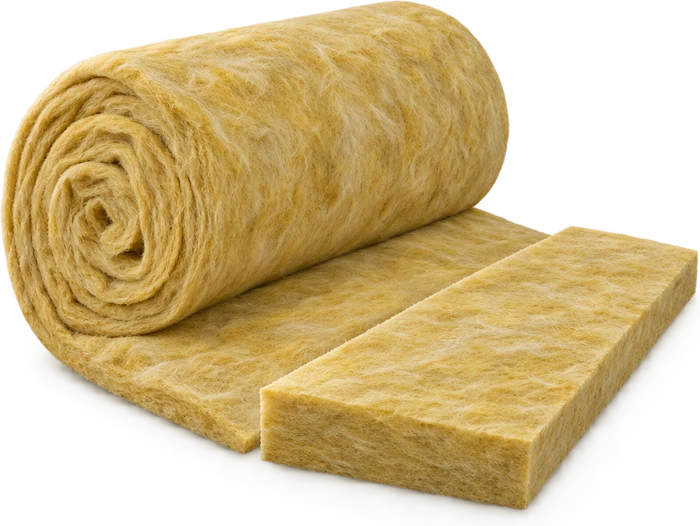
Fibreglass insulation comes in two varieties: batt insulation and loose-fill insulation, which have quite different designs. Batt comes in a roll, essentially rolled out between roof trusses and flooring joists. The loose fill is blown into spaces carefully to prevent potential fibreglass inhalation.
Both are often made of a similar mixture of glass fibres and plastic, with the plastic included to strengthen the glass. In many situations, a significant amount of the materials are recycled, making the product more environmentally friendly.
What is Spray Foam Insulation?
Image: Spray Foam Insulation
Spray foam insulation is at the polar opposite end of the home insulation spectrum and has been used in some amazing new structures. The material is 100% water-blown and available in two varieties: open-cell foam and closed-cell foam.
Unlike fibreglass, these have a far more similar appearance but highly different characteristics. Spray foam is sprayed onto a surface or pumped into gaps, then expands to match the needs of the area for maximum heat retention.
Spray foam is excellent loft or attic insulation that can establish strong air seals on its own, but it can also be used in hollow walls for moisture resistance under floors, ceilings, and crawl spaces. Fibreglass has fewer options, with loose-fill having to be fastened and batts that can only be laid.
Which Is Better: Foam Insulation or Fibreglass Insulation?
Both types of insulation, spray foam and fibreglass have their own particular qualities that make them suitable for different situations. It’s not just a case of one being better than another because in some situations they may not be the right option at all.
At face value, the primary qualities might reveal why some homeowners would favour one type of insulation over another. The efficiency of the insulation, for example, determined by the R-value, shows distinct differences between both fibreglass and spray foam insulation.
For the same thickness, closed-cell spray foam insulates better than open-cell foam, and both insulate better than fibreglass batts or loose-fill. That is why foam can be used in thinner layers where space is tight.
The second factor to consider is the installation method, with the qualities of each limiting where they may be used and how effective they will be. It is this that is often the vital determining factor of which option is most suitable.
Spray foam is excellent attic insulation that can establish strong air seals on its own, but it can also be used in hollow walls for moisture resistance under floors, ceilings, and crawl spaces. Fibreglass has fewer options, with loose-fill having to be fastened and batts being able to be laid only. When installed by professionals, it can still be a good and relatively inexpensive insulation material.
| Spray Foam Insulation | Fibreglass insulation | |
|---|---|---|
| How is it packaged? | Liquid chemical in a can. Comes in open cell and closed cell varieties | Batts or blow-in loose-fill |
| Resistance to moisture | High | High |
| Insulation R-value | Closed cell insulates best for its thickness, open cell a little less | Insulates less well than foam for the same thickness |
| Effectiveness | Expands to firm an air tight seal over cracks and gaps where air could flow through | Have to be cut precisely to size which can leave gaps for air to flow through when working with difficult obstacles and irrgular spaces between joists |
| Fire-resistant | Yes | Yes (when treated with fire-resitant chemicals) |
| Soundproof ability | Block both inside and outside noise | Block both inside and outside noise |
| Ease of installation | Difficult. Should only be installed by a professional | Easy to install. Could be done even by those with minimal DIY skills |
| Cost | Expensive | Relatively cheap but effective option |
| Payback | Longer, because it costs more to install | Shorter, because it costs less to install |
| Longevity | Depends on the product and the installation | Lasts well if it is not disturbed or allowed to get wet |
Is Spray Foam Taking the Place of Fibreglass?
While for many, fibreglass is the first of the available insulation materials that comes to mind, but in recent years, more homeowners have made a move to spray foam insulation. For the householder who is not planning to move, spray foam (where it is suitable) offers a good option when it has been properly installed by a professional.
Where spray foam sometimes presents some difficulties are if you need your spray foam insulation removed at some time in the future. This is often the case if you are planning on selling the property, as spray foam in the loft space (preventing a full inspection) can make it difficult for prospective buyers trying to obtain a mortgage. The expense of removal can sometimes outweigh what you paid to have it installed in the first place.
Is Spray Foam Insulation Appropriate for My Home?
Every home is unique, and we recommend seeking expert guidance before starting because spray foam is difficult to remove once installed.
Before commencing the job, an installation should always conduct a survey to check that the product is appropriate for your home. This typically includes:
- a U-value calculation that determines just how well your home is insulated
- an evaluation of the possibility of condensation in your home
- Identify any issues and detail the steps required to avoid them.
Costs and savings from spray foam insulation
Spray foam insulation is more costly than slabs, mineral or glass wool, and expanded polystyrene insulation (EPS).
Depending on the size of your home, you should budget between £600 and £1,100 for professionally fitted loft insulation made of classic materials like mineral fibre. You can save even more money if you install it yourself.
According to the National Insulation Association, the average cost of spray foam loft insulation in a 3-bedroom semi is approximately £2,500.
Spray foam insulation is more expensive than other insulation.
The overall cost will be determined by the thickness, type (closed or open cell), and size of the area to be insulated, as well as the method of installation.
The National Insulation Association recommends a price range of £20 to £50 per square metre. The lower cost corresponds to a thin layer of foam for stabilisation, whereas the larger cost corresponds to a thicker layer.
Closed cell spray foam insulation is often more expensive than open cell spray foam insulation. The cost is also affected by the difficulty of installation, the type of roof, and any necessary maintenance work.
Because spray foam is more expensive, it will take much longer to pay back the savings on your energy expenditures than a cheaper insulation such as fibreglass insulation.
If your loft or walls aren’t already insulated, some households may qualify for funded insulation, depending on eligibility. Check GOV.UK, or Home Energy Scotland if you are in Scotland.
In England, the Warm Homes: Local Grant funds measures for eligible lower-income households through councils that are taking part. Funding rarely covers spray foam, so check what a scheme will pay for before you commit.
And What About Fibreglass?
In many instances, fibreglass insulation is made from recycled glass, adding to its somewhat slightly greener credentials. However, care must be taken when installing it as the tiny particles of glass used in the product can be harmful to the skin or if inhaled.
As a fireproof material, it is great for areas around light fixtures or other electrical items, though the 270mm of fibreglass insulation that is recommended for lofts can add bulk and still never matches up the the R-value of spray foams. Fibreglass insulation does not shrink and maintains its shape so long as its integrity is not interfered with once installed. It can however sag over time, especially when used inside the walls or on rafters
One area that fibreglass insulation can fail is when it becomes wet, either through a leak or condensation. The wet insulation can be dried out but replacement is often the better option.
While installation is usually pretty straightforward, it can be difficult to fit into smaller spaces or awkward gaps, sometimes leading to gaps, and this is where it falls short in comparison to spray foam.
Summary Spray Foam Insulation vs Fibreglass Insulation
So is foam or fibreglass better as an insulation option? There is no definitive answer as it very much depends on your particular requirements, including your type of property and budget.
Yes, spray foam insulation provides a complete seal on cracks, gaps, voids, attics, walls, and crawl spaces, whereas fibreglass insulation provides extensive coverage but still leaves some cracks and gaps allowing air leakage.
You will see a massive difference in the long run if spray foam insulation is suitable for your property, as it can reduce heat loss through gaps and cracks.
However, spray foam insulation may present some difficulties if you come to sell your home in future. In that case, property surveyors and mortgage lenders typically value a property much lower than the market price if it has installed spray foam insulation. To determine how much lower the valuation on your property would likely be, look at the entire cost of a new roof, as this is what they base their valuations on.
Installing fibreglass insulation offers a cost-effective method of insulating your home and improving energy efficiency, and while it isn’t as effective as spray foam, it nonetheless offers a suitable alternative for those for whom cost is a much greater consideration.