Solar · Guide
Charge Your Car with Solar Power - The Ultimate Guide
On this page
- Want To Charge Your Electric Car With Solar Panels?
- Charging Your Electric Vehicle From Home
- Charging Your Electric Car With Solar Energy
- UK Energy Crisis & Energy Bills Explained
- Smart Energy & Green Energy Tariffs
- EV Charging Overview
- The Pros & Cons of Charging Your EV With Solar Panels
- The Pros Of Solar EV Charging
- The Disadvantages Of A Solar PV system
- How Do Solar Panels Function To Charge Devices?
- Solar Power To Charge EVs
- How Many Solar Panels Are Needed To Charge An EV?
- How About Solar Roof Tiles As An Alternative?
- Costs of Installing Solar Panels
- Battery Storage For Solar Panels
- Is Solar Energy Worth It For EV Charging?
- So, is Solar Power Generation Worthwhile?
If you've got an electric vehicle, you are probably keen to enjoy the savings it brings as well as reducing your own carbon footprint. But what if you want to boost those savings further by charging your car with your own solar panel system?
Charging an electric vehicle with solar panels will not only reduce the cost of running it, but will also reduce your reliance on the National Grid. With the renewable energy you produce with your own solar panels, these provide a more affordable and environmentally-friendly way to charge your EV.
Want To Charge Your Electric Car With Solar Panels?
If you're wondering whether it's practical or economical to run electric cars on solar power, the answer is very much a definite yes. While solar panel installation may seem like a big undertaking, and can require a significant investment, it's an investment that will pay off over time, especially if using it for solar car charging.
If you want to enjoy the benefits of solar panel charging for your EV vehicles, read on.
Charging Your Electric Vehicle From Home
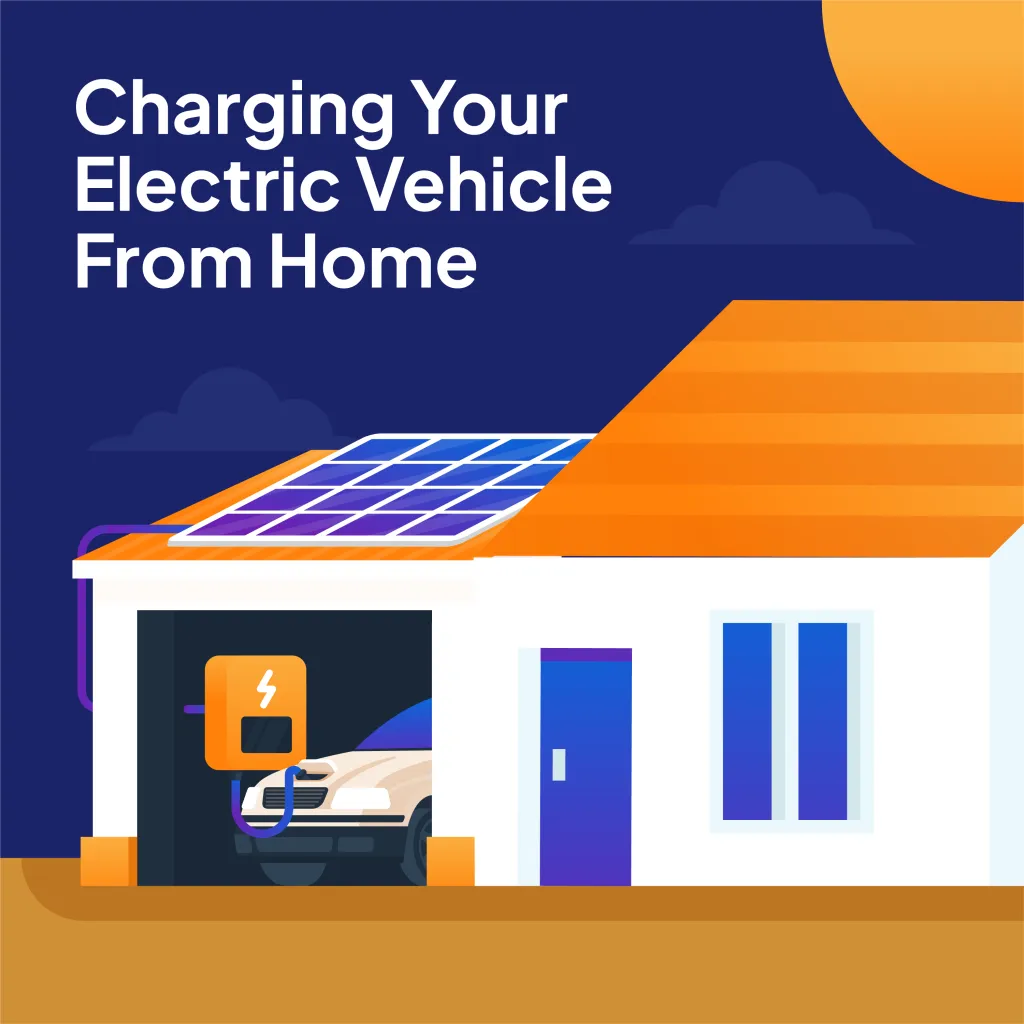
There is a lot to take into consideration when you purchase an electric vehicle, especially when it comes to how you will actually charge your vehicle. Some people choose to rely on the public charging network due to the upfront expense of a home charging station. However, charging an electric car at home using grid energy doesn't have to be overly expensive, especially if you are smart about the times you charge your vehicle and the tariffs you use.
Charging Your Electric Car With Solar Energy
Around half of all new cars sold are electric or hybrid vehicles, or EVs for short. The ultimate fantasy of many owners of electric vehicles is to be able to run them entirely on energy that their own solar panels generate and the EV charging system.
Here's how solar panels can help you generate and store your own solar power at home…
- UV rays are absorbed by a solar panel and used to create electricity for an electric vehicle.
- You receive the power to utilise this energy in your home through a technological device known as an “inverter.”
- A solar battery can be installed to store extra energy for later use.
- If your system does not generate sufficient power for your electricity needs, you can call upon power from the grid as you did prior to your solar PV being installed.
UK Energy Crisis & Energy Bills Explained

The UK government has in recent years been regulating the energy price limit or the maximum amount a typical household in the UK is expected to spend on gas and electricity. Check the unit rate on your own bill to see what you are paying now.
These prices still mean that households are spending a high portion of their income on energy bills. With uncertainty about future energy costs, households and businesses should protect themselves as best they can from future energy price shocks, and solar is a great way of doing that.
Running an EV can cost less than running a petrol car, and you can improve the saving further by charging from your own solar panels.
Some households may qualify for funded support towards energy upgrades, depending on eligibility. Check GOV.UK, or Home Energy Scotland in Scotland, for what is currently available.
Additionally, you can boost savings from EV charging by using a smart energy tariff...
Smart Energy & Green Energy Tariffs
To reduce greenhouse gas emissions and pollution from exhaust fumes, many people move to battery-powered vehicles. However, a car must be fuelled by renewable energy sources, such as solar power, if it is to produce no emissions.
The most cost-effective option to fuel your electric vehicle from a sustainable source is to charge it from your own solar PV installation. You can also purchase renewable electricity from energy companies that provide green tariffs.
With a smart energy tariff, you can benefit from lower rates at off-peak times, which vary by tariff. Because off-peak hours are less taxing on the energy grid, smart energy tariffs are more environmentally friendly. However, choose an energy tariff that relies on wind and solar for the greenest of green grid options.
To enable you to travel on clean, cost-free energy, we'll go over everything you need to know about charging your EV with the energy generated from your own solar panel setup.
EV Charging Overview
Solar panels generate electricity that can be used to recharge an electric car.
- You may be able to completely disconnect from the grid and charge at 7kW using only the electricity your solar panels produce.
- However, between 1kW and 4kW is the typical range for household solar installations in the UK.
- With a modest setup like this, you can either slowly charge your EV using only solar energy, or reduce the amount of grid energy you use by adding solar energy.
A solar system and a smart home charger with solar integration are the two main things you need to use solar panels to charge your electric vehicle.
You can choose 100% solar or a combination of energy sources with any of these smart chargers by customising the energy sources in the app. Importantly, they all enable you to view thorough charging session details and set charging times.
The Pros & Cons of Charging Your EV With Solar Panels
The Pros Of Solar EV Charging
So, how much money solar PV can save you?
Even though the upfront investment to have the capability to charge an electric vehicle may be high, there are substantial savings to be made. When you install solar panels, you may anticipate a very good return on your investment, but aside from the financial savings, there are other advantages of using solar to charge an electric car.
More environmentally-friendly
Enjoy your driving with the knowledge that your journey is as clean and environmentally friendly as it possibly can be if you are using sustainable solar energy to power your vehicle. With solar energy powering your vehicle, you're making every effort to reduce your carbon footprint.
Expand your electricity use
Aside from charging your vehicle with your own solar array, there is nothing to prevent you from using your own produced electricity to power many other aspects of your home.
Easy EV charging
Charging at home is highly convenient and free to use. You'll no longer have the frustration of arriving at a public charging station to charge your EV only to discover that it's already in use, blocked, or malfunctioning.
Future-proof your electricity costs
High electricity costs, the cost of charging on public networks, or even being charged to plug in your vehicle all put a strain on household budgets. The least expensive alternative is home charging, especially if you are generating your own solar power.
Save more long-term
While your initial investment in solar will have put a dent in your bank balance, you'll immediately start to see savings, and you could even make money if you are able to sell excess solar energy your system produces back to the grid. Together, all the solar technology combined will enable you to realise a decent return on investment in the upcoming years.
The Disadvantages Of A Solar PV system
Initial and Ongoing Costs
The solar array is not the only cost involved. For a simple 3kW system, wall boxes and house charge points cost several hundred pounds, while the largest and most expensive units can cost a few thousand pounds.
Additionally, you'll need to be ready to pay for installation fees as well as potential future maintenance. Exported electricity is paid for under the Smart Export Guarantee, which needs an MCS-certified installation. The more of your solar electricity you use yourself, for example by charging your car in the daytime, the better the return.
How Do Solar Panels Function To Charge Devices?
Understanding how solar panels can be used to charge an electric car is simple.
- The sunlight is converted into DC electricity by your solar panels.
- Your solar system's PV inverter unit transforms that DC electricity into AC electricity so that it is usable.
- Your distribution board receives AC electricity to operate your devices, and the battery stores any excess energy (if installed)
- The intelligent EV charger charges your vehicle either straight from the distribution board or through the battery using the AC electricity produced by the solar panels.
- To charge an EV as quickly as possible, the charger can either use 100% solar power or a combination of solar and grid electricity.
- Your EV's onboard charger changes the AC power that enters your vehicle through the cord back into DC power.
Solar Power To Charge EVs
For charging EVs, standard solar panels work just well. The energy they can produce as a system and the anticipated energy they will produce when it is cloudy are what matter most.
Solar power systems are measured in kW. Only under ideal circumstances, that is, when the sun is shining, is the maximum kW generation possible. When it's foggy, your solar panels will likely operate at 70-80% of their capacity.
Therefore, if you have a 4kW solar system, you will likely generate 3kW of power on a cloudy day and 1.5kW or less on a dark day.
It is obvious that this is insufficient for your EV to receive fast charging speeds. While charging, it is enough to supplement your energy needs and cut down on the quantity of grid electricity you use. Or you could slowly charge off the grid.
How Many Solar Panels Are Needed To Charge An EV?
The quantity of solar panels required to charge a car with solar panels isn't quite as important as the PV system's overall power output. The rate at which you can directly charge using solar energy depends on the actual power generation.
A 4kW to 7kW solar system is usually required if you wish to quickly charge your EV using only solar electricity. For charging at home, a 7kW charger will charge a standard car battery at a rate of approximately 25 miles per hour, and 4kW will provide a range of about 18 miles per hour. For a 7kW charger you might expect the electric car battery to charge from empty to full in around 8-10 hours.
How About Solar Roof Tiles As An Alternative?
Solar roof tiles can replace conventional panels on part or all of a roof. They are less common in the UK, and availability and prices vary, so ask installers about them when you compare quotes.
Costs of Installing Solar Panels
The Energy Saving Trust says a typical home solar system is about 4.5 kWp and costs around £7,600 to install. Adding a battery costs more, and prices vary with the panels you choose and the size of the system.
Source: Energy Saving Trust solar panels page (updated 16 Nov 2026), checked November 2026.
Larger systems and bigger batteries cost more, so get several quotes to compare.
The state and load-bearing capacity of your roof are additional factors influencing prices. Before solar panels can be put in, your roof might need to have some repairs carried out.
Battery Storage For Solar Panels
What happens to all the electricity produced that you don't actually use at the time? The simple answer is that solar power can be stored in a battery for later use, making it an effective energy storage system.
Because a solar battery storage is capable of storing electricity throughout the day during daylight hours, this enables solar charging of your vehicle overnight.
The price of your solar installation will go up if you add a battery or multiple batteries, but this is the only way to store solar-generated electricity. Much of the energy you produce will be lost to you if you don't have an energy storage solution!
Is Solar Energy Worth It For EV Charging?
It makes sense to use free solar energy to charge your electric vehicles if you already have solar panels because you have already paid for their installation. All you need to get started is a smart charger with solar integration.
In the absence of solar panels, you must consider the costs and benefits.
A typical home system costs around £7,600 to install, and a cheap overnight EV tariff can make grid charging inexpensive. On its own, charging a car is therefore unlikely to pay back the cost of the panels quickly. The case for solar rests on the whole household using the electricity.
Of course, solar panels enable you to consume less energy overall, which lessens your overall reliance on the grid. Even so, the Energy Saving Trust puts payback with export payments at 9 to 12 years (about 9 in London, 11 to 12 near Stirling), based on July 2026 fuel prices.
Source: Energy Saving Trust solar panels page (updated 16 Nov 2026), checked November 2026.
So, is Solar Power Generation Worthwhile?
Yes, if you want to produce electricity off the grid, but not for immediate payback. But the chances are in your favour if you purchase a home with solar panels already installed, or you are planning on staying in your property for the foreseeable future, so you can reap the full benefits of your solar PV installation.